Get a free estimate.
Nassau & Suffolk County.
A roof leak during heavy rain usually means water is getting past a weak point in the roofing system that stays dry during lighter showers. The problem may involve damaged shingles, worn flashing, clogged gutters, roof valleys, vent pipes, or another roof penetration. On Long Island, heavy rainfall, coastal winds, winter ice, and changing temperatures can place added stress on roofing materials. A small opening may allow enough water intrusion during a storm to wet insulation, roof decking, ceiling materials, and interior walls. Homeowners who notice water stains or dripping should arrange a professional roof inspection before the damage spreads.
Why Does My Roof Leak Only in Heavy Rain?
A roof may leak only during heavy rain because strong, sustained rainfall places much more water on the roofing assembly than a normal shower. Wind can also push rain beneath loose shingles or toward vulnerable roof penetrations. The U.S. Department of Energy Building Science program identifies valleys and roof penetrations as especially vulnerable areas for water intrusion. If the waterproof membrane, metal flashing, sealant, or shingles are already weakened, heavy rainfall can expose sealing issues that remain unnoticed in dry weather.
What Are the Most Common Causes of a Heavy-Rain Roof Leak?
Most roof leaks are not caused by one large hole. They usually begin at a roofing element designed to move or block water. Common trouble spots include shingles, flashing, roof valleys, gutters, pipe boots, vent caps, and skylights. Heavy rain sends large amounts of water across these areas, so even a small defect can lead to water infiltration. A complete roof inspection should evaluate the entire drainage path instead of focusing only on the ceiling stain. Long Island homeowners can also review JAGG’s roofing services to understand how different parts of the roof system work together.
| Leak Source | What Heavy Rain Exposes | What to Check |
|---|---|---|
| Shingles | Rain slips under missing, cracked, or lifted shingles | Granule loss, lifted tabs, exposed nails |
| Flashing | Water enters at chimneys, walls, and skylights | Bent, corroded, or poorly sealed metal |
| Gutters and valleys | Overflow and backup at the roof edge and valley channels | Debris, standing water, sagging gutters |
| Pipe boots and vents | Rain follows the pipe into the attic | Cracked rubber boots, dried sealant |
| Skylights | Leaks at seals and curb flashing | Stained frames, damp drywall nearby |
Damaged Shingles and Worn Roofing Materials
Missing, cracked, lifted, or worn shingles can allow rain to reach the underlayment and roof decking below. Years of UV exposure, wind, temperature changes, and storm impact gradually weaken roofing materials. Once the protective surface becomes damaged, heavy rain can enter beneath the shingles and spread through the roofing system. Flat roofs may develop similar problems when membranes split or drainage slows, while a metal roof can leak near fasteners, seams, or flashing. Regular roof maintenance helps identify minor roofing damage before it becomes an emergency leak. JAGG provides roof repair throughout Suffolk County for these types of problems.
Failed Flashing Around Chimneys, Walls, and Skylights
Metal flashing directs water away from places where the roof meets chimneys, walls, skylights, and other structures. If flashing becomes loose, corroded, bent, or poorly sealed, water can enter the roofing assembly during heavy rain. There is no single lifespan that applies to all roof flashings because material, installation, weather exposure, and nearby sealants all affect performance. The Department of Energy explains that step flashing protects roof-to-wall intersections from water intrusion. Chimney flashing and skylight flashing should therefore be checked during routine roof inspections rather than replaced according to age alone.
Clogged Gutters and Roof Valleys
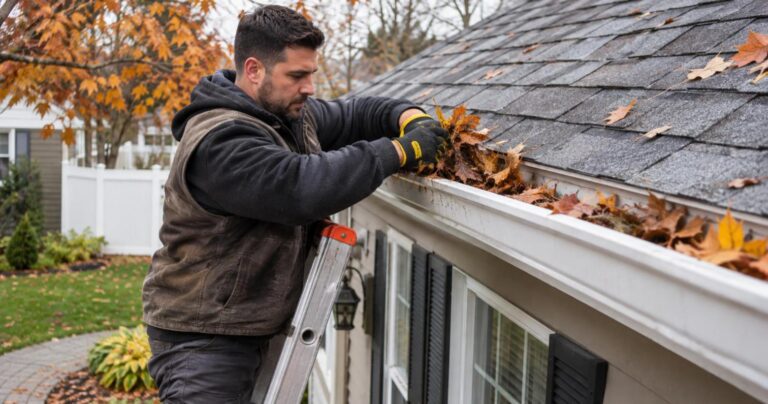
Yes, clogged gutters can contribute to roof leaks. Gutters are designed to move rainfall away from the roof, but leaves, branches, shingle granules, and other roof debris can block the gutter system. Water may then overflow or back up near the roof edge instead of draining normally. Roof valleys create another high-flow area because water from two roof slopes meets in one channel. Valley debris removal and regular gutter cleaning help keep these drainage systems open. The EPA also recommends that homeowners clean and repair roof gutters regularly as part of moisture control around the home.
Pipe Boots, Roof Vents, and Other Penetrations
Every opening through a roof creates a potential point for water intrusion. Vent pipes, roof vents, exhaust outlets, skylights, and other roof penetrations depend on flashing, membranes, or a pipe boot to create a watertight connection. Rubber boots can crack with age, while sealant cracks may form around fasteners and flashing. Heavy rain can then enter around the penetration and travel along the roof decking before becoming visible indoors. DOE guidance explains that properly sealing roof penetrations helps prevent water infiltration at these vulnerable locations. Bath fan ducts and attic ventilation should also be checked because indoor condensation can sometimes resemble a roof leak.
How Do I Find Where My Roof Is Leaking?
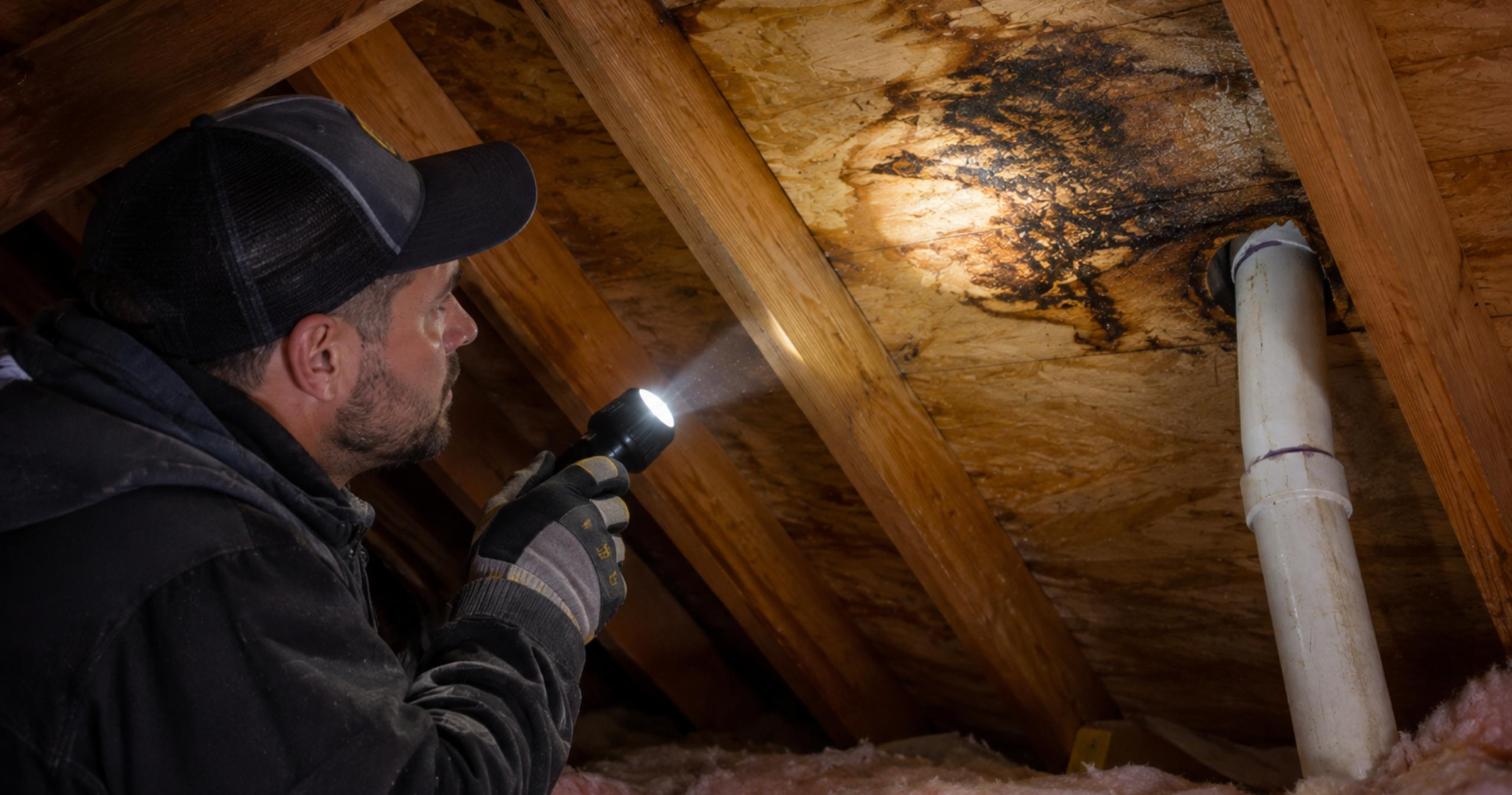
Start inside the attic when conditions are safe. Look for damp insulation, water stains, dark roof decking, rusty nails, or visible water dripping. Trace moisture upward because water can travel along rafters and decking before reaching the ceiling below. The stain in a bedroom may therefore be several feet away from the actual roof leak. Do not climb onto a wet roof during a storm. A roofing inspector can evaluate shingles, roof valleys, chimney flashing, pipe boots, vent caps, gutters, and other roofing elements from safer locations. Homeowners in Nassau and Suffolk County can request a Long Island roofing evaluation when the source is difficult to identify.
What Should You Do If Your Roof Leaks During Heavy Rain?
Protect the inside of the home first. Move furniture and electronics away from the affected area and place a container beneath active water dripping. Avoid wet electrical outlets, fixtures, and electrical systems because water and electricity create a serious safety risk. Photograph visible water damage for your records, then contact a professional roofing company once conditions allow a safe inspection. Wet insulation, drywall, and ceiling materials should not remain damp. The EPA recommends drying water-damaged materials within 24 to 48 hours to reduce the chance of mold growth.
Can You Temporarily Stop a Roof Leak From Inside?
A temporary interior measure can control water, but it does not repair the roofing system. Place a bucket below the leak and protect nearby flooring. If water is collecting behind a sagging ceiling, stay away from the area because saturated ceiling materials can fail. Some temporary repairs may involve covering an accessible opening from the attic, but waterproof caulk or patches should not be treated as a permanent roof leak repair. The exterior cause still needs professional evaluation. During severe Long Island storms, wait until conditions are safe before anyone accesses the roof. Recent National Weather Service New York guidance illustrates how periods of heavy rain can also create flooding hazards.
Roof Repair or Replacement: How Do You Know?
A localized roof repair may be enough when the leak comes from one damaged shingle, pipe boot, small flashing defect, or limited storm damage and the rest of the roof remains sound. Roof replacement becomes more likely when leaks appear in several areas, roofing materials are extensively worn, decking has widespread water damage, or repeated repairs no longer solve the problem. Age matters, but condition matters more. A professional evaluation should consider the roof system, attic inspection, maintenance history, water stains, and previous repairs before recommending reroofing services. Long Island homeowners can schedule an inspection with JAGG to determine whether targeted repair or replacement is the more practical solution.
Heavy-Rain Roof Leaks: Quick Answers
Why does my roof only leak when it rains hard?
Heavy, wind-driven rain pushes far more water across the roof than a light shower. That extra volume can find weak shingles, worn flashing, cracked pipe boots, or clogged valleys that stay dry the rest of the time.
Where does a roof leak usually start?
Most leaks begin at flashing, roof valleys, pipe boots, vents, skylights, or damaged shingles. The ceiling stain is often several feet from the actual entry point because water travels along decking and rafters.
Should I go on the roof to look for the leak?
No. A wet roof is a serious fall hazard. Check the attic from the inside when it is safe, then have a roofing professional inspect the exterior.
How fast should I dry out wet materials?
The EPA recommends drying water-damaged materials within 24 to 48 hours to reduce the chance of mold growth.
Jacob Giannelli is the founder of JAGG Roofing, Siding & Windows, serving Nassau and Suffolk County homeowners across Long Island. JAGG is an Owens Corning Preferred Contractor and BBB Accredited Business with a 5.0-star Google rating.