Get a free estimate.
Nassau & Suffolk County.
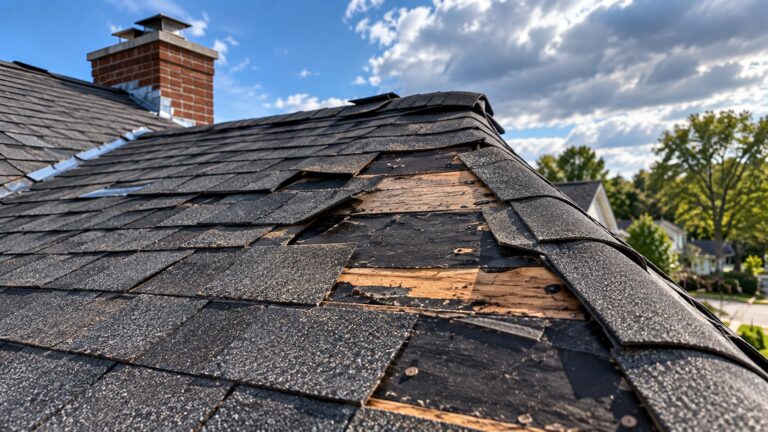
You clean your gutters and notice what looks like a handful of coarse black sand at the bottom. Or maybe after a storm, you see tiny colored particles scattered near your downspouts. Those particles are probably shingle granules, and finding them naturally raises the question: Is my roof starting to fail?
Some granule loss is normal with asphalt shingles, especially when a roof is new or beginning to age. But excessive shingle granule loss, bald spots, storm damage, or suddenly finding large amounts of granules in gutters can indicate that the roofing system needs attention.
For Long Island homeowners, knowing the difference matters because asphalt roof shingles are constantly exposed to UV rays, summer heat, freezing temperatures, wind, rain, and occasional hail.
What Are Asphalt Shingle Granules?
The rough surface you see on an asphalt shingle is made from mineral granules embedded into asphalt during the manufacturing process. According to the Asphalt Roofing Manufacturers Association’s guide to asphalt shingles, a typical shingle contains a fiberglass mat, asphalt, mineral stabilizers, and ceramic-coated crushed-rock granules.
Those mineral granules are not there only for color. They form a protective coating over the asphalt composition underneath and help shield it from prolonged ultraviolet radiation. Without that protection, sun exposure can accelerate deterioration of the asphalt.
Granules also contribute to the appearance and weather resistance of roofing shingles. Different blends create the colors and textures homeowners see when choosing Owens Corning roofing shingles for a new roof.
Why Are My Roof Shingles Losing Granules?
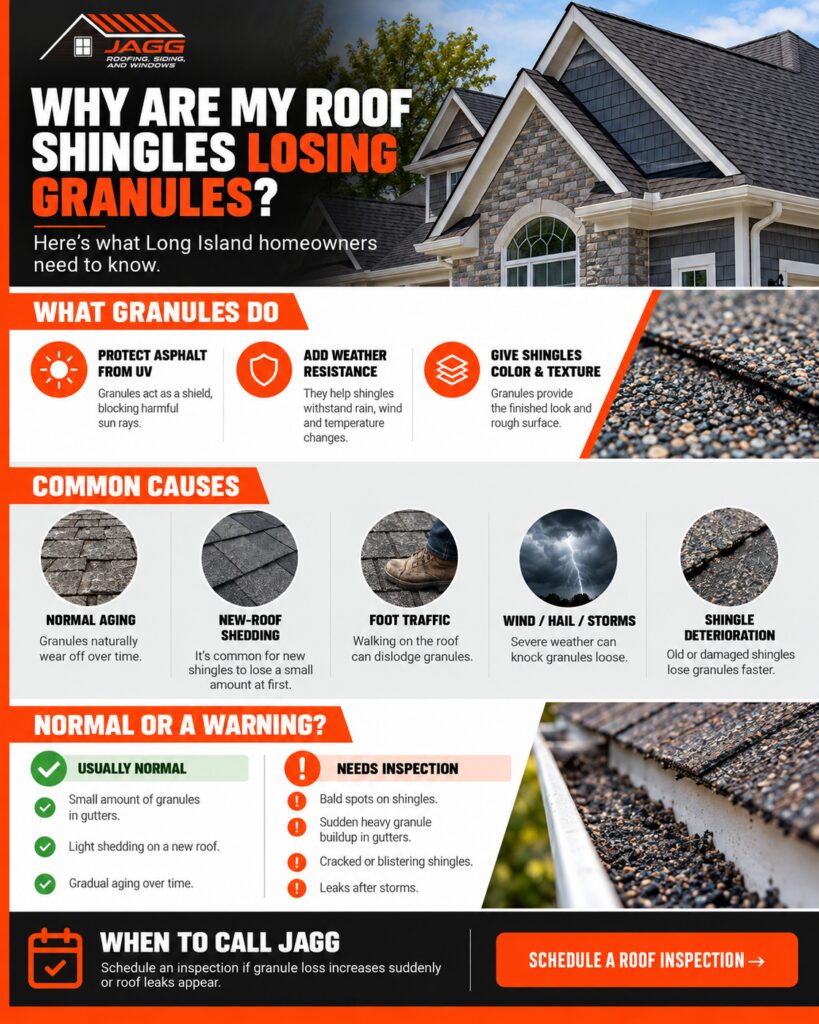
Granules can loosen for several reasons, and not every cause points to immediate roof failure. Normal aging is one of the most common. Years of sun exposure, rainfall, temperature changes, and weather extremes gradually wear the roof surface.
Foot traffic can also knock granules loose. Walking repeatedly on asphalt shingles, particularly when surface temperatures are high,can disturb the protective layer. Installation techniques may contribute as well if shingles are handled aggressively during installation or roof maintenance.
Other potential causes include hail damage, wind damage, manufacturing defects, batch problems, blistering shingles, cracked shingles, and deterioration of the asphalt holding the granules in place.
If granule loss is concentrated around an active leak or damaged section, a professional roof repair inspection from JAGG can help determine whether the problem is isolated or part of broader shingle wear.
Normal Shedding vs. Excessive Granule Loss
Seeing a modest amount of loose material does not automatically mean your roof needs replacement. New asphalt shingles can shed some excess granules left from manufacturing, transportation, and installation. Over time, older roofs also lose granules naturally as their surfaces weather.
What matters is the pattern and amount of loss.
What You Notice | What It May Mean |
|---|---|
Small amount of granules after installation | Initial shedding may be occurring |
Light gutter accumulation on an older roof | Normal aging may be contributing |
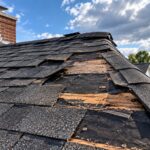
Bald spots exposing dark asphalt | More advanced granular loss |
Sudden heavy gutter accumulation | Storm impact or accelerated deterioration |
Circular or random damaged areas | Possible hail impact |
Cracked or blistering shingles | Roofing material deterioration |
Granule loss plus interior leaks | Professional evaluation is recommended |
The concern increases when you can visibly see patches where the protective surface has disappeared. Once enough granules are missing, more of the underlying asphalt is exposed directly to UV radiation and weather.
How Long Island Weather Accelerates Granule Loss
Long Island roofing systems experience a wide range of conditions over the course of a year. Summer sun heats the roof surface, winter brings freezing temperatures, and storms expose shingles to heavy rainfall and strong winds.
That repeated expansion, contraction, moisture exposure, and UV damage gradually contributes to shingle wear.
Severe thunderstorms add another layer of risk. In August 2026, for example, the National Weather Service documented storms across western Suffolk County with gusts around 40 mph and pea-size hail affecting communities including Centereach, Medford, Ronkonkoma, Holbrook, Sayville, and surrounding areas.
One storm does not automatically mean a roof is damaged, but a noticeable change in gutter accumulation or roof appearance afterward is worth investigating.
Hail, Wind and Storm Damage
Hail can displace granules when it strikes asphalt roofing. The Insurance Institute for Business & Home Safety roof research evaluates granule loss alongside dents, cracks, and ruptures when studying hail impacts on asphalt shingles.
Storm impact typically looks different from uniform age-related wear. Hail damage may appear as random impact areas where granules have been displaced, sometimes accompanied by bruising or damage to the asphalt underneath. Wind can also lift or crack shingles and loosen fragments along vulnerable roof sections.
This is why walking onto the roof with a wire brush or attempting to scrub questionable marks is a bad way to diagnose the problem. Additional foot traffic can create mechanical granule loss and make it harder to separate storm damage from damage caused during the inspection itself.
When Should You Be Concerned About Granule Loss?
A few granules at the bottom of a gutter are much different from sections of roofing where the asphalt underneath is plainly visible.
You should consider scheduling a roof inspection when granule accumulation suddenly increases, bald spots appear across multiple shingles, shingles begin cracking or blistering, or the roof develops leaks after a storm event.
Age matters as well. An older asphalt shingle roof showing widespread granular loss may simply be approaching the point where continued repairs provide diminishing returns. Manufacturer-rated lifespans are useful references, but actual roof condition depends on installation quality, attic airflow, sun exposure, roof pitch, maintenance, and weather history.
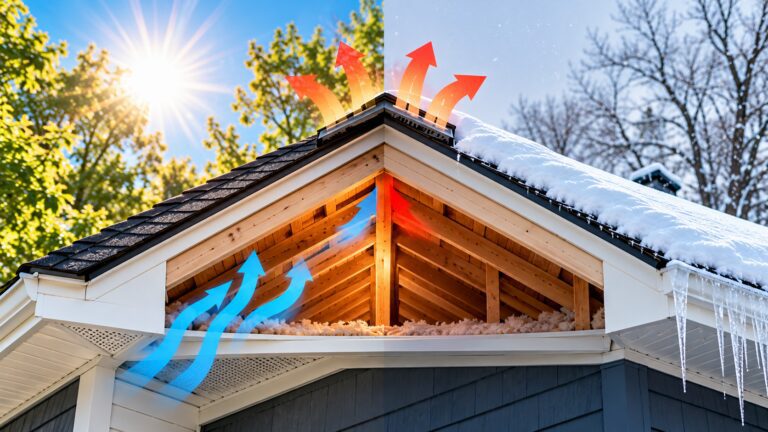
Attic ventilation can also influence the overall roofing system. Ventilation issues and excessive attic heat may increase stress on roofing materials even if they are not the direct cause of every missing granule.
A roofing professional should look at the entire roof’s condition rather than making a replacement recommendation based only on what appears in one gutter.
Can Granule Loss Be Repaired or Does the Roof Need Replacement?
That depends on how much of the roof is affected.
Localized damage may sometimes be addressed through shingle replacement or targeted roof repair. If a storm damaged only a limited section and the surrounding shingles remain in good condition, replacing the entire roofing system may not be necessary.
Widespread bald spots, recurring roof leaks, brittle or cracked shingles, extensive storm damage, and heavy granular loss across multiple roof slopes can point toward a larger problem. At that stage, roof replacement may be the more practical long-term solution.
Trying to glue loose granules back onto aging shingles with roofing cement is not a meaningful way to restore the original protective surface. The condition of the fiberglass mat, asphalt, seals, flashing, decking, and complete roof system should be considered together.
If you’re seeing unusual granules in gutters, bald spots, shingle fragments, or signs of water damage, JAGG Roofing, Siding & Windows can evaluate the roof before the problem becomes more difficult to address. Homeowners throughout Nassau and Suffolk County can schedule a professional roof evaluation to determine whether the roof needs maintenance, targeted repair, or replacement planning.
Jacob Giannelli is the founder of JAGG Roofing, Siding & Windows, serving Nassau and Suffolk County homeowners across Long Island. JAGG is an Owens Corning Preferred Contractor and BBB Accredited Business with a 5.0-star Google rating.