Get a free estimate.
Nassau & Suffolk County.
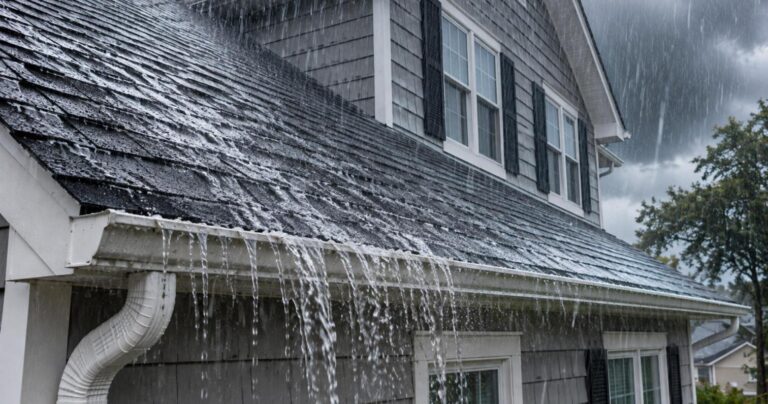
Cold weather can make existing roof damage worse, especially when a roofing system already has cracked shingles, loose flashing, small leaks, or weak roof seals. On Long Island, repeated temperature fluctuations, freezing rain, wind, snow, and winter storms can turn a minor roofing problem into water infiltration or interior damage. The biggest concern is that winter damage often develops slowly. Homeowners may not notice a problem until water stains appear on a ceiling or moisture reaches the attic.
The Short Answer
Yes. Cold weather does not always create the original roof damage, but it can make weak areas deteriorate faster. Water enters small cracks or gaps, freezes as temperatures fall, and expands inside the damaged area. When temperatures rise, the ice melts and the cycle starts again. These freeze-thaw cycles can widen openings around shingles, roof penetrations, metal flashing, and other roofing materials. Over time, a small defect can become a roof leak that requires professional roof repair.
How Do Freeze-Thaw Cycles Affect a Roof?
Freeze-thaw cycles happen when daytime temperatures rise above freezing and nighttime temperatures fall below it. Moisture that has entered a crack can repeatedly freeze, expand, melt, and move deeper into the roofing assembly. The Department of Energy explains that these winter conditions can also contribute to ice dam formation. Existing storm damage, loose seals, or openings around the roof deck can become more serious as repeated freezing places additional stress on vulnerable materials.
| Roof Component | How Cold Weather Makes It Worse | Warning Sign |
|---|---|---|
| Asphalt shingles | Less flexible and more likely to crack or break | Cracked, curled, or missing shingles |
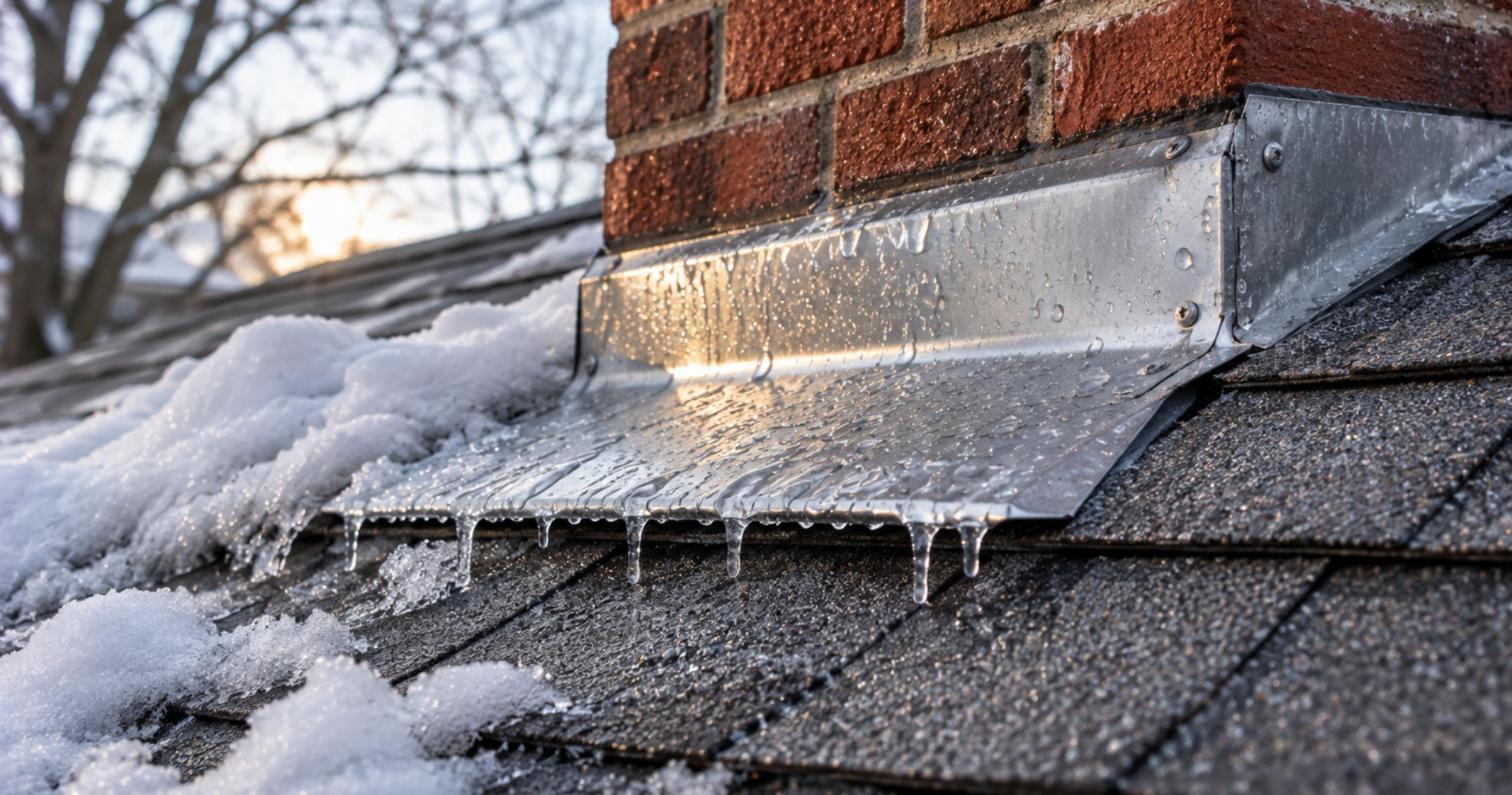
| Flashing and seals | Freeze-thaw cycles widen gaps and loosen sealant | Stains near chimneys, walls, or skylights |
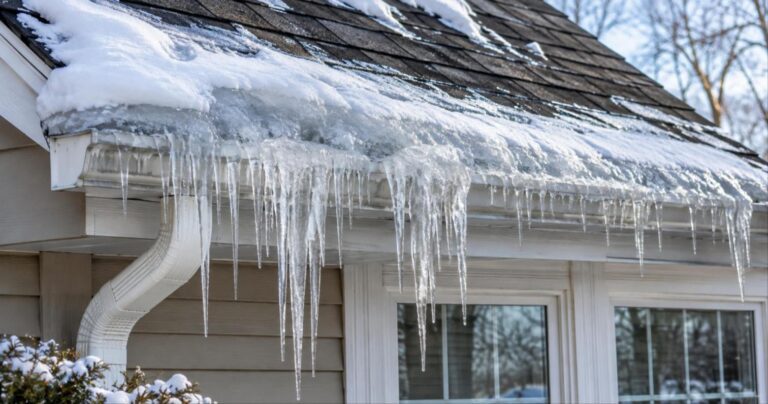
| Eaves and gutters | Ice dams trap melting snow behind a frozen edge | Icicles, ice ridges, overflowing gutters |
| Roof penetrations | Water freezes inside small openings and expands them | Damp attic insulation near pipes and vents |
| Flat and metal roofs | Seams, fasteners, and drainage points are stressed | Ponding water, loose fasteners, seam gaps |
Why Do Asphalt Shingles Become More Vulnerable in Winter?
Asphalt shingles become less flexible as temperatures drop. Older shingles that have already experienced years of UV exposure and weathering may be especially vulnerable to cracking or breaking. Technical guidance on cold-weather asphalt shingles notes that shingles can become brittle in very cold conditions. A shingle roof with previous wind damage, lifted edges, or broken shingles may therefore be more likely to develop leaks during Long Island’s colder months.
Can Ice Dams Damage an Already Weak Roof?
Ice dams can make existing roofing problems much worse. They develop when snow melts on warmer parts of the roof and refreezes near the colder eaves. This creates a ridge of ice that prevents additional water from draining normally. Water can then back up beneath asphalt shingles and reach the roof deck. If the roof already has damaged shingles, weak roof seals, leaky flashing, or worn roofing materials, an ice dam creates another path for moisture to enter the home.
How Attic Ventilation Affects Ice Dams
Poor attic ventilation and uneven insulation can contribute to temperature differences across the roof. Heat escaping from the living area warms parts of the roof deck and melts snow above them. That water reaches colder eaves and freezes again. Proper attic ventilation, insulation, and air sealing help keep roof temperatures more consistent. They cannot repair existing roof damage, but they can reduce conditions that encourage ice damming and help protect the roofing system during periods of snow, ice, and fluctuating temperatures.
Can Cold Weather Damage a Roof Even Without Snow?
Yes. Snow is not required for cold weather to worsen roofing problems. Rapid temperature fluctuations can affect shingles, sealants, flashing, and other roofing elements even during a dry winter period. Strong winds can lift loose shingles, while wind-driven rain can enter openings before temperatures fall again. Flat roofs and metal roofs can also develop problems around seams, fasteners, drainage points, and flashing. Existing weaknesses are usually the deciding factor, which is why roof inspection before winter can be valuable.
What Signs Show Existing Roof Damage Is Getting Worse?
Homeowners should watch for new water stains, missing shingles, loose roofing materials, gutter debris, sagging areas, or moisture inside the attic. Changes that appear after winter storms are especially important. A roof leak may also show up as damp insulation, peeling paint, mold growth, or dark marks on the roof deck. Some roofing damage is hidden from ground level, so the absence of obvious exterior damage does not always mean the roof is in good condition.
Broken Shingles, Nail Pops, and Loose Roofing Materials
Broken shingles and nail pops can create small entry points for water. Wind, cold temperatures, and repeated expansion and contraction may make these weak areas more noticeable during winter. Tree limbs can also scrape or strike roofing materials during storms. Homeowners should look for missing shingles from the ground and check roofing gutters for unusual amounts of shingle granules or debris. These warning signs do not always mean roof replacement is necessary, but they should be evaluated before winter damage spreads.
Leaky Flashing and Interior Water Stains
Leaky flashing is another common source of winter water infiltration. Metal flashing protects areas around chimneys, walls, skylights, and roof penetrations. If flashing becomes loose or roof seals fail, melting ice or wind-driven rain can reach the roofing system below. Interior water stains may appear several feet away from the actual opening because moisture can travel along rafters or the roof deck. An attic inspection often helps a roofing professional trace where the water is entering.
What Steps Should Homeowners Take to Prepare Their Roof for Winter?
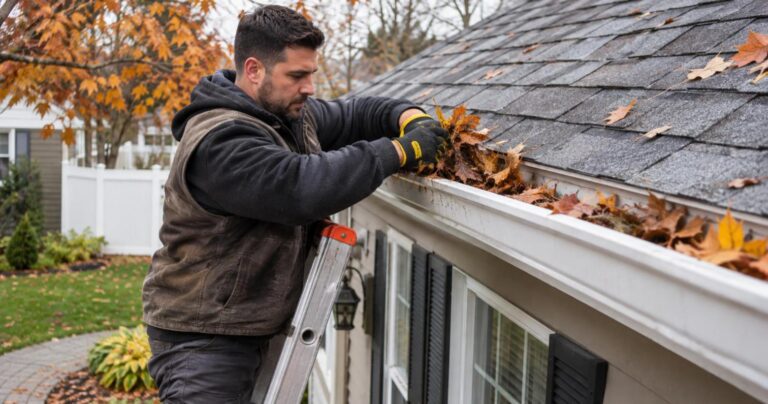
A winter maintenance schedule should include checking shingles, flashing, gutters, roof penetrations, and nearby tree limbs. Gutter cleaning is important because blocked roofing gutters can prevent melting snow and rain from draining properly. Homeowners should also look for ventilation issues and signs of previous storm damage. Gutter guards may reduce debris buildup, but they still require inspection. Addressing small problems before colder weather arrives can reduce the chance of emergency roof work during a winter storm.
How Can I Tell If My Roof Is in Good Condition?
Start with a visual inspection from the ground and inside the attic. Look for missing shingles, exposed areas, water stains, wet insulation, daylight entering through the roof deck, mold growth, or signs of water infiltration. Also consider the roof’s age and repair history. Different roof types, including asphalt shingle, metal roofing, clay and tile roofs, and flat roofs, develop different warning signs. A professional evaluation can identify problems that may not be visible without closer inspection.
Should I Walk on My Roof to Check Its Condition?
Walking on a roof is not recommended for most homeowners, especially during winter. Frost, ice, moisture, or cold roofing materials can create slippery surfaces, and brittle asphalt material may be damaged by unnecessary foot traffic. Professional roofers use safety equipment such as safety harnesses and non-slip boots when conditions require roof access. Homeowners can safely check many warning signs from the ground, through windows, or from the attic and leave direct roof inspection to trained professionals.
Can Storm Damage Roof Repair Be Done in Winter?
Storm damage roof repair can often be completed during winter when weather conditions and roofing materials allow safe work. The exact repair method depends on temperature, roof type, moisture, and the damaged area. Some asphalt shingles may require special handling or manual sealing during cold installations. Emergency repairs may also be used to stop active water infiltration until permanent work can be completed. The priority is protecting the home without creating additional damage or unsafe working conditions.
Should a Roof Be Replaced if Only a Few Shingles Are Damaged?
A few damaged shingles do not automatically mean the entire roof needs replacement. If the surrounding roofing system remains in good condition, targeted roof repairs may be enough. Roof replacement becomes more likely when damage is widespread, leaks occur in several areas, the roof deck has deteriorated, or the existing roof is nearing the end of its service life. A roofing professional should consider the roof’s age, material condition, previous storm damage, and current leaks before recommending replacement. Homeowners weighing that decision can learn more about roof replacement in Suffolk County.
When Should a Long Island Homeowner Call a Roofing Professional?
Schedule a professional roof inspection when you notice leaking, missing shingles, water stains, damaged flashing, repeated ice dams, or changes after a winter storm. Waiting can allow water to reach insulation, decking, ceilings, and walls, increasing the risk of mold growth and more extensive repairs. JAGG Roofing, Siding & Windows provides roof repair services on Long Island for homeowners dealing with storm damage, winter leaks, and other roofing problems. Early evaluation can help determine whether a repair or roof replacement is appropriate.
Cold Weather and Roof Damage: Quick Answers
Can cold weather really make roof damage worse?
Yes. Water enters small cracks, freezes, and expands. When temperatures rise it melts and the cycle repeats, widening openings around shingles, flashing, and roof penetrations.
Do I need snow for winter roof damage to happen?
No. Rapid temperature swings, strong winds, and wind-driven rain can worsen existing weak spots even during a dry winter.
Is it safe to check my own roof in winter?
Walking on a roof is not recommended. Frost and ice make surfaces slippery, and brittle shingles can be damaged by foot traffic. Check from the ground, through windows, or from the attic.
Can storm damage be repaired in winter?
Often yes, depending on temperature, roof type, and moisture. Emergency repairs can stop active leaks until permanent work can be completed.
Jacob Giannelli is the founder of JAGG Roofing, Siding & Windows, serving Nassau and Suffolk County homeowners across Long Island. JAGG is an Owens Corning Preferred Contractor and BBB Accredited Business with a 5.0-star Google rating.