Proudly Serving Long Island NY
Storm Damage Roof Repair Long Island
JAGG Roofing, Siding and Windows produly serves homeowners and businesses across Suffolk and Nassau County with roofing, siding and windows services.
Get a quick free estimate
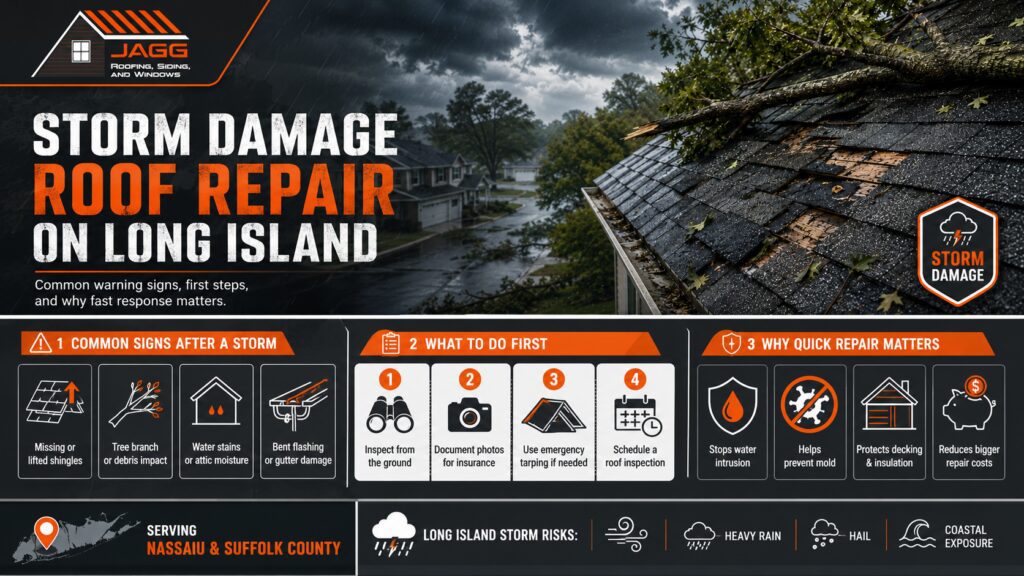
Storm damage can affect any roof on Long Island, especially during severe weather, hurricane season, coastal storms, and extreme weather conditions. A roof may look fine from the ground, but wind, hail, and heavy rain can loosen roof shingles, damage flashing, and create hidden water intrusion. Homes in Nassau County and Suffolk County also deal with salt air, falling branches, and fast weather changes. When roof repair is delayed, small roof leaks can turn into water stains, mold or mildew growth, structural damage, and larger property damage.
Local. Reliable. Proven by Long Island Homeowners.
EXCELLENT Based on 9 reviews
 Posted on Google
 Bernard CollettiCan't say enough about this company. From beginning to end they assisted me with my remodeling. They were extremely transparent with pricing and showed me every detail of what they were doing as they were doing it. They gave me options and didn't force me into making a decision. They came with an elite team and got right down to business I was really impressed on how clean they were and how proficient they were in the details. I would recommend them to anybody looking to renovate.Posted on Google
 Humberto KibelI recently had the pleasure of working with this roofing and window company, and I couldn’t be more impressed with the entire experience. From the initial consultation to the final installation, their professionalism, attention to detail, and commitment to quality truly stood out. The team was punctual, respectful, and extremely knowledgeable. They took the time to explain all my options clearly, helping me choose the best materials for both my roof and windows without any pressure. What really set them apart was their communication. They kept me informed throughout the entire process, answered all my questions promptly, and made sure I was completely satisfied every step of the way. My home looks amazing again! Thanks Tom for making it an easy choice to go with your team.Posted on Google
 Kelly Gelleroutstanding work. They were extremely attentive and on time and the roof came out amazingPosted on Google
 Michael GellerFantastic work done on my roof. Looks amazing and could not be happier!Posted on Google
 Michael FriedmannI highly recommend Jagg Roofing and Siding to anyone looking for top-quality work and a smooth, stress-free experience. From the initial consultation to the final walkthrough, everything was handled with professionalism and attention to detail. Tom, the project planner, was exceptional throughout the entire process. He took the time to explain every step, made sure all my questions were answered, and kept everything organized and on schedule. His communication and expertise really stood out, and you can tell he genuinely cares about delivering the best results. The crew did an outstanding jobefficient, clean, and clearly skilled at what they do. The finished work looks amazing, and the quality is something you can see right away. If you want a company that’s reliable, honest, and delivers excellent results, Jagg Roofing and Siding is the way to go. I wouldn’t hesitate to use them again.Posted on Google
 D BJAGG was an absolute pleasure to work with. I actually found them on Instagram and decided to reach out for a quote. After doing my due diligence and getting a second estimate from another company, it became clear that JAGG was the right choice. From our first meeting, their professionalism and experience really stood out. Jacob and his team did a fantastic job from start to finish, and I couldn’t be happier with the results. I highly recommend JAGG to anyone looking for quality work and a professional, reliable team.Posted on Google
 James MilesJAGG Roofing, Siding and Windows did an outstanding job from start to finish. Jacob was very easy to work with. Professional, responsive, and genuinely helpful throughout the entire process. He took the time to explain everything clearly, answered all of my questions, and made sure I felt comfortable every step of the way. The quality of the work speaks for itself. The crew was punctual, respectful, and kept the area clean. Everything was completed on time and exceeded my expectations. If you’re looking for a reliable and honest company, I highly recommend JAGG Roofing, Siding and Windows. Ask for Jacob, you’ll be in good hands!
Our Services
Complete Roofing Solutions.
Roof Repair
Fast, reliable roof repairs for leaks, storm damage, missing shingles, and other roofing problems before they become bigger and more expensive.
Roof Replacement
Complete roof replacements designed to improve protection, curb appeal, energy efficiency, and long-term value for your home or commercial property.
Emergency Roof Repair
What Storm Damage Can Do to a Roof
Storm damage roofing problems often start when wind lifts shingles, rain pushes under roof components, or hail strikes weak areas. Broken shingles, Damaged Flashing, loose ridge areas, and cracked seal points can let water enter the home. The National Weather Service New York office explains that severe thunderstorms can produce damaging winds, large hail, tornadoes, and flash flooding. On Long Island NY, that means one strong storm can create roof damage even when the roof was working well before. Early roofing repairs help protect ceilings, insulation, and framing.
Common Signs of Storm Roof Damage
Homeowners should look for water stains, missing shingles, sagging or bowing roof sections, loose flashing, gutter dents, and wet attic areas after a storm. Roof leaks may not appear right away because water can travel along rafters before dripping into a room. Structural concerns can also show up as soft decking, ceiling cracks, or areas that feel uneven. If these signs are ignored, moisture can spread and weaken the home. A roof inspection helps confirm whether the problem needs storm damage repair, roof leak repair, Shingle replacement, or full Roof Replacement.
Why Delaying Roof Replacement Can Cost More
Small leaks can lead to damaged plywood, mold, insulation issues, and structural problems. Addressing them early with a full roof replacement can save thousands in future repairs.
Signs It May Be Time to Replace Your Roof
Serving Suffolk County and Nassau County Property Owners
From roof repairs and full roof replacements to siding upgrades and new window installations, JAGG Roofing, Siding and Windows proudly serves homeowners, business owners, property managers, and commercial properties across Long Island. Browse your area below to explore the roofing, siding, and window services available near you. If you do not see your town listed, contact us to confirm nearby service availability.

Suffolk County
We serve towns and hamlets across Suffolk County with reliable roofing, siding and window services built for Long Island changing weather conditions.
Nassau County
From established suburban neighborhoods to coastal communities, JAGG helps Nassau County residenets protext and imporve their properties.
Roof Leak Detection and Inspection
Roof leak detection should include both interior and exterior assessments. A roofing service may check attic inspections, moisture mapping, flashing and valley examinations, chimney and vent seal checks, and roof deck conditions. Some roof repair services may also use thermal imaging technology to find hidden moisture. This matters because the visible water stain is not always below the leak source. Water can travel along rafters or under roofing materials before dripping inside. A full roof inspection helps homeowners understand whether they need simple roofing repairs, flat roof repair, or roof replacement.
Problem Areas That Often Leak
Many roof leaks start where the roof has an opening, edge, or transition. Flashing around Chimneys, damaged chimney flashing, roof valley sections, ridge vents, vent boots, skylights, and roof penetrations are common weak spots. Flat roofing can also leak when water sits near seams or drains. GAF notes that damaged flashing can let moisture in around chimneys, skylights, vents, and other penetrations. If these areas are not repaired correctly, the leak can return during the next heavy rain.
Storm Damage Roof Repair Warning Signs
After a Long Island storm, roof damage is not always obvious from the ground. These signs can help homeowners know when to schedule an inspection.
| Storm Damage Sign | What It May Mean | Why It Matters | Recommended Next Step |
|---|---|---|---|
| Missing or Lifted Shingles | High winds may have loosened shingles, broken seal strips, or exposed the underlayment. | Open roof areas can allow water intrusion during the next rainstorm. | Schedule a roof inspection and repair damaged shingles quickly. |
| Water Stains or Attic Moisture | Rain may be entering through shingles, flashing, valleys, vents, or roof penetrations. | Moisture can spread into insulation, plywood, drywall, and interior ceilings. | Request roof leak repair and check the attic for hidden water damage. |
| Fallen Branches or Debris Impact | Tree limbs may have punctured shingles, damaged flashing, or weakened the roof deck. | Impact damage can create small openings that are easy to miss from the ground. | Document the damage with photos and schedule a storm damage assessment. |
| Dented Gutters or Damaged Flashing | Heavy rain, wind, hail, or debris may have affected drainage and roof edges. | Poor drainage can push water under shingles, behind fascia, or toward the foundation. | Inspect gutters, downspouts, drip edge, chimney flashing, and roof valleys. |
| Hail Marks or Granule Loss | Hail may have bruised shingles, loosened granules, or dented metal roof components. | Damaged shingles may age faster and lose weather protection over time. | Schedule a hail damage assessment before the next severe storm. |
| Open Roof Area or Active Leak | The storm may have created an urgent roof opening or active water entry point. | Water can quickly damage ceilings, insulation, walls, and personal belongings. | Use emergency roof tarping if needed, then plan permanent roof repair. |
Storm Damage Assessment
A storm damage assessment should include the roof surface, attic, gutter system, flashing, chimney areas, and interior ceilings. Roofing contractors look for broken shingles, lifted tabs, hail marks, damaged flashing, and signs of water intrusion. This process matters because insurance claim documentation often needs clear photos, written notes, and repair details. A complete assessment also helps separate old wear from new storm damage. That gives the homeowner a better plan for roof repair services, emergency roof repair, or long-term roofing solutions.
Emergency Roof Tarping and Water Damage Mitigation
Emergency roof tarping helps protect the home when the roof is open or leaking after a storm. It is a temporary step that slows water entry until permanent roof storm damage repair can be completed. The U.S. Army Corps of Engineers explains that Operation Blue Roof uses fiber-reinforced sheeting to cover damaged roofs after disasters until permanent repairs are arranged. This shows why temporary covering matters. It can reduce water damage mitigation needs, protect belongings, and prevent a small leak from becoming major structural damage.
Roof Leaks and Water Stains
Roof leaks are one of the most common storm damage repair problems. Water may enter through damaged shingles, roof valleys, chimney flashing, skylights, vents, flat roofs, or nail holes. Once water gets inside, it can create stains, peeling paint, damp insulation, and mold or mildew growth. The EPA explains that controlling moisture is the key to controlling mold. This is why Roof Leak Repair should happen quickly. The faster the leak is found, the easier it is to limit damage inside the home.
Flat Roofs, Gutters, and Chimney Damage
Flat roofs can be vulnerable after severe storms because water may collect around drains, seams, and low areas. If drainage is poor, standing water can stress roofing materials and cause leaks. Gutters can also fail when branches, debris, or heavy rain overload the system. Gutter repairs, gutter fix, gutter installation, gutter system restoration, and gutter and downspout repairs all help move water away from the home. Chimney repair may also be needed if a chimney cap, masonry, or flashing system shifts during a storm. These details protect the full roofing system.
Hail Damage Assessment
A hail damage assessment checks for bruised shingles, cracked granules, dented metal, damaged vents, and soft impact marks. Hail damage is not always easy to see from the ground, especially on darker roof shingles. If ignored, the damaged areas can age faster and lose weather protection. That can lead to roof leaks during the next heavy rain. The Insurance Institute for Business & Home Safety tests homes against realistic storm conditions, including wind-driven rain, hail, and high winds. This kind of research shows why even small impact damage should be inspected.
Roof Repair or Roof Replacement?
A roof repair may be enough when damage is limited to a few shingles, one flashing area, or a small leak. Roof replacement may be needed when the roof has widespread damage, repeated leaks, soft decking, old roofing materials, or structural roof repairs that affect the whole system. Home value can also be affected when the roof looks worn or keeps leaking. A roofing contractor should explain the shingle type, roof components, repair scope, and whether full roofing systems are needed. This helps the homeowner avoid paying for repairs that will not last.
What Happens if It Rains During Installation?
If it rains during a roof installation or storm restoration project, the crew should protect open areas before continuing. Responsible roofing contractors watch the forecast, stage materials carefully, and avoid exposing more of the roof than they can protect. Temporary coverings, water control materials, and safe work planning help reduce risk. Rain during installation matters because exposed decking can absorb moisture and create future problems. Homeowners should ask how the roofing company protects the home during weather delays, especially in Nassau & Suffolk County where storm patterns can change quickly.
Insurance Claim Documentation
Insurance claim support starts with clear records. Homeowners should take photos, save receipts, keep damaged materials when possible, and report the loss to the insurer quickly. The New York Department of Financial Services says homeowners should notify their insurance company or agent after a loss and follow up in writing. This matters because storm damage claims often depend on proof, timing, and accurate repair notes. Roofing Projects tied to insurance should include written estimates, inspection photos, and details about emergency service or temporary protection.
Choosing a Long Island Roofing Contractor
Choosing a roofing company after storm damage should be based on trust, safety, communication, and workmanship. Homeowners should ask about roof inspection, storm damage services, emergency service, Liability Insurance Protection, warranties, customer service, and whether the company handles roof repair, LI roof replacements, gutter system restoration, and chimney repair. GAF-certified contractors or experienced local crews should explain materials, scheduling, Workmanship Guarantee terms, and any Lifetime Warranty details in plain language. Good roofing solutions protect the home, support customer confidence, and help the property recover after severe weather.