Get a free estimate.
Nassau & Suffolk County.
A roof on Long Island can last many years, but the exact roof lifespan depends on the roofing materials, installation quality, attic ventilation, maintenance, and exposure to coastal weather. Salt air, high winds, heavy rain, UV exposure, freeze-thaw cycles, and storm activity can all shorten the life of a roofing system. Asphalt shingles, metal roofing, cedar shake, flat roofs, slate roofs, and composite shingles also age at different rates. JAGG Roofing, Siding, and Windows helps Long Island homeowners understand when roof repair is enough and when roof replacement is the safer long-term decision.
Why Long Island Roofs Age Differently
Long Island roofs age differently because the Island is surrounded by water and exposed to coastal storms. Homes near the South Shore, North Shore, and eastern Suffolk County may deal with salt-laden air, wind-driven rain, humidity, algae growth, and storm exposure. These harsh conditions can affect nail fasteners, flashing, shingle surfaces, gutters, and roof decking. A roof that might last longer in a calmer inland area may show granule loss, seal failure, or moisture intrusion sooner on Long Island. This is why local roof inspections matter.
Average Roof Lifespan by Material
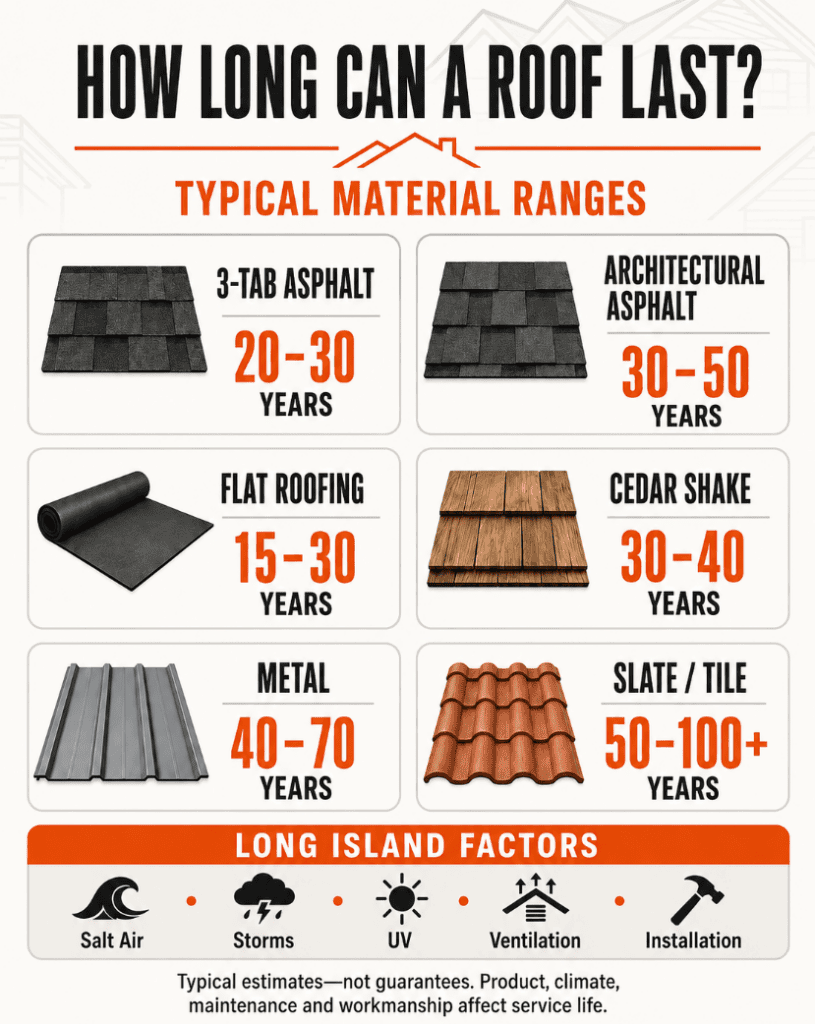
Roofing lifespan depends heavily on the material. Asphalt 3-tab shingles often have the shortest lifespan because they are thinner and less wind-resistant than newer architectural shingles. Architectural asphalt shingles usually last longer and are common on Long Island homes. Metal roofs, slate and tile, natural slate, clay tiles, and premium composite shingles may last longer when installed correctly. Flat roofs use different systems, such as modified bitumen or other low-slope roofing materials. The right material depends on the home, roof design, budget, maintenance plan, and coastal exposure.
Asphalt Shingles
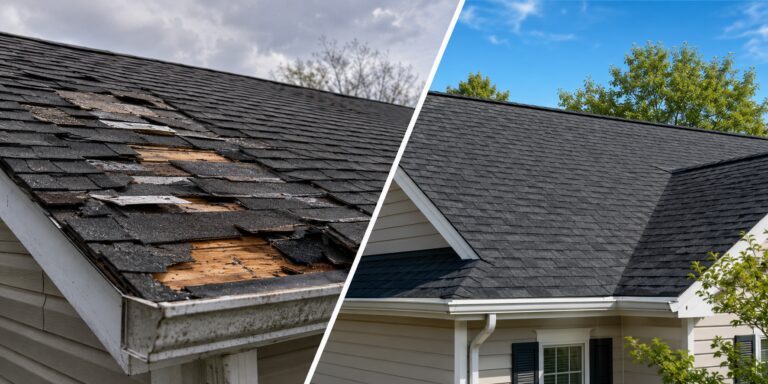
Asphalt shingles are the most common roofing material for Long Island residential roofing. Architectural shingles are thicker than older 3-tab shingles and often perform better against wind, rain, and normal wear. However, asphalt shingle systems still age from UV radiation, salt air, storm damage, and temperature extremes. Over time, homeowners may notice curling edges, missing shingles, granule loss, algae streaks, or water stains inside the home. If the shingles are near the end of their life and repairs are becoming frequent, a full roof replacement may be more practical than patching.
Metal Roofing
Metal roofing can be a strong option for certain Long Island homes because it sheds rain well and can handle many weather conditions. Standing seam metal and metal standing seam systems are often chosen for durability and clean design. However, coastal homeowners must think about salt air corrosion, fastener details, coatings, and installation quality. Metal roofs need the right materials and proper detailing near edges, penetrations, and flashing points. When installed correctly, they can offer long service life, but poor installation or incompatible materials can lead to leaks, rust, or premature wear.
Slate, Tile, Cedar, and Specialty Roofing
Slate roofs, tile roofing, cedar shake, wood shake roofs, solar shingles, and specialty roofing systems can last a long time when the structure, installation, and maintenance are right. Natural slate and clay tiles are heavy, so the roof structure must support them. Cedar shake can look beautiful but needs maintenance because moisture, moss growth, and salt air can shorten its useful life. Solar shingles and solar panels may add energy benefits, but they also require careful roof planning. Homeowners should review warranties, ventilation, flashing, and roof deck condition before choosing specialty roofing.
How Salt Air Affects Roof Lifespan
Salt air can speed up roof aging because salt in the air settles on roofing materials, metal flashing, vents, fasteners, and gutters. Over time, salt-laden air can contribute to corrosion, surface wear, and staining, especially near coastal areas. Asphalt shingles may also age faster when salt, wind, moisture, and UV exposure work together. Metal components are especially important because rusted flashing or weakened fasteners can allow water infiltration even if the main roof surface still looks acceptable. Regular maintenance helps remove debris and catch early corrosion.
Storm Exposure and High Winds
Storm exposure is one of the biggest factors in Long Island roof lifespan. Coastal storms, severe storms, nor’easters, and summer thunderstorms can lift shingles, loosen flashing, damage gutters, and push rain under weak areas. The National Weather Service explains that nor’easters are East Coast storms with winds that typically come from the northeast, and they are most frequent and strongest between September and April. After heavy rain or high winds, homeowners should check for missing shingles, lifted edges, granule piles, and ceiling stains.
Storm Damage Warning Signs
Storm damage is not always obvious from the front lawn. Some damage appears as small lifted shingles, cracked flashing, gutter dents, or loose ridge caps. Other damage shows up later as water damage inside the home. After major storm activity, watch for:
- Missing or lifted shingles
- Granule loss in gutters
- Bent or loose metal flashing
- Water stains on ceilings
- Shingle pieces in the yard
- Gutters pulling away from fascia
- Roof leaks during heavy rain
- Damaged ridge ventilation
- Soft or sagging roof areas
- Interior mold growth or musty odors
A roof inspection can confirm whether repair or replacement is needed.
UV Exposure, Heat, and Granule Loss
UV exposure and summer heat can slowly weaken asphalt shingles. Granules protect the asphalt layer from sunlight, so granule loss is one of the most important signs of roof aging. When shingles lose too many granules, they may dry out, crack, curl, or become more vulnerable to storm damage. Long Island summers also bring humidity and high roof surface temperatures, which can increase stress on the roofing system. If granules are collecting in gutters or shingles look thin and faded, the roof may be losing its protective surface.
Algae Growth, Moss, and Moisture
Algae growth is common on roofs in humid climates and shaded areas. Dark roof streaks are often linked to Gloeocapsa magma, a type of blue-green algae that can grow on shingles. Moss growth can be more damaging because it can hold moisture against the roof surface and lift shingle edges. On Long Island, tree cover, shade, humidity, and coastal moisture can all encourage organic growth. Algae-resistant shingles and algae-resistant granules may help reduce staining, but homeowners should also keep trees trimmed and gutters clear.
When Algae Is Cosmetic vs. Concerning
Some algae staining is mostly cosmetic, especially when the shingles are still flat and the roof is not leaking. Moss is more concerning because it holds moisture and can interfere with water flow. If moss is thick, spreading, or growing under shingle edges, it should be inspected. Homeowners should avoid aggressive pressure washing because it can remove granules and shorten roof life. A roofing contractor can identify whether staining is cosmetic, whether cleaning is safe, and whether the roof has hidden water damage, decking rot, or moisture intrusion.
Ice Dams and Freeze-Thaw Cycles
Ice dams can form when heat escapes into the attic, melts snow on the roof, and the water refreezes near the colder roof edge. This can block drainage and force water under shingles. ENERGY STAR explains that attic air sealing, combined with insulation, can help reduce dangerous ice dams in winter. Long Island freeze-thaw cycles can also widen small cracks in flashing, roofing materials, and roof edges. If ice dams happen often, the issue may involve attic ventilation, insulation, air sealing, gutter performance, or roof design.
Attic Ventilation and Ridge Ventilation
Attic ventilation helps control heat and moisture under the roof. Ridge ventilation, intake vents, and balanced airflow can reduce attic heat buildup in summer and help keep the roof deck colder in winter. Poor ventilation can trap moisture, raise energy costs, strain HVAC systems, and contribute to ice dam formation. Ventilation does not fix every roofing problem, but it supports the full roof system. During a roof inspection, the contractor should review intake, exhaust, insulation placement, and signs of trapped moisture in the attic.
Installation Quality and Building Codes
Installation quality plays a major role in how long a roof lasts. Even strong roofing materials can fail early if shingles are nailed incorrectly, flashing is poorly installed, ventilation is ignored, or the roof deck is not repaired before installation. Long Island homes may also need work that follows local building codes in Nassau County, Suffolk County, or the specific town or village. A quality roof replacement should include proper underlayment, flashing, starter shingles, ridge details, ventilation planning, and cleanup. The roof system should work as one connected assembly.
Roof Maintenance That Extends Lifespan
Roof maintenance helps homeowners catch small problems before they become leaks. Long Island roofs should be reviewed after major storm seasons and before winter weather. Gutter cleaning is especially important because clogged gutters can force water back toward the roof edge and fascia. Homeowners should also watch for overhanging branches, moss growth, granule loss, damaged flashing, and loose shingles. Maintenance does not make an old roof new again, but it can extend service life and help prevent avoidable water damage.
Simple Maintenance Checklist
A simple roof maintenance checklist can help homeowners know what to watch for each season. Some items can be checked from the ground, while roof work should be handled safely by a professional. Helpful steps include:
- Clean gutters and downspouts
- Check for missing shingles
- Look for granules near downspouts
- Trim branches near the roof
- Watch for algae or moss growth
- Check attic stains after heavy rain
- Review flashing around chimneys and skylights
- Look for sagging or soft roof areas
- Schedule a roof inspection after severe storms
- Review attic ventilation before winter
These steps help protect the roof system year-round.
When Age Alone Justifies Replacement
Age alone can justify roof replacement when the roof is near the end of its expected lifespan and showing multiple signs of wear. A roof may still have a few years left, but if shingles are brittle, losing granules, lifting, or leaking, waiting can increase the risk of structural damage. Insurance companies may also view older roofs differently when reviewing homeowner’s insurance or storm damage claims. Homeowners should not replace a roof based only on age, but age plus visible wear is a strong signal that replacement should be planned.
Signs Your Long Island Home Needs a New Roof
A Long Island home may need a new roof when repairs no longer solve the main problem. Repeated leaks, curling shingles, widespread granule loss, damaged decking, algae-covered aging shingles, storm damage, and poor ventilation can all point toward replacement. Water damage inside the home is especially important because it may mean the roof system is failing in more than one area. If the roof has structural deformities, soft spots, or decking rot, the problem should be reviewed quickly. A new roof can protect the home before damage spreads.
Repair May Be Enough When
Roof repair may be enough when the damage is limited and the rest of the roof is still in good condition. This may apply when a few shingles are missing after a storm, one flashing area is leaking, or a small section needs correction. Repair may make sense when:
- The roof is not near the end of its lifespan
- Damage is limited to one area
- There is no widespread granule loss
- Roof decking is solid
- Ventilation is working properly
- Matching materials are available
- Leaks are isolated and recent
- The roof has been maintained well
A professional inspection can confirm the best option.
Replacement Is Usually Better When
Roof replacement is usually better when damage is widespread, the roof is old, or repairs are becoming frequent. Patching an aging roof can become expensive if new leaks keep appearing. Replacement may be the better choice when:
- Shingles are curling or brittle
- Granule loss is widespread
- Multiple leaks are present
- Decking rot is found
- Storm damage affects large areas
- The roof has poor ventilation
- Ice dams happen often
- Water damage has spread indoors
- The roof warranty is no longer useful
- You are planning solar panels or a major exterior project
Replacement gives the home a fresh roof system instead of temporary fixes.
What Is a Full Roof Replacement?
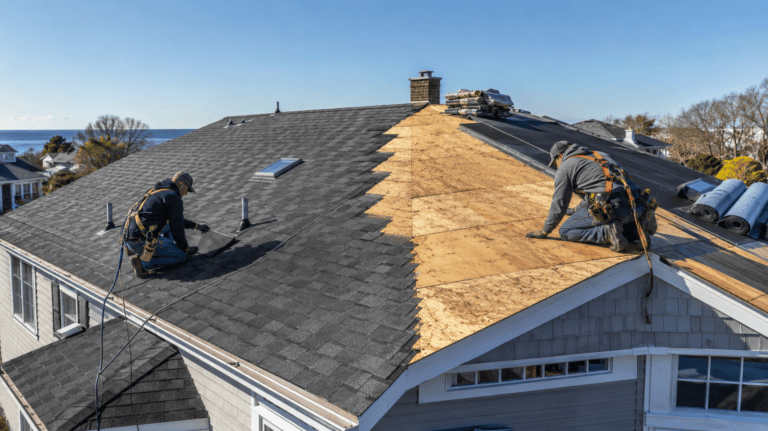
A full roof replacement means removing the old roofing materials and installing a new roof system. This may include removing asphalt shingles, inspecting the decking, replacing damaged wood, installing underlayment, adding flashing, setting starter strips, installing new shingles, and improving ridge ventilation when needed. The process may also involve drip edge, pipe boots, chimney flashing, and gutter coordination. A full replacement is different from layering new shingles over old roofing because it allows the contractor to inspect the roof deck and fix hidden water damage.
How Long Does Roof Replacement Take?
A roof replacement on Long Island often takes a few days for many typical homes, but timing depends on house size, roof design, material type, weather, repairs, and crew scheduling. A simple asphalt shingle roof may move faster than a large or steep roof with skylights, chimneys, dormers, or specialty roofing. Flat roofs, metal roofs, cedar shake, and slate may take longer because the materials and installation process differ. Storm seasons can also affect scheduling. A clear project plan should explain timing, access, material delivery, cleanup, and weather delays.
Permits, Insurance Claims, and Warranties
Roof replacement may require permits depending on the town, village, project scope, and local building rules. Homeowners in Nassau County and Suffolk County should confirm requirements before work begins. Storm damage may also involve insurance claims, especially after severe storms, high winds, or hail. A contractor can document visible damage, but the insurance company decides coverage. Homeowners should also ask about roof warranty details, including material warranty, workmanship coverage, and what maintenance is required. A good warranty is only useful when the roof is installed correctly and maintained properly.
Replacement Cost Value and Insurance
Insurance policies may treat roof claims differently depending on age, condition, and coverage type. Replacement cost value may cover the cost to replace damaged roofing materials, while other policies may factor depreciation into the payout. Homeowner’s insurance rules vary, so homeowners should review their policy and speak with their insurance representative. Photos, inspection notes, and storm dates can help support a claim. If the roof already had old damage before the storm, the claim may become more complicated. This is another reason regular roof inspections are helpful.
Best Roofing Material for Long Island Homes
The best roofing material for Long Island homes depends on budget, style, roof design, salt air exposure, storm risk, and maintenance expectations. Architectural shingles are popular because they balance cost, appearance, and performance. Impact-resistant shingles may be worth considering in areas with storm exposure. Metal roofing can work well when corrosion-resistant materials and proper details are used. Slate, tile, cedar, and composite shingles may fit certain homes but require careful planning. The right choice should account for roof pitch, ventilation, structure, warranty, and long-term maintenance.
Solar Shingles, Solar Panels, and Roof Timing
Solar shingles, solar panels, and solar technology should be planned around roof age. Installing solar on a roof near the end of its lifespan can create extra work later because panels may need to be removed before replacement. If a homeowner is considering solar power output guarantees, solar incentives, net metering, or solar energy upgrades, the roof should be inspected first. A new roof can create a stronger base for solar installation. Homeowners should also review roof warranty terms, installation process details, and whether specialty products fit the home’s roof design.
Schedule a Roof Inspection on Long Island
A roof inspection helps determine whether your Long Island roof needs repair, maintenance, or replacement. JAGG Roofing, Siding, and Windows provides roof replacement, roof repair, storm damage support, siding, and windows across Long Island, including Nassau County and Suffolk County. If you see granule loss, water damage, algae growth, missing shingles, storm damage, or signs of roof aging, request a review through JAGG Roofing, Siding, and Windows. A local inspection can help protect the home before salt air, storm exposure, and seasonal weather create larger problems.
Jacob Giannelli is the founder of JAGG Roofing, Siding & Windows, serving Nassau and Suffolk County homeowners across Long Island. JAGG is an Owens Corning Preferred Contractor and BBB Accredited Business with a 5.0-star Google rating.