Get a free estimate.
Nassau & Suffolk County.
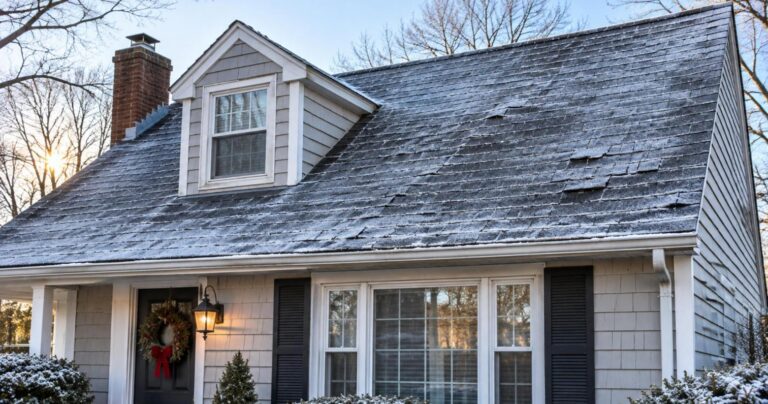
An ice dam is a ridge of ice that forms near the roof edge and prevents melting snow from draining normally. This problem is common when snow covers a roof while heat escaping from the home warms the upper roof deck. Meltwater travels downward, reaches the colder roof eaves, and freezes again. As the cycle continues, water can collect behind the ice and move beneath roof shingles. Long Island homeowners should take ice dam prevention seriously because winter water damage can affect insulation, ceilings, walls, and the roof deck before the problem becomes visible indoors.
What Exactly Is an Ice Dam?
An ice dam develops when different areas of a roof stay at different temperatures. The upper section becomes warm enough to melt snow, while the roof edge remains below freezing. Meltwater runs toward the eaves and freezes, creating an expanding barrier of ice. The U.S. Department of Energy explains that freeze-thaw cycles can cause water to back up beneath shingles and roof underlayment. Once water reaches the roof deck, homeowners may eventually notice water stains, wet insulation, mold growth, or damaged interior finishes.
Why Do Ice Dams Form on Long Island Roofs?
Long Island winters can bring snow, freezing rain, strong winds, and rapid temperature changes. The National Weather Service notes that New York winter weather can shift among snow, rain, sleet, freezing rain, extreme cold, and strong winds. These melting-freezing cycles create favorable ice conditions when snow accumulation remains on a roof. Wind-driven rain and coastal weather can add additional moisture. However, outdoor weather is only part of the problem. Most recurring ice dams are also connected to heat loss from the home into the attic and roof structure.
Heat Escaping Into the Attic Warms the Roof
Heat escaping from the living space can warm sections of the roof deck even when outdoor temperatures remain below freezing. Air leaks around attic bypasses, recessed lighting, plumbing openings, heating ducts, HVAC ducts, and other penetrations can allow warm indoor air to enter the attic. The snow above these warmer areas begins melting while the colder roof eaves remain frozen. Improving the air barrier and correcting major leaks can reduce this uneven roof temperature. These improvements may also increase energy efficiency because less heated air escapes from the home during winter.
How Attic Insulation Helps Prevent Ice Dams
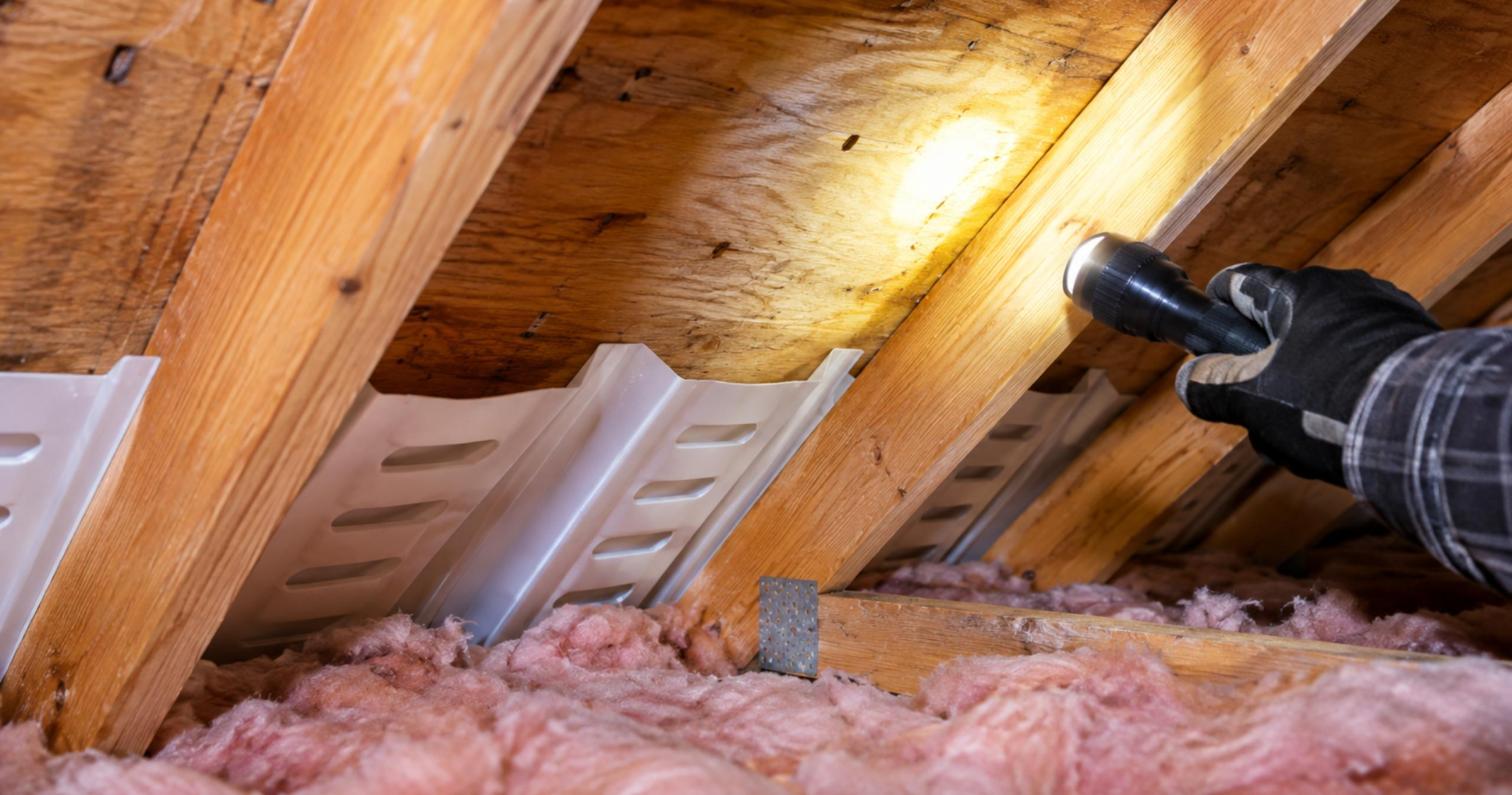
Proper attic insulation limits heat transfer from heated rooms into the attic and roof deck. When insulation is missing, compressed, uneven, or insufficient near exterior walls, warm spots can develop beneath the roof. Those warm areas encourage snow to melt even during freezing weather. Insulation upgrades can help keep roof temperatures more consistent while also reducing household heat loss. A Home Energy Assessment or professional inspection may identify thin insulation, attic bypasses, and other areas of thermal failure that homeowners cannot easily recognize from a simple visual inspection.
Why Attic Ventilation Is Also Important
Attic ventilation works with insulation and air sealing to manage heat and moisture. Soffit vents bring outdoor air into a vented attic while higher roof vents allow air to leave. When soffit vents are blocked by insulation or debris, the ventilation system may not function as intended. Excess heat can remain beneath the roof while attic condensation creates additional moisture concerns. Over time, damp conditions can contribute to mold growth and deterioration of the roof deck. Proper ventilation does not replace insulation, but both systems need to work together for effective ice dam prevention.
| Common Cause | Why It Leads to Ice Dams | Where to Start |
|---|---|---|
| Attic air leaks | Warm indoor air heats the roof deck and melts snow | Seal leaks around lighting, plumbing openings, and ducts |
| Thin or uneven insulation | Warm spots form beneath the roof | Add or correct attic insulation |
| Blocked soffit or roof vents | Excess heat and moisture stay under the roof | Keep vents open and clear |
| Clogged gutters and downspouts | Standing water freezes at the roof edge | Clean gutters before winter |
| Heavy snow buildup | More snow available to melt and refreeze | Monitor accumulation and use a roof rake from the ground |
Can Ice Dams Cause Roof Leaks?
Yes. Roof leaks are one of the main risks associated with an ice dam. As ice grows along the roof edge, additional snowmelt collects behind the frozen barrier. Water may then move underneath asphalt roof shingles and reach the underlayment or roof deck. Existing problems such as shingle cracking, damaged chimney flashing, loose roof penetrations, or deteriorated roofing materials can make water entry easier. Interior warning signs can include water stains, peeling paint, wet insulation, attic condensation, or mold growth. Severe winter water damage may require both roof repair and interior moisture remediation.
Use a Roof Rake to Control Snow Buildup
A roof rake can help reduce snow buildup near the lower portion of the roof before a large ice dam develops. Roof rakes are designed so homeowners can remove snow while remaining on the ground. This reduces the amount of snow available to melt and refreeze at the roof edge. Homeowners should avoid aggressively scraping roof shingles because sharp or excessive contact can damage roofing materials. Snow removal should also never involve climbing onto an icy roof without professional safety equipment. When conditions are unsafe or snow accumulation is heavy, professional crews are a safer option.
Keep Gutters and Down Spouts Clear
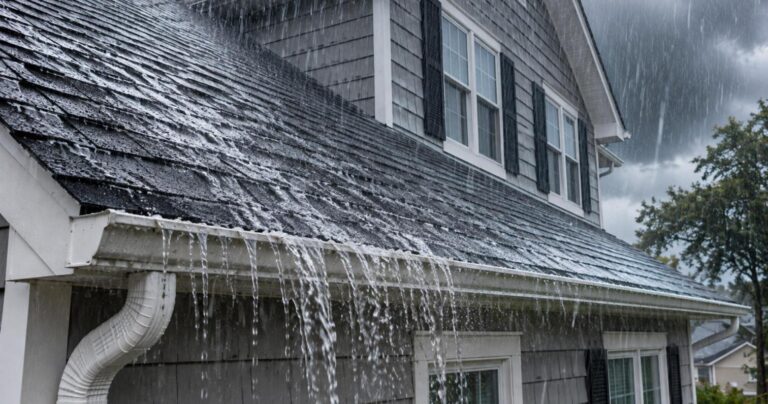
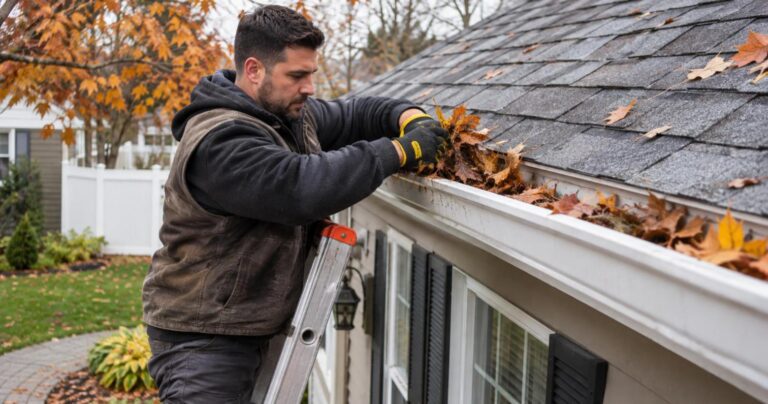
Gutter cleaning should be completed before winter because leaves and debris can restrict drainage. A blocked gutter system holds water near the roof edge, where freezing temperatures can turn standing water into additional ice. Down spouts should also move water away from the home without obstruction. Gutter guards or a gutter guard system can reduce debris, but they do not eliminate the need for inspection. In some conditions, ice can still form around gutter protection. Homeowners should check gutters, gutter brackets, and drainage pathways during fall so melting snow has a clear route away from the roof.
Can Gutter Guards Make Ice Dams Worse?
Gutter guards do not directly cause ice dams because the primary problem begins with heat loss and uneven roof temperatures. However, any gutter protection system can collect snow or ice when winter conditions are severe. If debris becomes trapped or drainage is restricted, water may freeze around the roof edge and gutters. That is why gutter guards should be inspected rather than considered maintenance-free. Keeping the system clean, checking down spouts, and correcting attic heat loss provides better protection than relying on gutter guards alone to prevent ice formation.
Should You Use Salt or Calcium Chloride on an Ice Dam?
Rock salt should generally not be spread across roof shingles because concentrated salt can damage roofing materials, metal components, siding, and nearby landscaping as runoff occurs. Calcium chloride may be used as a melting agent in certain controlled applications, but it does not correct the reason ice dams keep forming. Homeowners should also avoid using an ice pick, hammer, shovel, or other sharp tool to break ice from the roof. These methods can puncture shingles or flashing and turn an ice problem into an immediate roof leak. Prevention is safer than aggressive ice dam removal.
Are De-Icing Cables a Permanent Solution?
De-icing cables can create channels that allow meltwater to move through problem areas, but they are not a complete solution to recurring ice dams. Heating cables also use electricity whenever they operate, so running them throughout winter can increase energy consumption. Their effectiveness depends on placement, roof design, weather conditions, and installation. Homes that develop ice dams every winter should be evaluated for air leaks, inadequate attic insulation, blocked roof vents, and other causes of excess roof heat. Correcting those conditions usually provides a more complete long-term approach.
When Should You Call a Roofing Contractor?
Professional help is appropriate when ice repeatedly forms in the same areas, water has entered the attic, shingles appear damaged, or homeowners cannot safely remove snow. A roofing contractor can inspect chimney flashing, roof penetrations, roof eaves, roof vents, shingles, gutters, and other areas where winter moisture may enter. Moisture meters or infrared thermal imaging may also help identify hidden moisture or unusual heat patterns in some situations. If the underlying roofing system has significant deterioration, spring repairs or roof replacement may be recommended after emergency winter conditions have been stabilized.
Prevent Ice Dams Before the Next Long Island Snowstorm
The best ice dam prevention strategy addresses the source of the problem before snow reaches the roof. Homeowners should seal attic air leaks, maintain adequate attic insulation, keep soffit vents and roof vents open, clean gutters, monitor snow accumulation, and repair damaged roofing materials. These steps help keep the roof deck closer to the outdoor temperature and allow water to drain normally. JAGG Roofing, Siding & Windows can inspect Long Island roofing systems for damaged shingles, flashing problems, ventilation concerns, and other conditions that may increase the risk of winter leaks and ice dams.
Ice Dams: Frequently Asked Questions
Can ice dams cause roof leaks?
Yes. As ice grows along the roof edge, snowmelt collects behind it and can move beneath asphalt shingles to the underlayment or roof deck. Existing shingle cracking, damaged flashing, or loose roof penetrations can make water entry easier.
Can gutter guards make ice dams worse?
Gutter guards do not directly cause ice dams, because the primary problem is heat loss and uneven roof temperatures. They can still collect snow or ice in severe conditions, so they should be inspected rather than treated as maintenance-free.
Should I put rock salt on an ice dam?
Rock salt should generally not be spread across roof shingles because it can damage roofing materials, metal components, siding, and landscaping. Using sharp tools to break ice can also puncture shingles or flashing.
Are de-icing cables a permanent fix for ice dams?
No. De-icing cables can create channels for meltwater, but they are not a complete solution and use electricity whenever they operate. Homes that develop ice dams every winter should be evaluated for air leaks, thin insulation, and blocked vents.
Jacob Giannelli is the founder of JAGG Roofing, Siding & Windows, serving Nassau and Suffolk County homeowners across Long Island. JAGG is an Owens Corning Preferred Contractor and BBB Accredited Business with a 5.0-star Google rating.