Get a free estimate.
Nassau & Suffolk County.
A roof overlay means installing new roofing materials over an existing shingle roof, while a full tear-off means removing the old roof down to the roof deck before installing a new roofing system. Long Island homeowners often ask about overlays because they may seem faster and less expensive. However, salt air, coastal storms, high winds, freeze-thaw cycles, and hidden water damage can make a full roof replacement the better choice. JAGG Roofing, Siding, and Windows helps homeowners in Nassau County and Suffolk County understand whether their roof system needs repair, overlay, or complete replacement.
What Is a Roof Overlay?
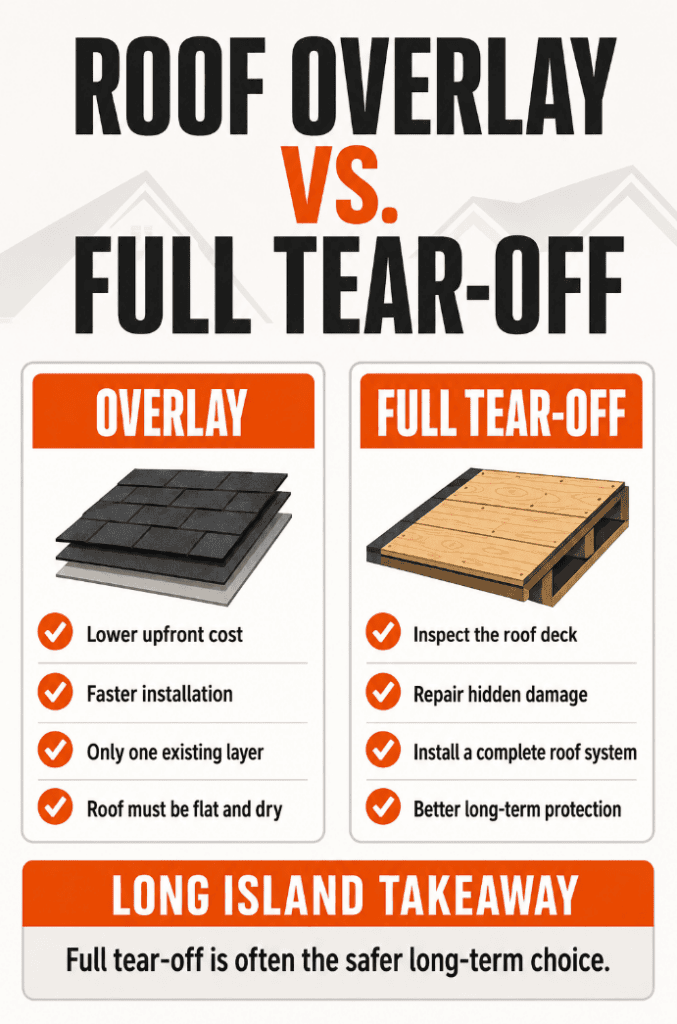
A roof overlay is a roofing project where new asphalt shingles are installed over an existing layer of asphalt shingles. This may reduce tear-off labor, disposal, and project time because the old shingles are left in place. The downside is that the contractor cannot fully inspect the wood decking below the existing roof layer. If the home has water damage, decking rot, storm damage, or poor ventilation, those problems can stay hidden. On Long Island, where coastal weather can drive rain under weak shingles, hidden damage is one of the biggest concerns with overlays.
What Is a Full Roof Replacement?
A full roof replacement, also called a roof tear-off, removes the existing roofing materials before the new roof system is installed. This allows the roofing contractor to inspect the roof deck, replace damaged wood decking, correct old flashing issues, and install underlayment, ice and water shield, starter strips, architectural shingles, ridge caps, and ventilation components properly. A full tear-off usually costs more upfront than an overlay because it includes more labor and disposal. The benefit is a cleaner start, better deck inspection, and a stronger foundation for roofing longevity.
Building Code Limits on Roof Layers
Building codes matter because most homes cannot keep adding roof layers without limits. The 2020 Residential Code of New York State includes rules for roof assemblies, asphalt shingles, roof slopes, underlayment, and re-covering conditions. It also states that asphalt shingles must be used only on roof slopes of at least 2 units vertical in 12 units horizontal. If a roof already has too many layers, has water damage, or has structural concerns, a re-cover may not be allowed. Homeowners should confirm local requirements before choosing an overlay.
Do Nassau or Suffolk County Permits Matter?
Roofing permits can vary by town, village, and project scope across Nassau County and Suffolk County. A permit may be required for roof replacement, structural roof work, or certain re-roofing projects, depending on the local building department. This matters because Long Island is not one single permit jurisdiction. Requirements may differ between towns, incorporated villages, and coastal communities. A homeowner should not assume an overlay avoids permit rules. A professional roofing contractor can help review the roof scope and guide the homeowner toward the correct local process before work starts.
Roof Deck Condition Is the Biggest Factor
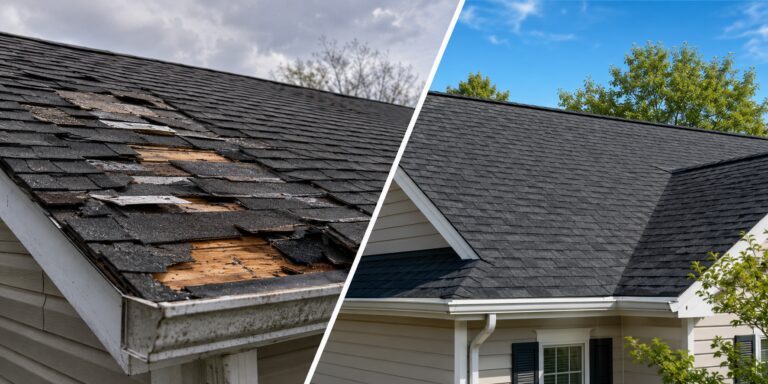
The roof deck is the wood surface that supports the roofing system. If the deck is solid, dry, and structurally sound, the roof has a better foundation for new materials. If the deck has rot, soft spots, delamination, mold growth, or old leak damage, new shingles will not solve the deeper problem. A full tear-off gives the contractor access to the deck so damaged sections can be replaced. An overlay hides the deck, which can allow moisture damage to keep spreading under the new asphalt shingle layer.
Signs the Deck Needs Inspection
Homeowners cannot always see roof deck problems from the ground. A roof inspection can identify warning signs that point to hidden issues under the shingles. A full tear-off may be safer when you notice:
- Soft or sagging roof areas
- Water stains in the attic
- Dark spots on roof decking
- Repeated leaks after repairs
- Mold or musty attic odors
- Granule loss across large areas
- Ice dams near the roof edge
- Storm damage in several sections
- Shingles that feel uneven or wavy
- Old roof layers that are already curling
These signs suggest the roof needs more than a surface-level installation.
Overlay Pros and Cons
A roof overlay may be considered when the existing roof has only one layer, the deck is believed to be sound, the shingles are lying flat, and there are no signs of major leaks. The main advantages are lower initial roofing costs, less disposal, and faster project completion. The disadvantages are important. An overlay adds weight, can shorten roofing lifespan, may hide water damage, and may affect warranty coverage. It can also make the finished roof look uneven if the old shingles are curled, brittle, or damaged.
Overlay may be reasonable when:
- There is only one existing roof layer
- The roof deck appears solid
- There are no active leaks
- Existing shingles are flat
- Ventilation is working
- Local building code allows it
- The homeowner understands warranty limits
Overlay is usually risky when:
- There are two or more roof layers
- The roof has storm damage
- The deck condition is unknown
- Shingles are curled or uneven
- Leaks have happened before
- Ice dams are common
- Long-term home value is a priority
Full Tear-Off Pros and Cons
A full tear-off usually costs more than an overlay, but it gives the roofing contractor the best chance to build a complete roof system. The old roof is removed, the deck inspection is completed, damaged wood decking is replaced, and new roofing components are installed from the base up. This is especially valuable on Long Island because coastal storms, salt air, and freeze-thaw cycles can create hidden moisture damage. The main drawback is higher upfront cost, more labor, and more disposal. For many homeowners, the long-term protection is worth it.
A full tear-off is usually better when:
- The roof is near the end of its life
- Water damage is suspected
- Storm damage is widespread
- You want better warranty options
- The roof has multiple layers
- Decking condition must be confirmed
- New attic ventilation is needed
- You plan to sell the home
- You want better roofing longevity
- The roof has repeated leak history
How Long Does Each Option Last?
A full tear-off usually gives the new roof a better chance of reaching its expected lifespan because the system starts with a clean, inspected deck. An overlay may not last as long because the new shingles sit over an older, uneven roof surface. Heat can also build up between layers, which may affect asphalt shingle performance. On Long Island, storm exposure, salt air corrosion, high winds, and coastal weather make installation quality even more important. If the goal is maximum roof lifespan, full replacement is often the stronger option.
Warranty and Manufacturer Considerations
Warranty coverage can depend on the roofing materials, installation method, contractor qualifications, ventilation, and whether the full roof system is installed correctly. GAF explains that a residential roofing system includes multiple layers, and qualifying GAF accessories can be part of certain lifetime limited warranty options. GAF’s warranty information also notes that wind coverage depends on the shingle type, ridge cap shingles, installation method, and accessory combination. This is important because an overlay may not qualify for the same warranty depth as a complete system installed over a properly prepared deck.
Why System Installation Matters
A roof is more than shingles. A complete roof system may include underlayment, ice and water shield, starter strips, drip edge, flashing, metal fasteners, ventilation, ridge caps, and architectural shingles. These roofing components must be installed according to building codes, manufacturer requirements, and New York State code where applicable. If the system is installed poorly, the roof may fail early even if the shingle itself is high quality. This is why labor quality, roofing safety, and installation details matter as much as material selection.
A full roof replacement gives the roofing contractor a clean surface to inspect the deck, review the structural load, and install the right roof ventilation system. This matters for asphalt roof systems, Timberline HDZ shingles, Owens Corning shingles, impact-resistant shingles, metal roofing, cedar shake, natural slate, slate roof projects, and even flat roofs with modified bitumen. A roof overlay can hide old damage and make it harder to correct valleys, chimney flashing, roof penetrations, and ventilation problems.
Cost, Insurance, and Long-Term Value
A roof overlay often has a lower upfront cost because it may reduce labor and disposal. A full tear-off usually costs more because it includes removing old materials, inspecting the deck, replacing damaged wood, and installing a new system from the base up. The true value depends on how long the roof lasts and whether hidden damage is avoided. Insurance claims can also become more complicated when old roof layers or pre-existing damage are present. Homeowners should review their insurance policy and ask how storm damage, replacement cost value, and roof age may affect coverage.
When Insurance Claims Are Involved
If the roof has storm damage, a full inspection is important before deciding on an overlay. High winds, coastal storms, and flying debris can damage shingles, flashing, ridge caps, and decking. An insurance company may want documentation of the damage, photos, storm dates, and repair recommendations. An overlay may not address storm-related deck damage or moisture intrusion. If a claim is involved, homeowners should avoid covering damaged areas before the roof is properly inspected. A clear report helps support the claims process and protects the homeowner from repairing only the visible surface.
Which Option Is Better for Long Island Homes?
For many Long Island homes, a full tear-off is the safer long-term choice because it allows inspection of the roof deck and correction of hidden water damage. An overlay may only make sense when the existing roof is flat, dry, young enough, code-compliant, and has one layer. Coastal weather makes this decision more important. Salt air, storm activity, ice dams, and heavy rain can all hide damage beneath shingles. If the homeowner wants the best chance at strong warranty coverage, home value, and roofing longevity, full replacement is usually the better path.
Schedule a Roof Inspection on Long Island
The right choice starts with a roof inspection. JAGG Roofing, Siding, and Windows provides roof replacement, roof repair, storm damage support, siding, and windows across Long Island, including Nassau County and Suffolk County. Their team can review roof age, roof layers, decking condition, attic ventilation, storm damage, and material selection before recommending an overlay or full tear-off. Homeowners can request help through JAGG Roofing, Siding, and Windows to understand the best option for their home, budget, and long-term protection.
Jacob Giannelli is the founder of JAGG Roofing, Siding & Windows, serving Nassau and Suffolk County homeowners across Long Island. JAGG is an Owens Corning Preferred Contractor and BBB Accredited Business with a 5.0-star Google rating.