Get a free estimate.
Nassau & Suffolk County.
Cold weather causes vinyl siding to contract and become less flexible, but properly installed siding is designed to handle seasonal temperature changes. Problems are more likely when siding panels are installed too tightly, already damaged, or exposed to repeated moisture and freezing. On Long Island, winter weather brings temperature fluctuations, coastal winds, snow, ice, and freeze-thaw cycles. These conditions can expose weak fastening methods, moisture infiltration, or existing storm damage. Understanding how vinyl reacts to winter temperatures can help homeowners recognize damage signs before small exterior problems lead to water damage or more extensive repairs.
What Happens to Vinyl Siding in Cold Weather?
Vinyl siding is made primarily from polyvinyl chloride, a material that naturally responds to temperature shifts. When temperatures fall, siding panels contract. When temperatures rise, they expand again. This expansion and contraction is expected and does not mean the siding is failing. However, the installation process must allow enough room for thermal expansion. Panels that cannot move freely may buckle, warp, or place stress on fastening points. Long Island’s changing winter temperatures make proper siding installation especially important because the exterior may experience repeated warming and cooling throughout the season.
How Much Does Vinyl Siding Expand and Contract?
The movement can be greater than homeowners expect. The Vinyl Siding Institute installation manual states that vinyl siding can expand and contract half an inch or more across a 12-foot-6-inch length during normal yearly temperature changes. Proper installation techniques account for that movement by centering fasteners in the nailing fin slots and avoiding tight fastening. An appropriate expansion gap is also left near corners, trim, and other fixed surfaces. Without these allowances, normal temperature fluctuations can cause visible siding problems.
Why Proper Fastening Methods Matter
Vinyl siding should not be nailed tightly against the wall. The fastening methods must secure each panel while still allowing side-to-side movement as temperatures change. If a fastener is driven too tightly, the siding can become trapped and unable to respond normally to thermal expansion. This may cause rippling or buckling when warmer temperatures return. Installation instructions also specify proper fastener spacing and end gaps. These small details matter because a siding system needs enough freedom to move without becoming loose enough for wind to lift or damage the panels.
Can Vinyl Siding Crack in Freezing Weather?
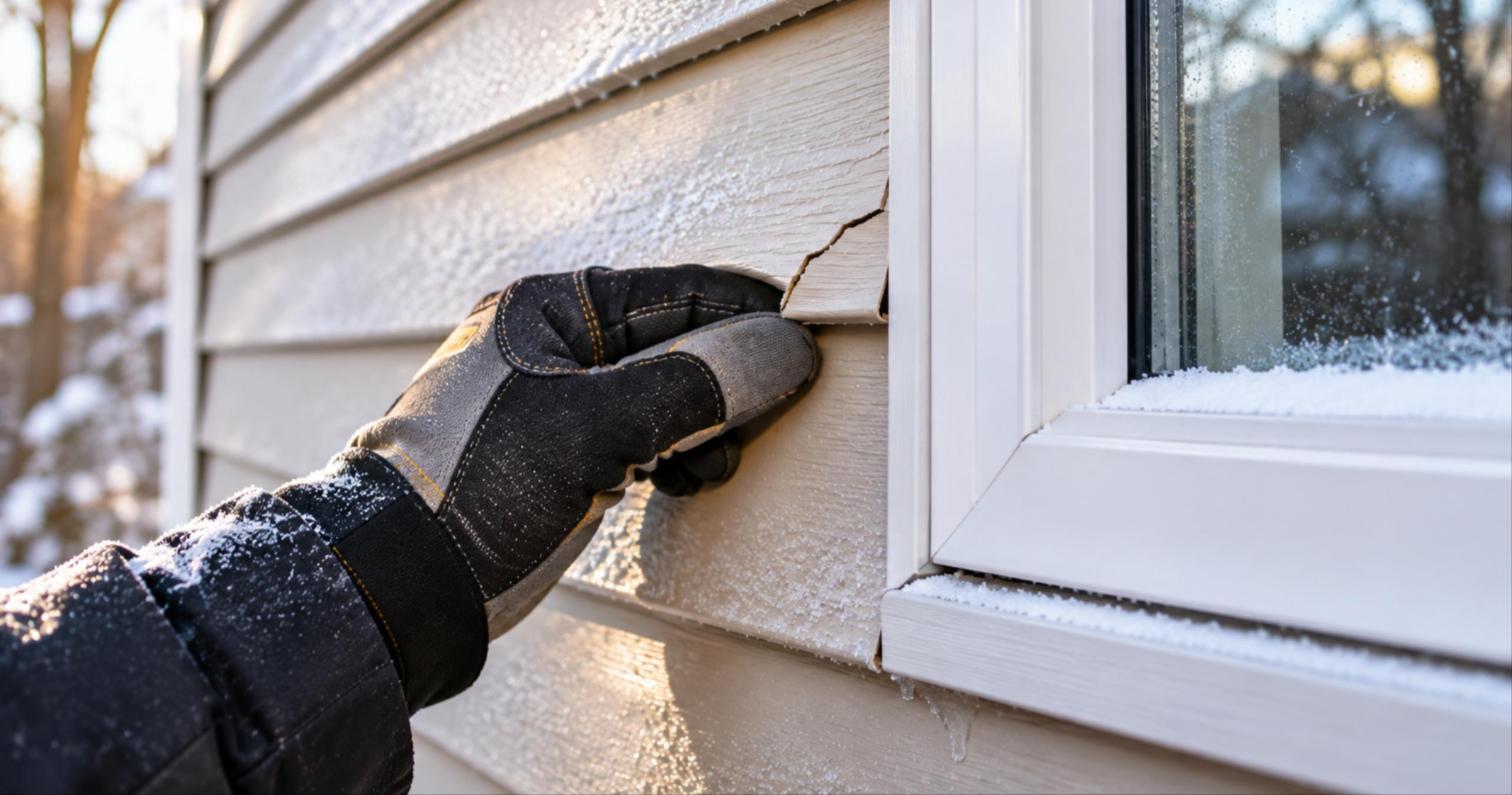
Vinyl siding can become less flexible in freezing weather, which makes impact damage a greater concern. Cold alone does not mean siding will suddenly crack, but a very cold panel may respond differently when struck by a tree branch, ladder, or windblown debris. Existing weak areas can also become more noticeable during sub-zero temperatures. Impact cracking, splitting, and loose paneling should be inspected after severe winter storms. Homeowners should avoid pushing or bending extremely cold panels because unnecessary force can cause additional damage when the material is less flexible.
How Do Freeze-Thaw Cycles Affect House Siding?
Freeze-thaw cycles become a problem when moisture reaches areas behind the siding. Water may enter through damaged panels, poor window installation, failed flashing, gaps around penetrations, or weak caulking and sealing. When that moisture freezes, it expands. It then melts when temperatures rise, creating a repeating freeze-thaw cycle. Over time, this process can worsen moisture-related problems behind the exterior. Vinyl itself has strong moisture resistance, but the building materials underneath it still require protection. Moisture barriers and proper drainage are essential for limiting water penetration and protecting the wall assembly.
| Winter Concern | What Happens | What to Do |
|---|---|---|
| Contraction in cold | Panels shrink and become less flexible | Rely on proper expansion gaps and centered fasteners |
| Impact in freezing weather | Cold panels crack more easily when struck | Inspect after storms and avoid bending cold panels |
| Freeze-thaw moisture | Water behind siding freezes, expands, and melts | Find and fix the moisture source, not only the surface |
| Wind-driven damage | Loose panels rattle, separate, or lift | Check for loose or shifted sections from the ground |
| Ice dam overflow | Meltwater reaches siding below the roof edge | Keep roofing, gutters, and flashing working together |
Can Moisture Behind Siding Cause Mold or Water Damage?
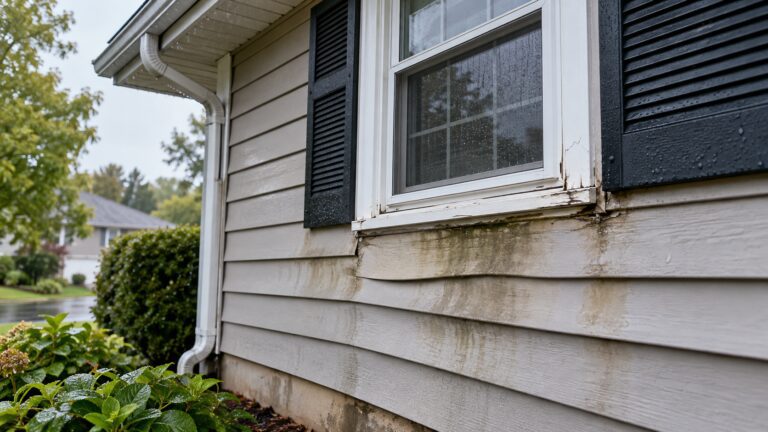
Yes. Vinyl siding is not meant to serve as the home’s only waterproof layer. If moisture infiltration occurs, water may reach sheathing, insulation, framing, or other materials behind the exterior. Continued moisture exposure can eventually contribute to water stains, deterioration, or mold growth. Ice formation can make an existing moisture problem harder to identify during winter because water may remain frozen before melting during warmer periods. Homeowners who notice staining, musty odors, damaged panels, or repeated moisture near windows should have the source investigated rather than simply sealing the visible surface.
Can Ice Dams Affect Vinyl Siding?
Ice dams form primarily along roof edges, but the resulting water can affect other parts of the home’s exterior. Melting snow that cannot drain properly may move behind roofing materials or overflow gutters and reach siding below. This does not necessarily mean the vinyl siding caused the problem. Instead, the siding may be exposed to excess moisture because another part of the exterior drainage system has failed. Long Island homes should have roofing, gutters, flashing, siding, and moisture barriers working together to direct water away from the structure during winter weather.
Can Wind Damage Vinyl Siding During Winter?
Long Island’s coastal storms can produce strong winds that test siding panels and fastening systems. Properly installed residential siding is designed to resist wind, but loose panels, poor fastening, previous storm damage, or damaged accessories can create vulnerable areas. Wind may cause loose paneling to rattle, separate, or pull farther away from the wall. Flying branches and debris can also cause impact damage when vinyl is less flexible in cold conditions. After a strong winter storm, homeowners can safely inspect the exterior from ground level for missing panels, cracks, shifted sections, or exposed wall areas.
Can You Install Vinyl Siding During Winter?
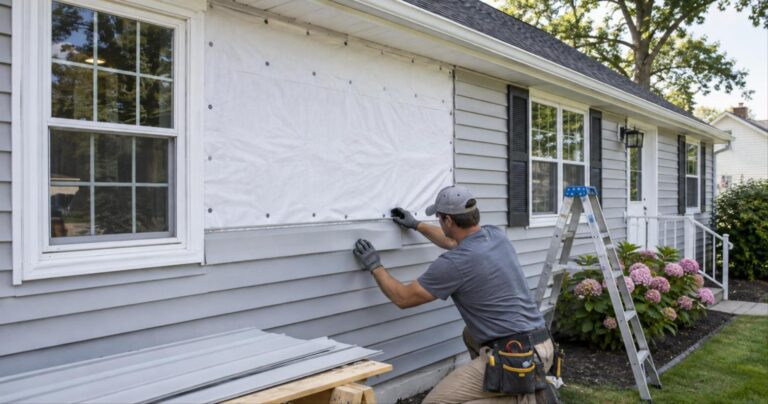
Yes, winter installation is possible when weather and safety conditions allow it. The main challenge is accounting for the material’s contracted state and reduced flexibility. Installation techniques must follow manufacturer temperature guidelines, expansion gap requirements, and fastening instructions. The installer must also handle cold siding carefully when cutting and positioning panels. Snow, ice, severe winds, or dangerous working conditions can delay exterior renovation even when the material itself could technically be installed. There is no single temperature that applies to every vinyl product, so product-specific siding requirements should guide winter installation.
Does Winter Installation Require Different Expansion Gaps?
Cold-weather siding installation requires extra attention to expansion space because panels installed while contracted will grow as temperatures increase. VSI guidance calls for larger clearance when installing horizontal vinyl siding below 40°F, demonstrating why installers must consider temperature during installation. Fasteners should still be centered correctly and should not prevent panel movement. Weatherproof caulking and sealing around appropriate openings must also be suitable for the conditions. Correct winter installation anticipates what will happen to the siding when Long Island temperatures rise again in spring and summer.
Does Insulated Vinyl Siding Perform Better in Winter?
Insulated vinyl siding combines siding panels with foam insulation to create a more continuous layer across the exterior wall. This can reduce thermal bridging through wall framing and support improved energy efficiency. Better insulation performance may help a home retain heat more effectively during winter, although siding is only one part of the building envelope. Windows, doors, attic insulation, air leakage, and the heating system also influence energy bills. JAGG notes that insulated vinyl is one of the siding options available to Long Island homeowners who want to improve exterior protection and efficiency.
How Does Vinyl Compare With Other Siding Materials in Winter?
Different siding materials respond to winter conditions in different ways. Fiber cement siding is more rigid than vinyl and does not experience the same degree of thermal movement, while wood siding can absorb moisture when its protective finish deteriorates. Aluminum siding and seamless steel siding have their own expansion, impact, and maintenance considerations. Stone veneer also depends heavily on correct moisture management. No siding option is immune to poor installation or water infiltration. Long Island homeowners should compare weather resistance, impact resistance, maintenance, energy efficiency, moisture performance, and installation requirements rather than focusing on cold temperature alone.
What Winter Damage Signs Should Long Island Homeowners Look For?
Homeowners should look for cracking or splitting, loose paneling, buckling, gaps, impact marks, water stains, and siding sections that appear different after a storm. Damage around windows, doors, corners, and roof-to-wall transitions also deserves attention because these areas depend on proper flashing and moisture control. A problem discovered during winter does not automatically mean complete siding replacement is necessary. JAGG Roofing, Siding & Windows provides siding services throughout Long Island and can evaluate siding panels, moisture damage, fastening issues, and the wall system underneath before determining whether targeted repair or replacement is appropriate.
Vinyl Siding in Cold Weather: Quick Answers
Does vinyl siding crack in cold weather?
Cold alone does not make siding crack, but frozen panels are less flexible, so impact from branches, ladders, or windblown debris is more likely to cause damage.
How much does vinyl siding expand and contract?
The Vinyl Siding Institute installation manual states that vinyl siding can expand and contract half an inch or more across a 12-foot-6-inch length during normal yearly temperature changes.
Can vinyl siding be installed in winter?
Yes, when weather and safety conditions allow. Installers must follow manufacturer temperature guidelines, leave proper expansion gaps, and handle cold panels carefully.
What winter damage should I look for?
Check for cracking, loose panels, buckling, gaps, impact marks, and water stains, especially around windows, doors, corners, and roof-to-wall transitions.
Jacob Giannelli is the founder of JAGG Roofing, Siding & Windows, serving Nassau and Suffolk County homeowners across Long Island. JAGG is an Owens Corning Preferred Contractor and BBB Accredited Business with a 5.0-star Google rating.