Get a free estimate.
Nassau & Suffolk County.
When old siding comes off a Long Island home, homeowners sometimes discover another layer underneath: house wrap. That raises an important question during a siding replacement: should the existing house wrap stay, or should new material be installed before the siding goes back on?
The answer depends on its condition, installation, and the rest of the building envelope. House wrap is not simply an extra layer under vinyl siding. It works as a water-resistive barrier that helps manage water intrusion while also reducing uncontrolled air leakage when properly installed and sealed.
Long Island’s humid summers, wind-driven rain, coastal storms, and snowy winters make moisture management especially important. Because a siding replacement exposes portions of the exterior wall that may not be accessible again for decades, it is an ideal time to inspect the weather barrier, sheathing, window flashing, and other construction details.
What Is House Wrap and What Does It Do?
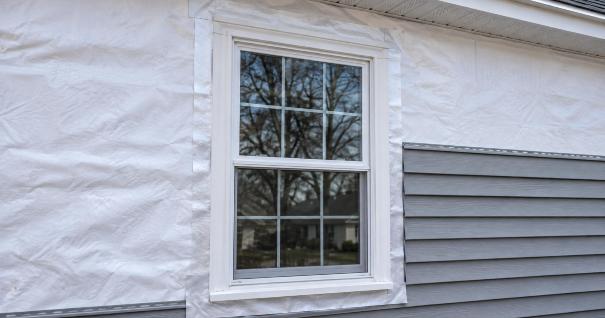
House wrap is a synthetic membrane installed over exterior wall sheathing and behind siding or another cladding type. Products such as Tyvek house wrap and other modern synthetic materials are designed to resist bulk water while allowing some water vapor to move through the wall assembly.
That distinction is important. House wrap is generally not the same thing as a vapor barrier. Vapor barriers and vapor retarders control vapor diffusion, while a water-resistant barrier primarily helps prevent rain and other exterior moisture from reaching the wall assembly.
Older Long Island homes may have asphalt-coated felt paper or tar paper instead of a modern housewrap membrane. Newer systems can include conventional house wrap, integrated sheathing products such as the Zip System, or drainage-oriented products that create a small rainscreen gap behind the siding.
House wrap can also support energy efficiency when it functions as part of the home’s air barrier. Reducing air leaks can limit heat loss, help insulation perform more effectively, and improve occupant comfort.
Should Existing House Wrap Be Replaced During Siding Replacement?
Not every siding project automatically requires removing functional house wrap, but the existing barrier should be thoroughly inspected once the old siding is removed.
If the house wrap is torn, brittle, improperly overlapped, extensively punctured, deteriorated from UV exposure, or poorly integrated around windows and doors, replacing it usually makes more sense than covering the problems with new siding.
Old siding fasteners can leave hundreds of penetrations behind. Previous repairs may also reveal damaged sections, failed window flashing, or areas where water seeped behind the cladding. Simply installing new vinyl siding over those conditions can leave weaknesses hidden inside the new exterior.
New York’s current Residential Code requires exterior wall assemblies to include a continuous water-resistant barrier behind exterior wall cladding, subject to specified exceptions. The system must also work with flashing so water that penetrates the exterior cladding can drain toward the outside.
For that reason, a professional Long Island siding replacement should involve more than removing old panels and installing new ones. The exposed wall is an opportunity to inspect the sheathing, water-resistive barrier, window and head flashing, penetrations, and other components before they disappear behind the finished siding.
What Happens If House Wrap or Flashing Is Damaged?
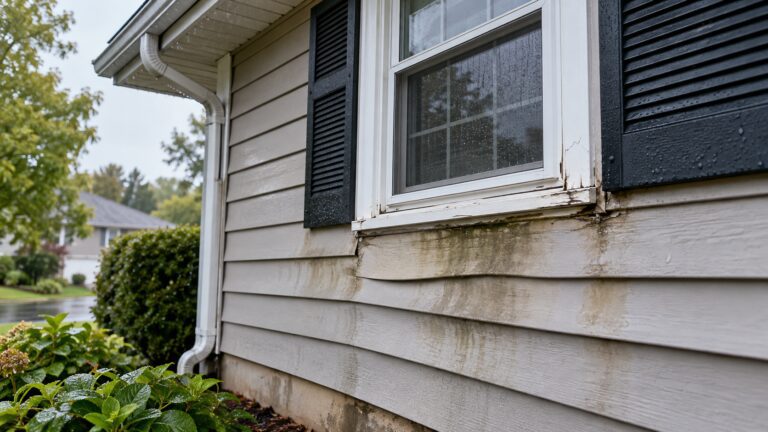
Siding is designed to shed most rain, but it is not a vacuum seal. Wind-driven water can get behind vinyl siding and other exterior finishes, which is why the drainage layer underneath matters.
If house wrap is missing, damaged, or installed incorrectly, repeated water penetration can reach the sheathing and wall cavity. Over time, moisture issues may contribute to deteriorated wood, insulation problems, mold-friendly conditions, reduced building efficiency, and expensive repairs that remain hidden until siding is removed again.
Proper installation around windows is particularly important. Window flashing and head flashing should integrate with the water-resistive barrier so water moves over the layers below it rather than behind them.
Some homes may also benefit from a ventilated rain screen using furring strips, vertical battens, or a dimpled membrane to create drainage and drying space behind certain siding materials. The right approach depends on the cladding type, wall construction, manufacturer requirements, and existing building envelope.
For Long Island homeowners, the goal during re-siding work should not simply be a better-looking exterior. JAGG Roofing, Siding & Windows can inspect what is underneath the old siding and determine whether the existing house wrap can remain or whether replacing and properly integrating the water-resistant barrier will provide better long-term moisture protection.
New siding may be what you see when the project is finished, but the layers underneath are what help protect the house when Long Island weather hits.
Jacob Giannelli is the founder of JAGG Roofing, Siding & Windows, serving Nassau and Suffolk County homeowners across Long Island. JAGG is an Owens Corning Preferred Contractor and BBB Accredited Business with a 5.0-star Google rating.