Get a free estimate.
Nassau & Suffolk County.
A roof leak rarely tells you exactly where the problem started. Water can enter through damaged shingles, failed flashing, a roof vent, skylight, chimney, or low-slope membrane, then travel along decking, rafters, or insulation before it finally appears as a stain on a ceiling. That is why the wet spot inside your Long Island home may be several feet away from the actual water entry point.
Long Island roofs also deal with conditions that can make leaks intermittent. Coastal salt air, wind-driven rain, snow, ice dams, humidity, freeze-thaw cycles, and summer heat all place stress on roofing materials. A roof may stay dry during a light shower but leak during a storm with strong wind, or it may only leak when melting snow backs water beneath shingles.
Why Does My Roof Leak Only Sometimes?
Intermittent leaks usually depend on wind direction, rainfall intensity, snowmelt, or the amount of water reaching a vulnerable part of the roof. Flashing around a chimney may hold during ordinary rain but allow water inside when strong wind pushes rain against the side of the structure. A small opening around a vent can behave the same way.
Water paths also change. Moisture may collect above insulation or travel along framing until enough water builds up to become visible. This can make a leak seem random even when the source has been present for months.
The first step is therefore not simply patching the area above the ceiling stain. A professional roof inspection should trace the likely water path and evaluate the roof surface, flashing, penetrations, valleys, drainage, and attic conditions.
Damaged or Missing Shingles
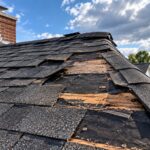
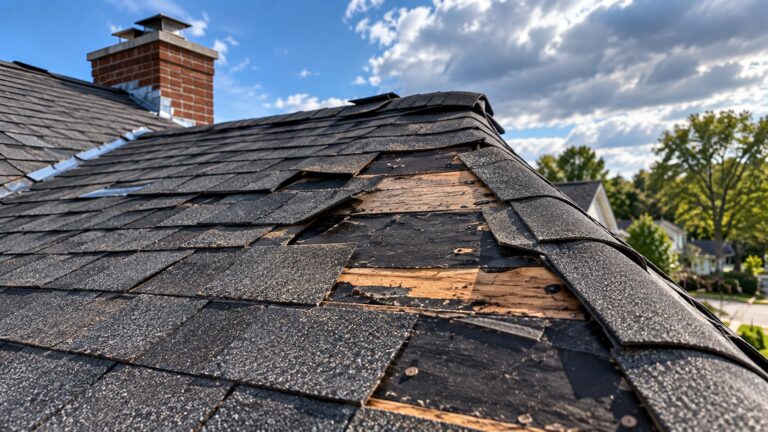
Asphalt shingles form the primary weather-facing layer on many Long Island homes. High winds can lift or remove shingles, while age, heat, hail, and repeated weather exposure can cause cracks, curling, broken edges, and granule loss. Once the protective surface is compromised, water has a better opportunity to reach the underlayment and roof deck.
A single missing shingle does not always create an immediate indoor leak. Underlayment may provide temporary protection, but repeated exposure can eventually allow water to move into plywood or wood sheathing. Dark patches, exposed nail heads, noticeably bare areas, or piles of granules in gutters can all justify a closer inspection.
Flashing Around Chimneys, Walls, and Valleys
Flashing is installed where roofing materials meet chimneys, walls, valleys, and other transitions. These are common leak locations because water is being redirected through an area where different materials come together.
Loose, rusted, bent, missing, or improperly layered flashing can allow water underneath the roofing system. Sealant may also crack or separate with age. Chimney leaks can be especially difficult to diagnose because the problem could involve step flashing, counterflashing, masonry, mortar joints, a chimney cap, or the surrounding shingles.
Roof valleys deserve the same attention. Large volumes of rainwater move through valleys, so damaged materials, debris, poor installation, or an aging valley liner can create a concentrated leak.
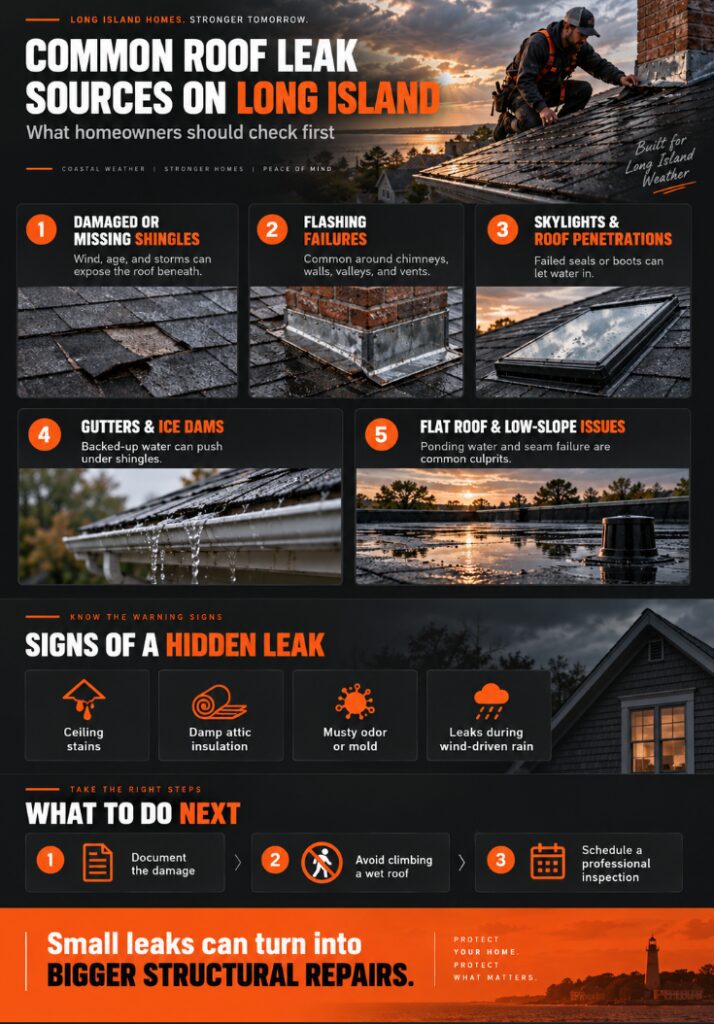
Roof Vents, Skylights, and Other Penetrations
Every opening through the roof creates a detail that must stay watertight. Plumbing vents, exhaust vents, skylights, satellite mounts, and other penetrations rely on flashing, boots, seals, or compatible roofing components to keep water out.
Rubber vent boots can crack as they age. Fasteners can loosen. Skylight seals or surrounding flashing can deteriorate. Sometimes the skylight itself is blamed even though water is entering higher on the roof and traveling toward the opening.
When a leak appears near a bathroom, kitchen, or HVAC equipment, the source may not even be the roof. Plumbing fixtures, condensation lines, or HVAC equipment can also create moisture. A careful inspection helps separate a true roof leak from another water source before roofing materials are removed unnecessarily.
Clogged Gutters, Roof Edges, and Ice Dams
Gutters do not normally cause a leak in the middle of a healthy roof, but poor drainage can contribute to water problems around roof edges, fascia, soffits, and low areas. Leaves and debris can slow drainage and cause water to overflow or back up where roofing components meet.
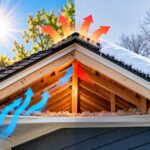
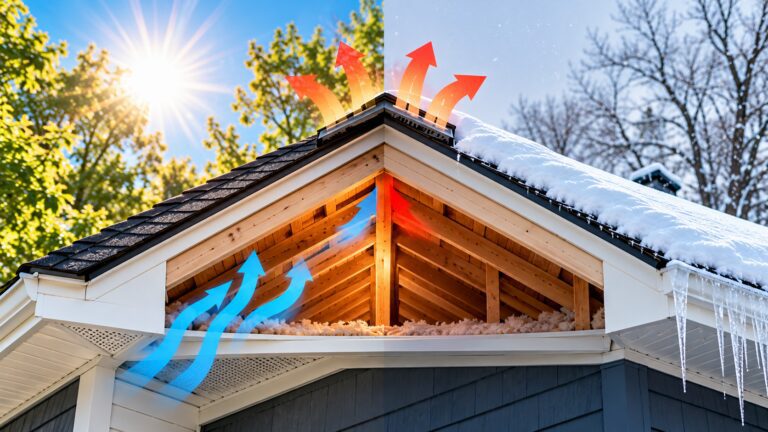
Winter creates another Long Island concern: ice dams. Heat escaping into the attic can melt snow higher on the roof. That water can refreeze near colder eaves, creating a ridge of ice that prevents additional meltwater from draining. Water can then back up beneath shingles and enter the roof assembly.
Proper attic insulation and ventilation can reduce conditions that contribute to ice damming, while ice and water protection beneath roofing materials provides an additional layer of defense in vulnerable areas.
Flat Roofs and Low-Slope Roofing Systems
Flat and low-slope roofs have different leak patterns than steep asphalt-shingle roofs. TPO, EPDM, modified bitumen, and other roofing membranes depend heavily on intact seams, flashing, drainage, and penetrations.
Punctures, separated seams, deteriorated flashing, blocked drains, and water pooling can all become leak sources. Because water moves slowly across flatter surfaces, the visible leak may be far from the original membrane damage.
Metal roofs can also leak around seams, fasteners, penetrations, transitions, or damaged flashing. Salt air and moisture exposure may contribute to corrosion on susceptible metal components, particularly in coastal areas of Nassau and Suffolk County.
Where You Notice Water | Possible Source | What Should Be Checked |
|---|---|---|
Near a chimney | Flashing or masonry | Step flashing, counterflashing, mortar, chimney cap |
Around a skylight | Flashing, seal, or uphill leak | Skylight flashing and surrounding shingles |
At an exterior wall or eave | Ice dam, edge flashing, or gutter issue | Roof edge, insulation, ventilation, drainage |
Below a flat roof | Membrane or drainage failure | Seams, penetrations, flashing, ponding water |
What Water Stains, Mold, and Damp Insulation Can Tell You
Interior symptoms help narrow the investigation. Brown or yellow water stains on ceilings and walls can indicate that moisture has moved beyond the roof deck. Damp attic insulation, darkened sheathing, rusty nails, peeling paint, or musty odors may point to a leak that has existed longer than the homeowner realized.
Mold growth can occur when building materials remain damp, but visible mold does not automatically identify the roof as the source. Condensation and plumbing problems can produce similar symptoms. Moisture mapping, targeted water testing, or thermal imaging may sometimes help a professional investigate difficult leaks, although these tools work best when combined with a physical roof inspection.
Homeowners should also remember that the roof may stop leaking before the materials inside have dried. A ceiling stain that is no longer dripping does not prove the problem has repaired itself.
When a Leak Means Repairand When Replacement May Be Better
A localized roof leak can often be repaired when the surrounding roofing system remains sound. Replacing several damaged shingles, correcting flashing, installing a new vent boot, or repairing a small membrane area may solve the problem without replacing the entire roof.
Replacement becomes more reasonable when leaks repeatedly develop in different areas, shingles are extensively deteriorated, the decking has widespread moisture damage, or an aging roofing system requires constant repairs. The inspection should determine that recommendation rather than the existence of one leak alone.
Repair cost also depends on accessibility and scope. A simple shingle repair is different from rebuilding chimney flashing, replacing damaged decking, or tracing a water path beneath multiple roof layers. That is why an accurate roof leak repair estimate generally requires inspecting the property instead of applying one average price to every leak.
Why Long Island Weather Makes Roof Leaks More Complicated
Long Island homes experience weather from several directions throughout the year. Heavy rain can expose drainage problems, while wind-driven rain can push moisture beneath flashing or shingles that appear secure during calmer conditions.
Coastal salt air can gradually affect exposed metals, including certain flashing, fasteners, and roof accessories. Winter presents a different challenge through snow, ice dams, and repeated freeze-thaw cycles. Summer heat can contribute to aging sealants and roofing materials, especially when attic ventilation is poor.
Storm damage may also remain hidden. A strong storm can loosen a shingle seal or damage flashing without leaving a large missing section that is obvious from the ground. The roof may not leak until the next storm arrives from the right direction.
Regular gutter maintenance, periodic roof inspections, proper ventilation, and timely repair of damaged roofing materials can reduce the chance that these smaller weaknesses turn into larger water problems.
What Should You Do When Your Roof Starts Leaking?
Start by limiting interior damage. Move belongings away from the wet area and use a container to catch dripping water when it is safe to do so. If water is near electrical fixtures, outlets, or wiring, avoid the area until the electrical hazard has been addressed.
Do not climb onto a wet, icy, steep, or storm-damaged roof to find the source. Exterior roofing work can be dangerous, and temporary repairs performed in poor conditions can create additional damage. From the ground, homeowners can photograph missing shingles, fallen branches, damaged gutters, or other visible storm impacts.
If the leak followed severe weather, document visible damage before permanent repairs begin when circumstances allow. New York homeowners policies can include different standard, windstorm, and hurricane deductibles, and coastal properties in Nassau and Suffolk counties may be particularly affected by wind or hurricane deductible provisions. Coverage ultimately depends on the individual policy and cause of damage.
JAGG Roofing, Siding & Windows provides roof leak detection, shingle and flashing repair, storm damage documentation, emergency protection, and roof replacement throughout Nassau and Suffolk County. JAGG’s current repair process includes written estimates and inspection of problems involving shingles, flashing, gutters, and leaks.
The most important thing is not to ignore a leak simply because the rain stopped. Water intrusion can damage decking, attic insulation, ceilings, and walls before the next visible drip appears. Finding the actual source early gives homeowners a better chance of limiting the repair to the part of the roofing system that failed.
Jacob Giannelli is the founder of JAGG Roofing, Siding & Windows, serving Nassau and Suffolk County homeowners across Long Island. JAGG is an Owens Corning Preferred Contractor and BBB Accredited Business with a 5.0-star Google rating.