Get a free estimate.
Nassau & Suffolk County.
If a double-pane window suddenly looks cloudy or develops fogging between panes, the problem may not be dirt on the glass. It can be a window seal failure inside the insulated glass unit.
Modern double- and triple-pane windows rely on sealed spaces between glass panes to improve energy efficiency. When that seal deteriorates, moisture can enter and insulating gas can escape. For Long Island homeowners, temperature swings, summer heat, winter cold, UV exposure, and years of normal expansion and contraction can all put stress on window components.
A failed seal does not always mean the entire window needs immediate replacement, but it does mean the insulating glass is no longer performing exactly as designed.
What Is a Broken Window Seal?
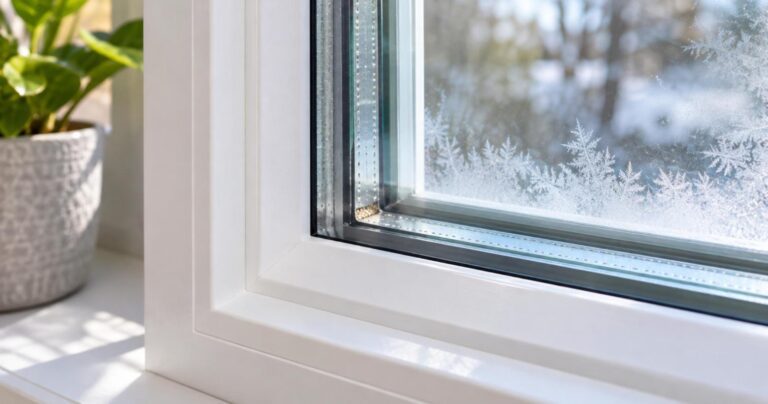
An insulated glass unit, or IGU, contains two or more glass panes separated by spacers and sealed around the perimeter. The space between the panes may contain air or inert gasses such as argon or krypton to reduce heat transfer.
The U.S. Department of Energy explains that modern insulated window glazing uses multiple panes, sealed insulating spaces, gas fills, and spacers to improve thermal performance.
The glazing seal is responsible for keeping outside moisture from entering that space while helping retain the gas fill. Once the thermal seal fails, water vapor can enter the glass unit and create the familiar cloudy appearance.
What Causes Window Seals to Fail?
Window seals experience stress throughout their service life. One major factor is thermal expansion. Glass, spacers, sealants, and the window frame expand and contract as outdoor temperatures change. Long Island’s seasonal temperature differences can repeatedly flex those materials.
Pressure differences also place stress on an insulating glass unit. Spacers and sealants are specifically designed to accommodate thermal expansion and pressure changes while preventing moisture and gas leaks.
Other causes can include prolonged UV radiation, age, poor window installation, manufacturing defects, and water repeatedly collecting around the frame.
The Efficient Windows Collaborative notes that the durability of an insulating glass seal is important to energy performance and that seal failure can allow insulating gas to escape and moisture to penetrate between the panes.
How Can You Tell If a Window Seal Has Failed?
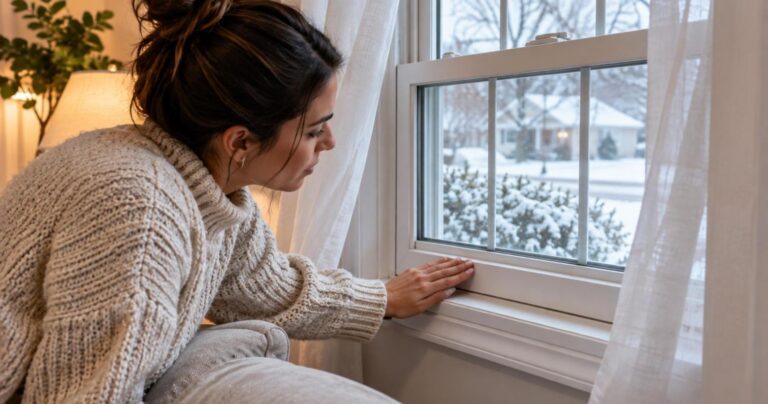
The clearest sign is fogging between panes that cannot be wiped away from either side of the glass.
You may also notice moisture droplets or a hazy film developing inside a double-pane window. In severe cases, mineral deposits can remain after repeated moisture buildup.
Not all condensation indicates seal failure. Condensation on the room-facing surface of the glass may be related to indoor humidity, exhaust fans, HVAC operation, or outdoor temperatures. Exterior condensation can also occur under certain weather conditions.
The key difference is location: moisture trapped between sealed glass panes strongly suggests the insulating glass unit has been compromised.
A failed seal may also reduce some of the window’s insulating properties as gas escapes. Argon and krypton are safe, non-toxic gases, but losing the intended gas fill can reduce thermal performance over time.
Can a Failed Window Seal Be Repaired?
The answer depends on the window.
Cleaning the visible glass with white vinegar or another household product will not fix moisture trapped inside a sealed double-pane glass unit. Likewise, attempting to reseal only the exterior edge does not restore the original factory-built IGU, gas fill, or insulating spaces.
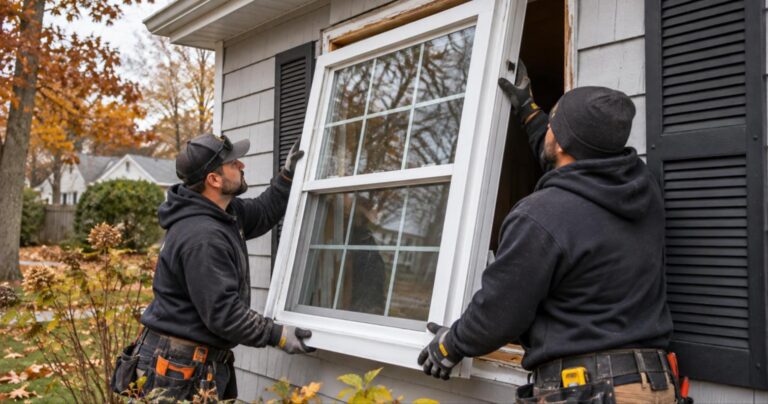
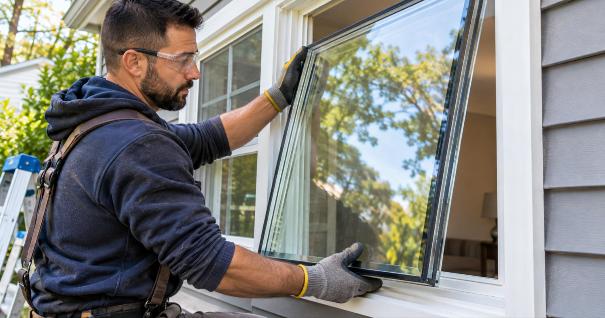
In some windows, the glass unit can be replaced while the existing window frame remains. That may make sense when the frame, sash, hardware, and surrounding materials are still in good condition.
A full-frame replacement may be more appropriate when seal failure occurs alongside rotted framing, water damage, poor installation, air leakage, or deterioration around the opening.
The age of the window and manufacturer’s warranty should also be checked before deciding. Some manufacturers provide specific warranty coverage for premature insulating glass seal failure.
When Should Long Island Homeowners Consider Replacement Windows?
One failed window does not necessarily mean every window in the home needs to be replaced. However, several fogged windows, drafts, difficult operation, water intrusion, deteriorated frames, or consistently uncomfortable rooms may point to a broader issue.
A professional window inspection can evaluate both the glass unit and the surrounding opening. Proper installation is especially important because even high-performance glass cannot perform as intended if the frame is poorly fitted or water is reaching the assembly.
JAGG Roofing, Siding & Windows provides window replacement throughout Long Island, including Nassau and Suffolk County. The team can determine whether a problem is limited to an insulated glass unit or whether replacement windows offer a better long-term solution.
Addressing seal failure early can help prevent moisture problems around the opening while restoring the clear view, comfort, and energy efficiency the window was designed to provide.
Jacob Giannelli is the founder of JAGG Roofing, Siding & Windows, serving Nassau and Suffolk County homeowners across Long Island. JAGG is an Owens Corning Preferred Contractor and BBB Accredited Business with a 5.0-star Google rating.