Get a free estimate.
Nassau & Suffolk County.
When homeowners start shopping for replacement windows, the conversation usually reaches the same question: vinyl or fiberglass? Both can improve energy efficiency, reduce drafts, and replace old windows that make certain rooms uncomfortable. But the two frame materials are manufactured differently, perform differently as temperatures change, and come with different price points.
For Long Island homeowners dealing with cold winters, humid summers, coastal weather, and constant temperature fluctuations, the better choice depends less on which material sounds more premium and more on the complete window: frame construction, glass package, air seal, installation quality, and tested energy performance.
What Are Vinyl Windows?
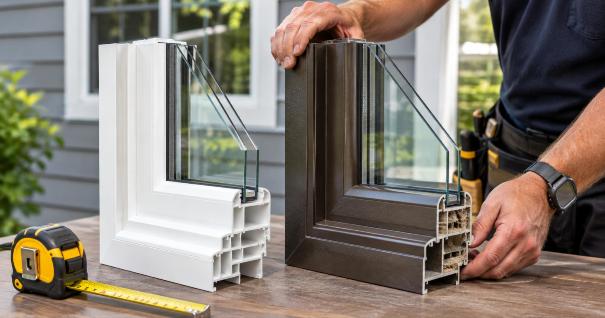
Vinyl windows are made primarily from polyvinyl chloride, commonly called PVC or uPVC. During the manufacturing process, the material is formed into hollow window-frame profiles that may contain internal chambers for additional rigidity and thermal performance.
Many vinyl window frames use fusion-welded or welded corners rather than mechanically fastened joints. Vinyl also does not require painting and is resistant to common problems that affect wooden windows, such as wood rot and insect damage.
One reason vinyl has become popular for residential window replacement is value. It generally offers a lower entry price than fiberglass while still allowing homeowners to choose energy-efficient glass, Low-E coatings, different window styles, and numerous color options.
For homeowners replacing aging or drafty windows, JAGG provides window replacement services throughout Long Island for both Nassau and Suffolk County properties.
What Are Fiberglass Windows?
Fiberglass window frames are typically produced using glass fibers embedded within a polymer resin. Many products use a process called pultrusion, which creates rigid lengths of high-density fiberglass material.
Because fiberglass is a thermoset material rather than a thermoplastic like vinyl, it has strong dimensional stability. In practical terms, the frame experiences relatively little expansion and contraction as outdoor temperatures change.
Fiberglass frames can also be manufactured with thinner profiles while maintaining structural strength, which may allow a larger glass area and more natural light depending on the window design.
The tradeoff is generally cost. Fiberglass windows tend to occupy a higher price tier than standard vinyl windows, and there may be fewer product and installer options in some markets.
Which Material Is More Energy Efficient?
This is where homeowners should be careful with broad claims. Fiberglass is sometimes described as inherently more energy efficient than vinyl, but frame material alone does not determine the energy performance of a finished window.
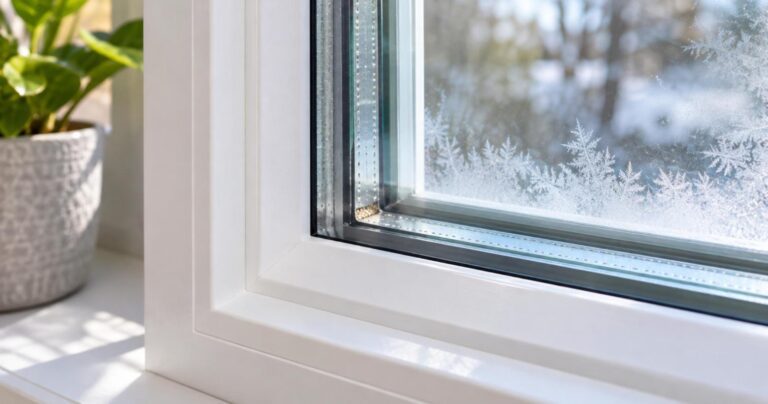
The glass package often has a larger influence. Dual- or triple-pane glass, Low-E coatings, gas fills, spacer systems, frame construction, air infiltration, and installation all affect heat loss.
Instead of comparing only “vinyl versus fiberglass,” look at the window’s U-factor. The National Fenestration Rating Council defines U-factor as a measurement of how effectively a product prevents heat from escaping; lower numbers indicate better insulating performance.
ENERGY STAR also recommends that homeowners in northern climates prioritize windows with lower U-factors and compare the actual NFRC ratings of the products they are considering.
Why Glass and Installation Matter So Much
A premium frame cannot compensate for a poorly installed window.
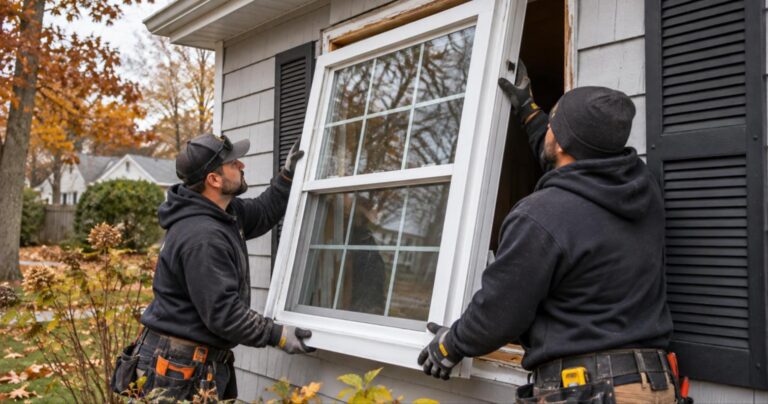
Gaps between the window frame and the rough opening can create air infiltration even when the window itself has excellent thermal ratings. That is why professional window installation includes proper sizing, leveling, fastening, air sealing, flashing, and exterior water management.
The glass matters just as much. A modern Low-E glass package can reduce heat transfer through the glass surface, while dual- or triple-pane construction creates insulating spaces that a single pane of glass cannot provide.
The ENERGY STAR window buying guidance recommends checking the exact ENERGY STAR and NFRC labels on the windows being installed rather than relying solely on marketing descriptions.
Vinyl vs. Fiberglass: Durability and Maintenance
Both materials avoid many of the maintenance issues associated with traditional wood windows, but they age differently.
| Feature | Vinyl Windows | Fiberglass Windows |
|---|---|---|
| Maintenance | Low | Low |
| Painting required | Generally no | Depends on finish |
| Moisture resistance | Very good | Very good |
| Expansion and contraction | Greater than fiberglass | Very low |
| Structural rigidity | Good | Higher |
| Typical initial cost | Lower | Higher |
| Color options | Numerous, product dependent | Numerous, often paintable |
| Wood rot/insect damage | Not susceptible | Not susceptible |
Fiberglass’s dimensional stability can be an advantage in areas with significant temperature fluctuations because the frame material expands and contracts less.
Vinyl remains durable for residential use, but product quality matters. Frame reinforcement, wall thickness, corner welds, UV stabilizers, and overall manufacturing standards can vary substantially between inexpensive and higher-performing vinyl windows.
Which Offers Better Long-Term Value?
Fiberglass may offer greater rigidity and dimensional stability, but that does not automatically mean it delivers a better return on investment for every home.
A quality vinyl window with strong NFRC ratings, Low-E glass, good weather resistance, and professional installation may provide excellent long-term value at a lower upfront price. That leaves homeowners more flexibility when replacing numerous windows at once.
Fiberglass may make sense when structural strength, slim frames, specific finishes, or long-term dimensional stability are higher priorities than initial window prices.
For either material, energy savings should also be viewed realistically. Replacement windows can reduce drafts and heat loss, but actual energy performance depends on the condition of the existing windows, insulation, air leakage throughout the home, HVAC efficiency, and the specifications of the replacement product.
Which Replacement Window Should You Choose?
For most homeowners, there is no universal winner.
Choose vinyl windows when affordability, low maintenance, energy performance, and a wide selection of styles are the main priorities. A well-built vinyl window with fusion-welded corners, insulated glass, Low-E coatings, and good NFRC ratings can be an excellent replacement option.
Consider fiberglass windows when greater frame rigidity, minimal thermal expansion, slim profiles, or specific finish options justify the additional cost.
More importantly, compare the actual specifications instead of buying based on material alone. Ask for the U-factor, air leakage rating, glass package, Low-E coating, warranty details, and installation method for each window being considered.
Long Island’s seasonal temperature changes make both the product and installation important. JAGG Roofing, Siding & Windows can evaluate existing window frames, discuss replacement options, and help homeowners choose a window system based on comfort, energy efficiency, appearance, and budget rather than a one-size-fits-all recommendation.
Jacob Giannelli is the founder of JAGG Roofing, Siding & Windows, serving Nassau and Suffolk County homeowners across Long Island. JAGG is an Owens Corning Preferred Contractor and BBB Accredited Business with a 5.0-star Google rating.