Get a free estimate.
Nassau & Suffolk County.
Roof flashing is a thin, water-resistant material installed around the most vulnerable areas of a roof. It directs rainwater away from joints, edges, valleys, chimneys, skylights, and other roof penetrations where leaks are more likely to develop.
For New York homeowners, properly installed roof flashing is especially important because a roofing system must withstand heavy rain, snow, ice, wind, and repeated freeze-thaw cycles. Damaged or poorly installed flashing can allow water intrusion beneath roof shingles and into the roof decking, attic areas, walls, and ceilings.
Knowing the warning signs of failing flashing can help you address a small roof leak repair before it develops into extensive water damage.
What Does Roof Flashing Do?
Roof flashing creates a protective barrier at transition points where ordinary roofing materials alone may not provide enough protection against water.
Instead of allowing rainwater to collect around a chimney, vent pipe, skylight, or roof valley, flashing directs it toward the shingles, gutters, or another drainage point. These relatively small pieces of metal play an important role in protecting the entire roof system.
Without effective flashing, moisture can reach the underlying building materials and eventually cause rotting wood, damaged insulation, ceiling stains, and mold growth.
Where Is Flashing Installed on a Roof?
Metal flashings are used anywhere a roof changes direction or meets another building surface. The exact configuration depends on the roof design and roofing materials.
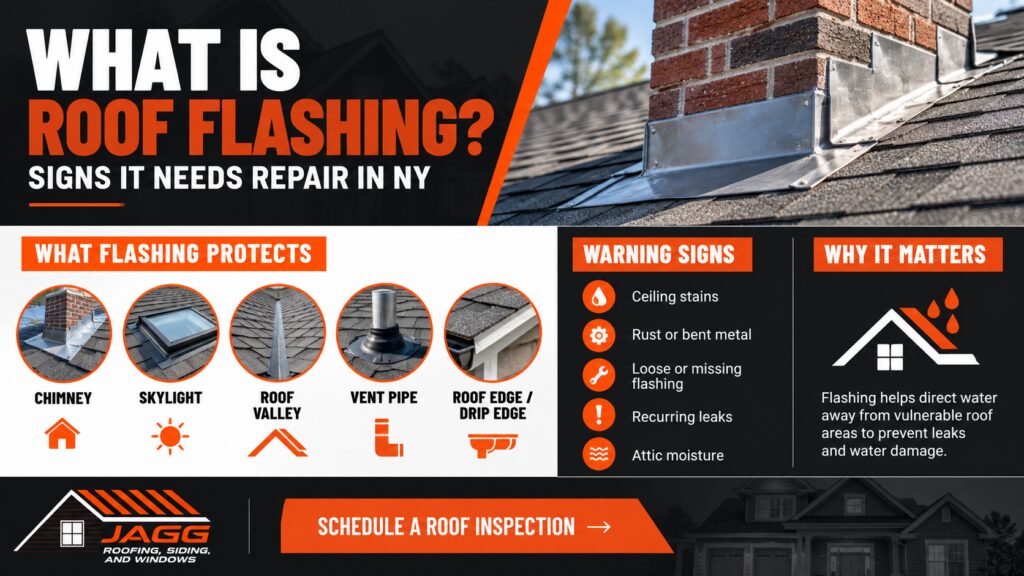
Common locations include roof valleys, roof edges, chimneys, skylights, dormers, walls, vent pipes, and other roof penetrations.
Step Flashing and Counter Flashing
Step flashing is commonly installed where a sloped roof meets a vertical wall. Individual pieces overlap with the roof shingles, creating a layered path that directs water downward.
Around chimneys and similar structures, base flashing and counter flashing may work together. Counter flashing covers the upper edge of the base flashing to help prevent water from getting behind the roofing system.
Valley, Vent and Skylight Flashing
Valley flashing protects roof valleys where two slopes meet and significant amounts of rainwater may be concentrated. Vent flashing creates a watertight transition around vent pipes, while skylight flashing protects the perimeter of a skylight.
Kickout flashing may also be installed where a roof meets a wall to direct runoff away from the siding or wall assembly.
Drip Edge Flashing
A drip edge is installed along roof edges to direct water away from the fascia and into the gutter system. It also helps prevent water from traveling underneath the edge of the roof covering.
Drip edge flashing is particularly valuable during New York winters, when snowmelt and ice dams can expose vulnerable roof edges to additional moisture.
What Is Roof Flashing Made Of?
Galvanized steel is one of the most commonly used flashing materials because it provides durability at a relatively affordable cost. Aluminum flashings are lightweight and corrosion resistant, while copper flashings offer excellent longevity and are often used on premium or historic roofing systems.
The appropriate metal material and metal thickness depend on the roof design, location of the flashing, surrounding building materials, and applicable building code requirements.
The National Roofing Contractors Association provides additional consumer roofing resources explaining roofing systems and the importance of qualified installation.
How Do You Know If Roof Flashing Needs Repair?
Flashing problems are not always obvious from the ground. Some of the first signs appear inside the home rather than on the roof.
Homeowners should watch for ceiling or wall stains, moisture in attic areas, mold growth, peeling paint, or recurring roof leaks near chimneys, skylights, or exterior walls.
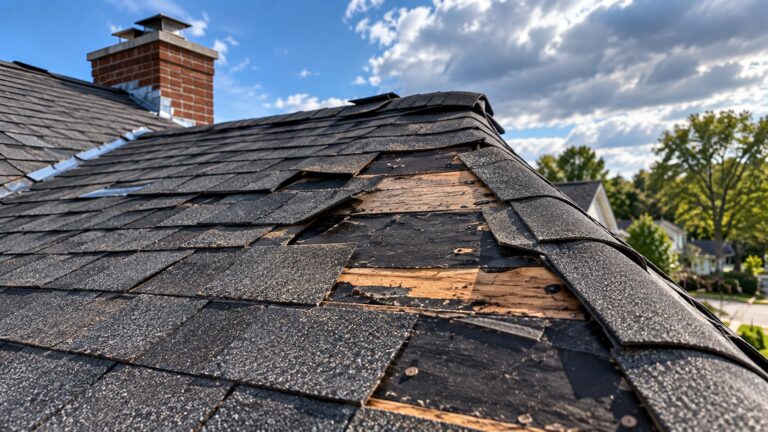
Outside, flashing may appear bent, loose, rusted, cracked, separated from surrounding materials, or missing entirely. Roofing sealant or roofing cement that is cracking or pulling away can also indicate an area that needs closer evaluation.
Why Flashing Can Fail
Storm damage, age, improper installation, corrosion, movement between building assemblies, and repeated exposure to New York weather can gradually weaken flashing.
Roofing nails can loosen, sealants can deteriorate, and metal can separate from adjoining surfaces. Ice dams may also force water beneath shingles and into vulnerable transition points.
A professional inspection can determine whether the problem is isolated flashing damage or evidence of a larger roofing issue.
How Does Roof Flashing Repair Work?
The repair depends on the location and extent of the damage. Minor issues may involve resecuring or replacing a damaged section and restoring the surrounding shingles. More extensive deterioration may require removal of nearby roofing materials so new flashing can be properly integrated into the roof system.
Simply covering damaged flashing with roofing cement is not always a permanent solution. The underlying source of the water intrusion needs to be identified so repairs protect the roof rather than temporarily hiding the problem.
JAGG Roofing, Siding & Windows provides roof repair services for homeowners dealing with leaks, storm damage, and other roofing problems.
How Long Does Roof Flashing Last?
Properly installed metal roof flashing can last for decades, but its service life depends on the material, installation quality, environment, and condition of the surrounding roof.
Copper flashings can have an especially long lifespan, while galvanized steel and aluminum may eventually corrode or deteriorate depending on exposure.
Flashing should therefore be evaluated as part of regular roof maintenance rather than assumed to last indefinitely. An inspection after severe weather can also identify damage before the next major rain or snow event exposes it.
Should Flashing Be Replaced During a Roof Replacement?
Roof replacement provides an opportunity to inspect flashing that may otherwise be partially concealed by shingles. Some flashing can potentially remain when it is in excellent condition and compatible with the new roofing system, but damaged, improperly installed, or deteriorated flashing should be replaced.
Reusing questionable flashing on a new roof can create a weak point in an otherwise new roofing system.
Homeowners considering a new roof can learn more about JAGG’s roof replacement services and available roofing options.
Can Damaged Flashing Cause Serious Water Damage?
Yes. A relatively small flashing failure can allow water to travel beneath shingles and into areas far from the original opening.
Persistent moisture can damage roof decking, insulation, drywall, framing, and interior finishes. It may also create conditions that support mold growth. Because water can travel along rafters and other building materials before becoming visible, the stain inside your home may not be directly beneath the damaged flashing.
This is why recurring leaks around chimneys, skylights, valleys, and roof penetrations should not be ignored.
How Can You Maintain Roof Flashing?
You generally do not need to perform flashing maintenance yourself. Instead, visually monitor the roof from a safe location and arrange a professional inspection when you notice damage or experience severe weather.
Keep gutters clear so water can drain properly, address missing or damaged shingles promptly, and pay attention to moisture around chimneys, skylights, ceilings, and attic areas.
After major wind, hail, or other severe weather, JAGG’s storm damage inspections can help identify flashing and roofing damage that may not be visible from the ground.
Get Your Roof Flashing Inspected in New York
Roof flashing may represent a small portion of your roof, but it protects some of the areas most susceptible to leaks. Step flashing, chimney flashing, valley flashing, drip edges, skylight flashing, and vent flashing all help keep water moving away from vulnerable parts of the home.
If you notice water stains, leaks, damaged shingles, loose metal, or other signs of water intrusion, have the roof evaluated before the damage spreads.
JAGG Roofing, Siding & Windows provides professional roofing services for homeowners throughout Long Island. Contact JAGG Roofing, Siding & Windows to schedule a professional roof inspection and determine whether your flashing needs repair or replacement.
Jacob Giannelli is the founder of JAGG Roofing, Siding & Windows, serving Nassau and Suffolk County homeowners across Long Island. JAGG is an Owens Corning Preferred Contractor and BBB Accredited Business with a 5.0-star Google rating.