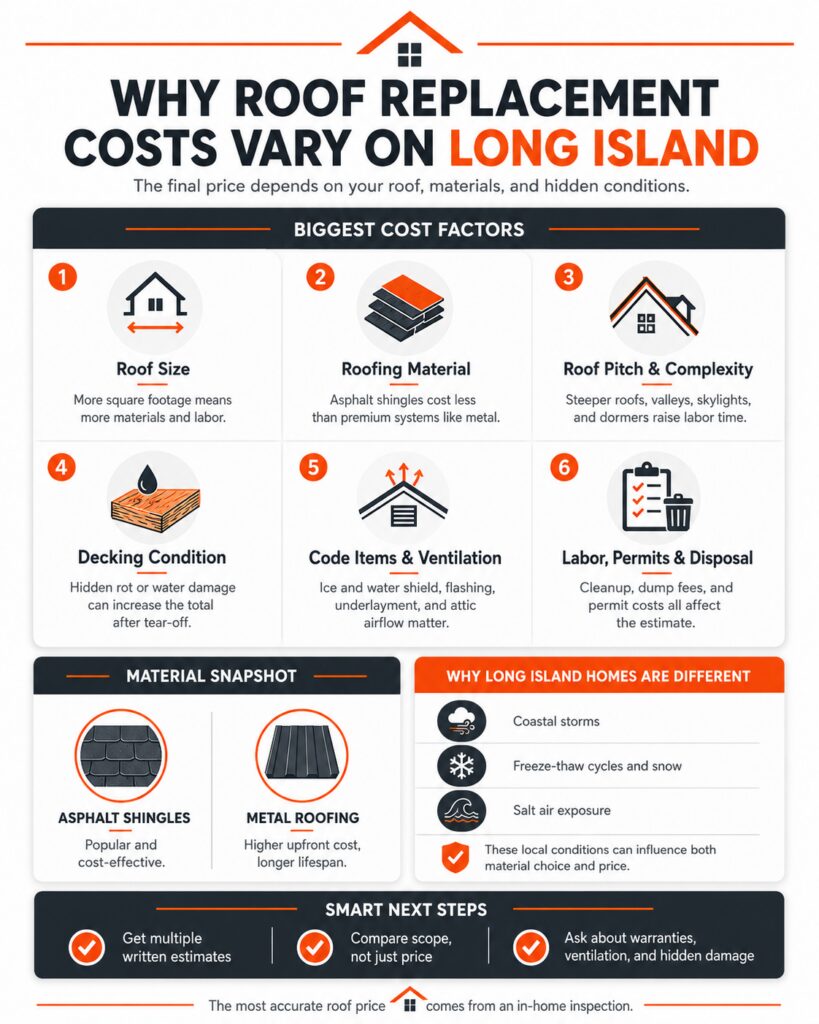
Roof replacement cost on Long Island depends on the roof size, roofing materials, labor rates, roof pitch, and the condition of the roof decking. A simple asphalt shingle roof on a smaller home usually costs less than a complex roof with steep slopes, skylights, chimneys, and structural work. Nassau County and Suffolk County homes also face coastal storms, freeze-thaw cycles, heavy snow, and salt air, which can affect material choices. The best way to price a new roof installation is through an in-home estimate, not a rough online guess.
Most roofing costs are built from several parts. The main cost drivers include roofing materials, labor costs, disposal fees, roof tear-off, underlayment, ventilation components, flashing, ice and water shield, and any needed roof repair. If water damage has reached the roof decking, the price can increase because damaged wood must be replaced before shingles are installed. A roofing contractor should explain each line item clearly. This helps homeowners understand what they are paying for and why one estimate may be higher than another.
Roof size is one of the biggest cost factors because roofing is often measured by the square foot or by roofing squares. One roofing square equals 100 square feet of roof surface. This does not always match the home’s floor size because roof slopes, overhangs, dormers, and design details add surface area. A larger roof needs more asphalt shingles, synthetic underlayment, ridge caps, flashing, and labor. When homeowners compare cost estimates, they should confirm that each estimate is based on the same roof measurements.
Roof pitch affects labor costs because steeper roofs take more time, safety planning, and equipment. A low-slope roof may be easier to access, while steep roof slopes can slow the full replacement process. Roof complexity also matters. Gable roofs are often simpler than roofs with many valleys, dormers, skylights, and transitions. Each detail requires careful flashing and sealing. OSHA explains that residential roofing work needs fall protection because falls are a major safety risk, which is one reason skilled labor is a serious part of the project cost.
Asphalt shingle roof replacement is one of the most common choices for residential roofs on Long Island. Asphalt shingles are popular because they balance cost, appearance, and material lifespan. Standard asphalt roofing is usually more affordable than metal roofing systems or synthetic slate. Architectural shingles cost more than basic shingles, but they can improve curb appeal, shingle quality, and resale value. For many homeowners, an asphalt roof offers the best mix of price, warranty coverage, and dependable protection against storm season weather.
Sometimes building codes allow roof recover or overlay work, but that does not mean it is always the best choice. The International Residential Code allows re-covering in some situations, but it also lists cases where it is not permitted, such as when the existing roof is water-soaked or deteriorated enough that the new layer would not perform properly.
That matters because covering old problems can trap moisture and hide damage in the roof deck below. For many homeowners, a full tear-off gives the roofing contractor a better view of the structure and creates a stronger base for long-term performance.
Homeowners insurance may help with roofing costs when the damage comes from a covered peril, but the answer depends on the insurance policy and the cause of the damage. Sudden events like wind or hail damage are more likely to be covered than long-term wear, neglect, or old age.
The Insurance Information Institute explains that coverage depends on the policy language and whether the loss came from a covered event, while settlement may be based on Replacement Cost Value or Actual Cash Value depending on the terms. For homeowners, that means documentation, photos, and a professional inspection are important if an insurance claim may be needed.
A roof in poor condition can make buyers worry about hidden costs, financing problems, and future repairs. A newer roof can reduce that concern and improve home value because it signals better protection and less immediate work after closing. It can also help curb appeal and support a smoother sale.
The exact market value impact depends on the home, location, and buyer expectations, but roof condition is often part of how buyers judge overall upkeep. For Long Island homeowners, replacing a failing roof before listing may create a stronger impression than trying to sell as-is with visible damage indicators.
There is no one perfect month for every home, but weather and scheduling both matter. Many homeowners prefer milder seasons because crews can work more comfortably and weather delays may be lower. Still, the best time is often when the roof condition makes action necessary.
Waiting for an ideal month can allow leaks, water damage, and mold growth to spread. If a roof has active problems, a licensed roofing contractor should inspect it as soon as possible. For Long Island homeowners, the best timing is usually the point where the roof can still be addressed in a controlled way before emergency conditions take over.
Not sure about your roof's condition? Let's take a look.
(631) 861-5428Architectural shingles cost more than basic three-tab shingles because they are thicker, more dimensional, and often come with stronger manufacturer-backed warranties. Products like GAF Timberline HDZ® are examples of architectural asphalt shingles designed for a finished look and stronger wind performance when installed as part of a qualifying roofing system. GAF’s own residential warranty information explains that coverage can depend on the shingle, accessories, and installation method. Better shingle quality can raise the upfront cost, but it may reduce future roof repair needs.
Metal roofing usually costs more than asphalt shingles, but metal roofs can offer a longer material lifespan when installed correctly. Metal roofing systems may be a good fit for certain Long Island homes, especially when homeowners want strong durability, clean design, and improved energy efficiency. Energy-efficient metal systems may also help reflect heat in some applications. The tradeoff is higher material prices, more specialized labor, and possible upgrade costs. Homeowners should compare the long-term value, not just the first price on the estimate.
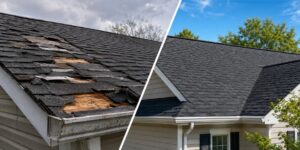
A full tear-off usually costs more than installing over old shingles, but it gives the contractor a chance to inspect the roof decking. This matters because hidden water damage, soft wood, structural deck rot, or a sagging roof can stay covered under old layers. Many homeowners ask if they can put a new roof over an old roof to save money. The answer depends on building codes, roof condition, and manufacturer rules. A full tear-off is often cleaner because it protects structural integrity and helps avoid hidden problems.
Roof replacement pricing can vary from one home to another. The table below explains the biggest factors that affect the final estimate.
| Cost Factor | How It Affects the Price | What Long Island Homeowners Should Know |
|---|---|---|
| Roof Size | Larger roofs require more shingles, underlayment, flashing, ridge caps, and installation labor. | Roof size is measured by roof surface area, not just the home’s interior square footage. |
| Roof Pitch | Steeper roofs can increase labor time, safety planning, and equipment needs. | Homes with steep slopes may cost more than simpler low-slope roofing projects. |
| Roof Complexity | Dormers, valleys, skylights, chimneys, and multiple roof sections add installation time. | More roof details mean more flashing, sealing, and careful workmanship. |
| Roofing Material | Asphalt shingles usually cost less than metal roofing or other premium roofing systems. | Architectural shingles may cost more upfront but can improve curb appeal, durability, and warranty coverage. |
| Full Tear-Off | Removing old shingles adds labor, cleanup, and disposal costs to the project. | A tear-off allows the contractor to inspect the roof decking for hidden water damage or rot. |
| Decking Condition | Soft, rotten, or water-damaged decking must be replaced before the new roof is installed. | Hidden damage is one reason the final price may change after the old roof is removed. |
| Ice & Water Protection | Synthetic underlayment, ice and water shield, drip edge, and flashing can affect the project scope. | These components are important for Long Island homes exposed to rain, snow, wind, and freeze-thaw cycles. |
| Ventilation | Proper attic ventilation may require added materials, vent upgrades, or adjustments during installation. | Good ventilation helps reduce trapped heat, moisture buildup, and ice dam problems. |
| Labor, Permits & Disposal | Crew labor, local permit requirements, cleanup, dump fees, and site protection all affect the estimate. | A detailed written estimate should explain what is included so homeowners can compare contractors fairly. |
Decking condition can change the final roof replacement cost after the old roof is removed. If the roof decking is solid, the project can move forward as planned. If there is water damage, rot, soft spots, or structural work needed, the contractor may need to replace sections before installing the new roof. This is why a contingency fund is smart. Long Island homes with past leaks, ice dam formation, or poor attic ventilation may have hidden damage that only appears during the roof tear-off.
Code compliance expenses can affect roofing prices because a new roof must be installed correctly for local conditions. Ice and water shield is important on Long Island because freeze-thaw cycles, heavy snow, and ice dam formation can push water under the roof edge. The New York State Residential Code roof assembly section explains roof assembly requirements, including underlayment and ice barrier rules. Synthetic underlayment, drip edge, flashing, and ventilation components all help protect the home from water intrusion.
Attic ventilation can affect the life of a roof and the comfort of the home. Poor ventilation traps heat and moisture in the attic. This can weaken roof decking, increase ice dam formation in winter, and make cooling harder in summer. Proper ventilation helps air move through the attic and supports better energy efficiency. The ENERGY STAR attic ventilation guide explains why ventilation matters for home performance. A roof estimate should include ventilation review, not just shingles.
Disposal fees are part of many roof replacement estimates because old asphalt shingles, underlayment, nails, and damaged decking must be removed from the property. Labor rates also vary based on crew size, schedule, roof pitch, and roof complexity. Permits and local building codes may also affect the full replacement process depending on the town, project scope, and roof design. Homeowners should make sure the estimate explains tear-off, cleanup, disposal, and site protection. A lower price is not always better if important steps are missing.
Homeowner insurance may cover a new roof if the damage comes from a covered event, such as storm damage, fallen debris, or certain insurance losses. It usually does not cover normal aging, poor maintenance, or old roofing materials that have simply reached the end of their lifespan. The New York Department of Financial Services explains that after a loss, homeowners should notify their insurer and keep written records of the claim process through its homeowner loss guidance. Insurance claims depend on the policy, deductible costs, and inspection findings.
Insurance conversations can be confusing because a covered roof claim does not always mean the full cost is paid upfront. Deductible costs, depreciation gaps, policy limits, and code compliance expenses can all affect what the homeowner pays. Some policies pay replacement cost after work is completed, while others account for age and material condition. Homeowners should read the insurance policy and ask clear questions before choosing a contractor. A roofing contractor can document roof damage, but the insurance company decides claim approval and payment terms.
Roof financing options can help homeowners move forward when a roof cannot wait. Some projects are planned upgrades, while others happen after leaks, storm season damage, or failed roof repair attempts. Financing plans, payment plans, and structured payment solutions can make the cost easier to manage over time. Homeowners should compare monthly payments, interest rates, approval terms, and total repayment cost. A lower monthly payment may feel better at first, but the full financing cost matters when planning a major exterior project.
A standard asphalt shingle roof replacement does not automatically qualify for a federal tax credit. Some energy improvements may qualify, but homeowners should check the current IRS rules before assuming savings. The IRS explains the Energy Efficient Home Improvement Credit through its official energy-efficient home improvement credit page. Solar-ready installations or solar roofing work may have different tax rules than normal roof replacement. If energy savings are part of the plan, ask about attic ventilation, insulation, metal roofing, and solar preparation before work begins.
Getting multiple estimates is smart because it helps homeowners compare scope, not just price. One estimate may include full tear-off, ice and water shield, synthetic underlayment, ventilation components, flashing, cleanup, and a workmanship warranty. Another estimate may leave some of those items unclear. The goal is not to find the cheapest number. The goal is to understand what is included, what is excluded, and what could change after the roof tear-off. A clear estimate protects the homeowner from surprise upgrade costs.
A local roofing contractor understands Nassau and Suffolk County weather, county roofing systems, coastal storms, and the way Long Island homes are built. Local crews also understand common issues like salt air, ice dam formation, heavy snow, wind-driven rain, and older roof decking. Homeowners should look for licensed crews, manufacturer-backed warranties, a clear workmanship warranty, and in-home estimates. JAGG Roofing, Siding and Windows provides roofing, roof repair, siding services, and new roof installation support for Long Island homeowners.
The cost of roof replacement on Long Island depends on roof size, square foot measurements, roofing materials, labor costs, roof pitch, roof complexity, decking condition, and warranty coverage. Asphalt shingles are usually more affordable than metal roofing, while architectural shingles and premium systems can raise the price. Hidden water damage, structural work, code compliance, disposal fees, and insurance deductibles can also change the final total. The safest next step is a detailed inspection and written estimate so the homeowner can make a clear decision.