Get a free estimate.
Nassau & Suffolk County.
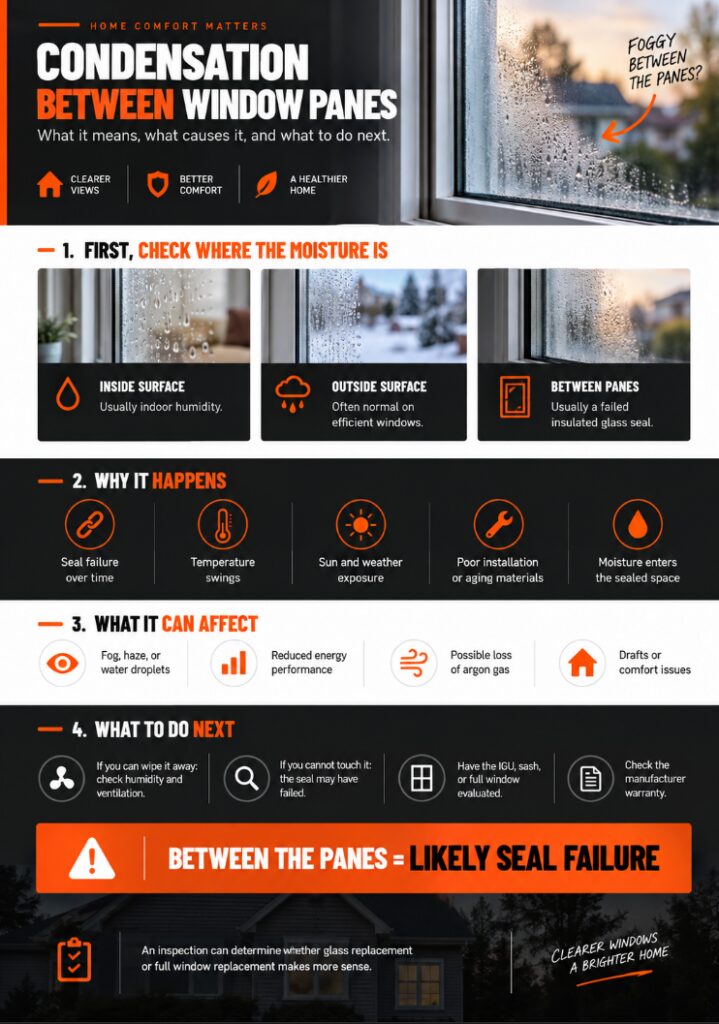
Fog or condensation trapped between window panes is usually more than a cleaning problem. If the moisture is sitting inside the sealed space between two or three panes of glass, it commonly means the insulated glass seal has failed and moisture has entered an area that is supposed to remain sealed.
That is different from condensation you can wipe off the inside or outside surface of a window. Interior condensation is often related to indoor humidity meeting cold glass, while exterior condensation can occur when humid outdoor air contacts a cooler exterior pane. Moisture trapped between the glass points to a problem within the window itself. Both Pella and Andersen identify between-pane condensation as a common sign of insulating-glass seal failure.
For Long Island homeowners, temperature swings, cold winters, humid summers, strong sunlight, and coastal weather can all place stress on windows over time. Understanding what the fogging means can help you determine whether the glass unit can be replaced or whether a complete window replacement makes more sense.
Why Is There Condensation Between My Window Panes?
Modern double-pane and triple-pane windows are built using an insulated glass unit, often called an IGU. Two or more panes of glass are separated by a spacer around the perimeter and sealed together to create an enclosed space.
That space may contain an insulating gas such as argon or, in some window systems, krypton. The combination of multiple panes, insulating gas, Low-E coatings, and a sealed airspace helps reduce heat transfer through the window.
When the perimeter seal begins to fail, outside air and moisture can enter the space between the glass. The desiccant material incorporated into the spacer may initially absorb some of that moisture. Eventually, however, it can become saturated. At that point, changing temperatures cause visible fog, haze, or water droplets to form between the panes.
Because you cannot reach that surface from inside or outside the house, wiping the window does nothing.
First, Determine Where the Window Condensation Is
Before assuming the window has failed, determine which surface contains the moisture.
|
Where Is the Condensation? |
Likely Cause |
What It Usually Means |
|---|---|---|
|
Inside surface of glass |
Warm humid indoor air contacting cold glass |
Check indoor humidity and ventilation |
|
Outside surface of glass |
Humid outdoor air contacting cool glass |
Can occur normally on energy-efficient windows |
|
Between two or three panes |
Insulated glass seal failure |
IGU, sash, or window replacement may be needed |
Interior condensation does not automatically mean there is something wrong with the window. ENERGY STAR notes that condensation can form when the glass surface falls below the dew point of humid indoor air. Using kitchen and bathroom exhaust fans, venting dryers outdoors, improving air circulation, and controlling indoor humidity can help.
Exterior condensation can also occur on high-performance windows because efficient insulating glass limits heat transfer. The outside pane may stay cooler and collect temporary condensation under humid conditions. Andersen notes that this moisture typically evaporates as conditions change.
Condensation between the panes is the condition that deserves closer attention.
What Causes an Insulated Window Seal to Fail?
Window seals experience stress every day. Glass and framing materials expand when temperatures rise and contract when they fall. Over many seasons, this repeated movement can gradually weaken the perimeter seal.
Age is one common factor. Older windows have simply been through more heating, cooling, sunlight, wind, and moisture cycles. Strong sun exposure can also heat the glass and increase thermal stress.
Installation matters too. A window that is improperly sized, poorly supported, or installed in an opening that places unnecessary pressure on the frame may experience additional stress. Drainage problems around the window can expose surrounding materials to repeated moisture.
Manufacturing quality, window design, sealant materials, spacer design, and environmental exposure can also affect how long the sealed unit performs. Pella notes that seal life depends on factors including environmental conditions, sealing materials, desiccant materials, glass design, and overall window construction.
What Happens to the Argon Gas and Spacer?
Once the seal fails, the problem is not simply that water has appeared.
The sealed cavity may originally contain argon or another insulating gas. When seal integrity is lost, that gas can gradually escape while humid air enters. The spacer’s desiccant attempts to absorb incoming moisture, but its capacity is limited.
When moisture remains in the cavity, temperature changes can turn it into visible fog or droplets.
That is why condensation may come and go. The glass might look relatively clear during one part of the day and become noticeably cloudy when sunlight or outdoor temperatures change. The underlying seal failure has not disappeared just because the moisture temporarily becomes less visible.
Can You Remove Moisture Between Double-Pane Windows?
You may find window “defogging” services that drill into the glass, remove moisture, and attempt to improve visibility. This can make the window look clearer, but it does not necessarily restore the original sealed insulating system.
Defogging generally does not replace the escaped insulating gas or recreate the original factory seal. For that reason, it is primarily a cosmetic approach rather than a complete restoration of thermal performance.
Using a hair dryer is not a permanent solution either. Heating the glass may temporarily change where moisture appears, but it cannot repair the failed perimeter seal or remove the underlying reason humid air entered the sealed cavity.
A more durable solution is usually replacement of the insulated glass unit, sash, or entire window.
Does a Failed Window Seal Affect Energy Efficiency?
Yes, potentially. Double- and triple-pane windows rely on the sealed space between the glass as part of their insulating performance.
Once that system is compromised, the window may no longer perform according to its original specifications. Loss of insulating gas and ongoing moisture infiltration can reduce thermal performance even if the window still opens and closes normally.
That does not mean one foggy window will suddenly cause a dramatic increase in energy bills. However, multiple older windows with failed seals, air leakage, deteriorated weatherstripping, or poorly insulated frames can contribute to drafts and inconsistent indoor temperatures.
JAGG recommends evaluating U-factor, solar heat gain coefficient, air leakage, ENERGY STAR eligibility, and NFRC ratings when comparing replacement windows rather than judging efficiency by appearance or brand name alone. JAGG installs energy-efficient windows throughout Nassau and Suffolk County.
Should You Replace the Glass or the Entire Window?
A failed seal does not always mean the entire window has to come out of the wall.
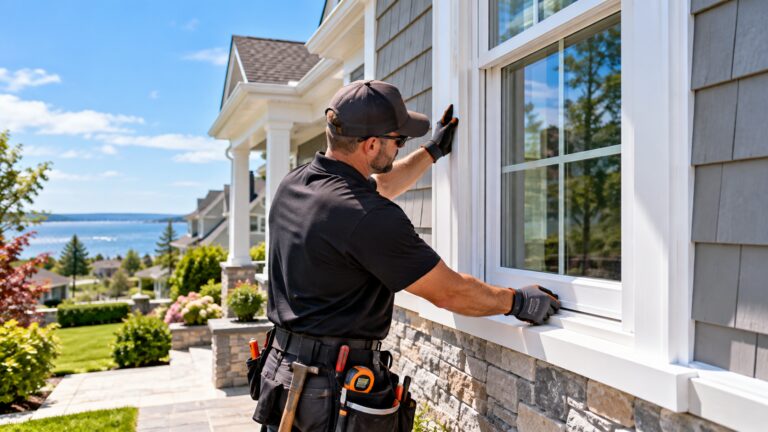
If the frame, sash, hardware, and surrounding installation remain in good condition, it may be possible to replace only the insulated glass unit or, depending on the window design, the complete sash. Replacing the IGU installs a newly sealed glass assembly while leaving the existing window frame in place.
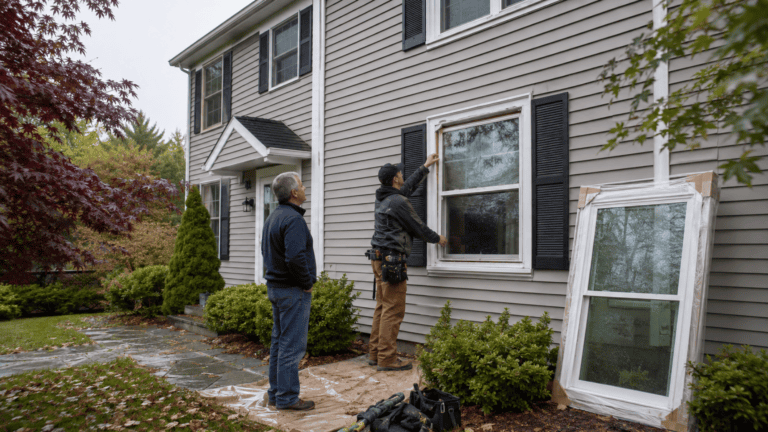
Full window replacement may make more sense when the problem extends beyond the glass. Examples include rotted wood, warped frames, recurring drafts, difficult operation, damaged hardware, multiple failed sealed units, water intrusion around the opening, or an older window with poor overall energy performance.
Check the manufacturer’s warranty before paying for either option. Some window warranties include specific coverage for insulating glass or seal failure, although terms vary by manufacturer, product line, installation, and age.
Foggy Window? Start Here
You can wipe the moisture away: It is probably surface condensation. Look at indoor humidity, outdoor conditions, and ventilation first.
You cannot touch the moisture: If it is visibly trapped between the panes, the insulated glass seal has likely failed.
The frame is also damaged or drafty: Consider evaluating the complete window rather than replacing only the glass.
JAGG Roofing, Siding & Windows provides window inspections and replacement throughout Long Island, including Nassau and Suffolk County. Available options include vinyl and fiberglass frames, double- and triple-pane configurations, Low-E glass packages, and energy-efficient replacement windows.
If condensation is trapped between your window panes, an inspection can determine whether the problem is limited to the sealed glass unit or whether the age and condition of the entire window make full replacement the better long-term solution.
Jacob Giannelli is the founder of JAGG Roofing, Siding & Windows, serving Nassau and Suffolk County homeowners across Long Island. JAGG is an Owens Corning Preferred Contractor and BBB Accredited Business with a 5.0-star Google rating.