Get a free estimate.
Nassau & Suffolk County.
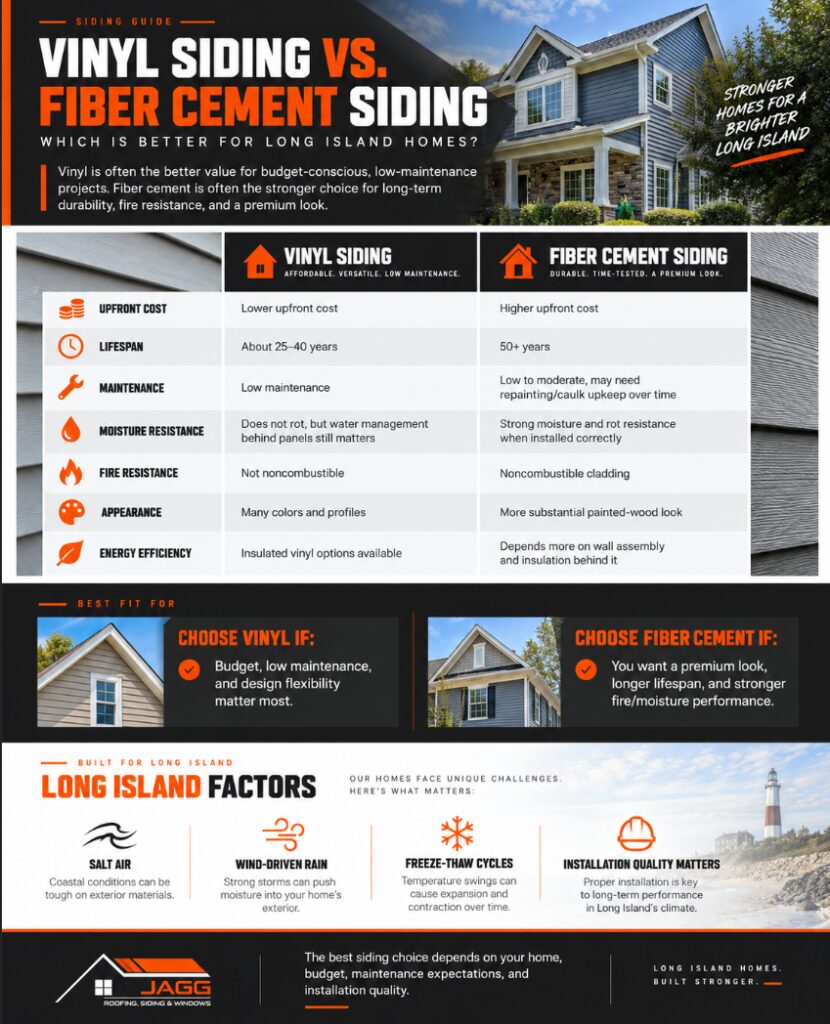
Choosing between vinyl siding and fiber cement siding is not really about finding one material that wins every category. Both can work well on Long Island, but they solve different homeowner priorities. Vinyl is usually the more budget-friendly, lower-maintenance option and can be paired with continuous insulation for better thermal performance. Fiber cement costs more to install but offers a heavier, more rigid exterior with strong resistance to moisture, pests, weather, and fire.
Long Island makes the comparison more important because siding has to deal with humid summers, winter freeze-thaw cycles, strong coastal storms, wind-driven rain, salt air near the shoreline, and years of UV exposure. The right choice depends on where the home is located, how much maintenance the homeowner wants, the desired appearance, energy-efficiency goals, and the condition of the wall assembly behind the siding.
JAGG Roofing, Siding & Windows installs both vinyl and fiber cement siding throughout Nassau and Suffolk County, so the decision can be based on the property rather than forcing every homeowner into the same material.
Vinyl Siding vs. Fiber Cement Siding: Which Is Better for Long Island Homes?
For many Long Island homes, vinyl siding is the better value when upfront cost, low maintenance, and design flexibility are the priorities. Fiber cement is often the stronger choice when long-term durability, fire resistance, moisture resistance, and a more substantial wood-like appearance matter most.
Neither material should be judged by the panel alone. Flashing, housewrap or another water-resistive barrier, insulation, caulking, trim, soffits, fascia, and details around windows and doors all influence how the exterior performs.
The U.S. Department of Energy notes that exterior cladding systems can allow some wind-driven moisture past the outer surface, which is why a properly installed water-resistive barrier and drainage plane behind the siding are important. That drainage layer should integrate with flashing around windows, doors, penetrations, and roof-to-wall transitions.
That makes installation quality one of the most important parts of the vinyl-versus-fiber-cement decision. An expensive siding product installed over poor flashing or inadequate moisture management can still develop problems.
The Quick Comparison: Cost, Durability, Maintenance, and Appearance
|
Category |
Vinyl Siding |
Fiber Cement Siding |
|---|---|---|
|
Upfront Cost |
Generally lower |
Generally higher because material and labor are more involved |
|
Expected Lifespan |
Often about 25–40 years |
Often 50+ years with proper installation and care |
|
Maintenance |
Low; cleaning and damage checks are usually the main needs |
Low to moderate; caulk, joints, finish, and repainting may need attention over time |
|
Moisture |
Does not rot, but water management behind panels still matters |
Designed to resist moisture, swelling, and rot |
|
Fire |
Not a noncombustible cladding |
Fiber cement products such as Hardie® siding are noncombustible |
|
Appearance |
Large selection of colors, profiles, shakes, and textures |
Thicker painted appearance with lap, panel, and shingle-style options |
These are planning differences rather than guarantees. Product quality matters within both categories. Premium vinyl can perform very differently from an entry-level panel, just as fiber cement performance depends on the manufacturer, finish, installation details, and maintenance.
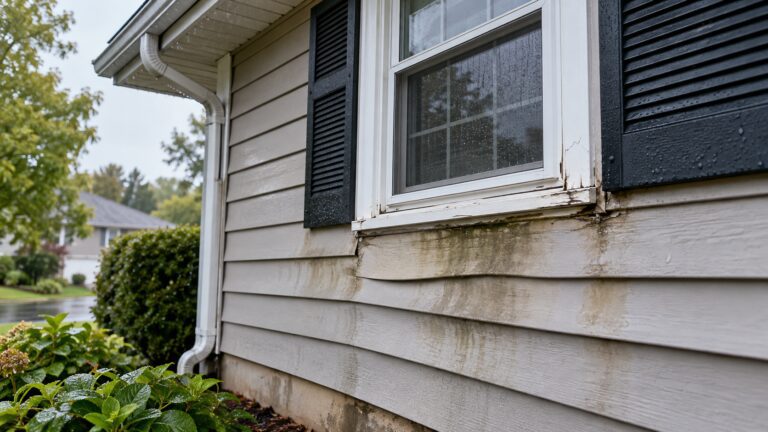
Repairability is another practical difference. Vinyl panels can sometimes be removed and replaced individually, but matching an older color after years of sun exposure can be difficult. Fiber cement can also be repaired in sections, although damaged boards may require more labor because of their weight, fastening, and painted finish. For both materials, widespread moisture damage behind the siding can turn what appears to be a simple panel repair into a larger wall-system project.
Where Vinyl Siding Has the Advantage
Vinyl remains popular because it gives homeowners a broad range of exterior styles without the repainting cycle associated with many painted siding products. It does not rot, and routine care is relatively simple. For a homeowner who wants to update curb appeal while controlling project cost and future maintenance, that combination is hard to ignore.
The design options have also expanded considerably. Vinyl is available in traditional horizontal profiles, shake-style products, board-and-batten looks, different exposures, and a wide color range. That makes it suitable for many Long Island Colonials, Capes, ranches, split-levels, and newer homes without making every exterior look the same.
Cost, Maintenance, and Insulated Vinyl Options
The biggest vinyl advantage is usually economics. Material and installation costs are generally lower than fiber cement, and the product does not require periodic repainting. Damaged individual panels may also be replaceable when a matching profile and color are available.
Insulated vinyl adds another consideration. These systems incorporate rigid foam behind the siding to create a more continuous layer over the wall framing. The Department of Energy recognizes insulated siding as one way to reduce thermal bridging and provide continuous insulation. When properly installed as part of the wall assembly, that can improve thermal performance and indoor comfort.
Vinyl is not maintenance-free in the literal sense. Homeowners should still inspect for loose panels, cracks, storm impact, warped sections, failed trim details, and openings around penetrations. Panels also expand and contract as temperatures change, so proper fastening and installation are critical.
Where Fiber Cement Has the Advantage
Fiber cement is a denser, more rigid material made primarily from cementitious ingredients and cellulose fibers. It is often chosen by homeowners who want the appearance of painted wood without using traditional wood siding.
Durability is its strongest selling point. James Hardie states that its fiber cement products are engineered to resist moisture, rot, pests, extreme weather, and changing climate conditions. JAGG generally uses the 50+ year range as a planning lifespan for fiber cement siding, compared with approximately 25–40 years for vinyl. Actual service life still depends on installation, exposure, finish maintenance, and the wall system behind the siding.
Fiber cement also has a different visual character. The material can create deeper shadow lines and a more substantial painted-clapboard appearance, which can work particularly well on traditional Long Island architecture. It is available in lap siding, shingle-style profiles, vertical panels, trim, and other architectural formats.
Durability, Fire Resistance, and James Hardie Options
One clear technical difference is fire performance. Hardie® fiber cement siding is noncombustible and will not contribute fuel when exposed to flame, according to James Hardie. That does not make the entire exterior wall fireproof, but it gives fiber cement an advantage for homeowners who prioritize noncombustible cladding.
Fiber cement also performs well against moisture when installed correctly. Hardie products are designed to resist damage from water, humidity, swelling, and rot, and the company engineers products for different regional climate conditions. Many Hardie siding products currently carry a 30-year non-prorated limited substrate warranty.
The tradeoff is installation and maintenance. Fiber cement is heavier and more labor-intensive to handle than vinyl. Proper fastening, clearances, flashing, joint treatment, and cutting procedures matter. Depending on the finish, repainting may eventually be required. Factory-finished products such as ColorPlus® are designed to reduce some finish maintenance, but homeowners should still inspect caulk, joints, trim, and surface condition periodically.
How Long Island Weather Changes the Decision
Long Island does not have one siding environment. A house near the Great South Bay, Long Island Sound, or Atlantic shoreline can experience different exposure from a property farther inland. Nassau and Suffolk County homes may encounter nor’easters, wind-driven rain, humidity, snow, freeze-thaw cycles, intense sun, and occasional impact from storm debris.
Both siding materials can perform in these conditions when the right product is installed correctly. The difference is how they respond to specific stresses.
Vinyl does not rot from moisture, which makes it practical in humid environments, but high winds and impact can damage weaker products or poorly secured panels. Fiber cement’s rigidity and moisture resistance are advantages during demanding weather, although the material is not indestructible and can still chip or crack when subjected to severe impact.
Moisture, Salt Air, Wind, and Freeze-Thaw Cycles
Coastal salt air is not just a siding-panel issue. Fasteners, flashing, trim, vents, and other exposed metal components can corrode if inappropriate materials are used. A coastal siding system should therefore be designed as a complete assembly rather than choosing a panel based only on whether it contains vinyl or cement.
Moisture management behind the siding is equally important. DOE building-science guidance recommends a continuous drainage plane behind exterior cladding and proper integration with flashing around windows, doors, roof intersections, and other wall penetrations. If water gets behind either vinyl or fiber cement, the wall needs a way to drain it safely rather than trapping moisture against sheathing or insulation.
Freeze-thaw cycles also put installation details to the test. James Hardie specifically markets climate-engineered fiber cement products designed for wet and freezing conditions, while vinyl siding needs room for normal thermal movement. In both cases, manufacturer-specified fastening patterns, clearances, flashing, and installation quality matter more than simply choosing the material with the stronger marketing claim.
Which Siding Should You Choose for Your Long Island Home?
Choose vinyl siding when keeping the initial project cost manageable, minimizing repainting, and having broad color and style options are high priorities. It is also worth considering when insulated vinyl could complement a larger energy-efficiency upgrade.
Choose fiber cement siding when you prioritize a longer expected service life, noncombustible cladding, resistance to moisture and pests, and the appearance of painted wood. Homeowners willing to spend more upfront may prefer the heavier feel and architectural finish of fiber cement or James Hardie siding.
For either material, ask the contractor what will happen behind the siding. Will damaged sheathing be repaired? What water-resistive barrier will be used? How will kick-out flashing, windows, doors, roof-to-wall transitions, soffits, and fascia be handled? Will continuous insulation or air sealing be added? Those details can have a greater effect on moisture control and energy efficiency than the siding panel itself.
Best Fit at a Glance
Choose vinyl if: budget, low maintenance, design flexibility, and insulated siding options are leading priorities.
Choose fiber cement if: maximum durability, fire resistance, moisture performance, and a premium painted-wood appearance matter more than the lowest upfront cost.
Homeowners comparing resale value should also avoid assuming one material automatically produces a higher return. New siding can improve curb appeal and reduce visible exterior deterioration, but market value depends on the condition of the entire home, neighborhood, product quality, and installation. The better investment is usually the system that fits the property and is installed correctly.
Some homeowners ask whether fiber cement siding lowers home-insurance costs because of its fire resistance. James Hardie notes that some insurers may offer discounts for noncombustible siding, but any premium reduction is carrier- and policy-specific and should be confirmed directly with the homeowner’s insurer rather than assumed when budgeting a project.
Permit requirements can also vary by Long Island town or incorporated village, particularly when siding work involves structural alterations. That should be confirmed for the property’s actual jurisdiction before work begins.
JAGG Roofing, Siding & Windows installs vinyl, insulated vinyl, fiber cement, James Hardie, cedar, composite, and engineered siding throughout Nassau and Suffolk County. JAGG can also coordinate siding with roofing and replacement windows when a broader exterior renovation is planned.
A professional siding estimate should evaluate the existing exterior, sheathing, moisture conditions, trim, windows, doors, and wall transitions before recommending a material. There is no universal winner between vinyl and fiber cementthe better siding is the one that matches the home’s exposure, design, budget, maintenance expectations, and long-term goals.
Jacob Giannelli is the founder of JAGG Roofing, Siding & Windows, serving Nassau and Suffolk County homeowners across Long Island. JAGG is an Owens Corning Preferred Contractor and BBB Accredited Business with a 5.0-star Google rating.