Get a free estimate.
Nassau & Suffolk County.
Siding replacement cost on Long Island depends on the size of the home, siding materials, labor rates, wall condition, trim details, and the amount of preparation needed before installation. A simple vinyl siding project usually costs less than fiber cement, insulated vinyl siding, brick veneer, metal siding, or larger exterior renovations that include substrate repairs. Long Island homes also face a coastal climate, storm damage, moisture damage, and temperature extremes that can affect both the project scope and final price. JAGG Roofing, Siding, and Windows helps homeowners compare siding options, review water damage, and request a clear cost estimate.
What Drives Siding Prices on Long Island Today?
Siding prices on Long Island are driven by material choice, labor costs, house size, wall surface area, access, design details, and hidden damage. Homes in Nassau County and Suffolk County may also have different local labor rates, property layouts, and exterior conditions. A small ranch with simple wall lines will usually cost less than a large two-story home with dormers, bay windows, corner boards, and detailed trim. If the old siding hides water damage, mold growth, or structural damage, the cost estimate may change after removal. This is why a full inspection matters before quoting the final project.
Average Siding Replacement Cost Factors
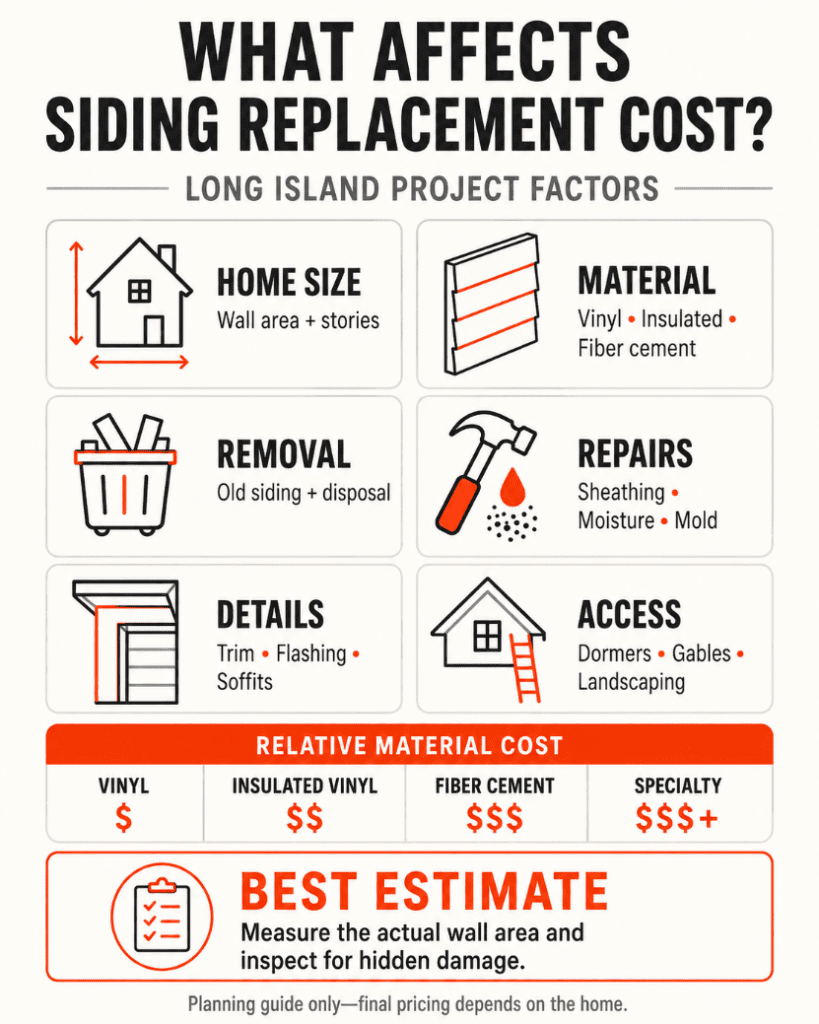
Most siding contractors estimate projects based on the home’s wall surface area, material selection, labor, disposal, and preparation work. General New York market data shows installed siding costs can vary widely by material and home size, so Long Island homeowners should treat online averages as planning numbers, not final pricing. A 2,000 square foot home may not have 2,000 square feet of siding because windows, doors, gables, garage walls, and architectural details change the measurement. The best way to understand siding costs is to look at the factors that increase or reduce labor and material needs.
Common siding cost factors include:
- Total wall surface area
- Number of stories
- Existing siding removal
- Vinyl siding, fiber cement, wood siding, or other materials
- Insulated vinyl siding or contoured insulation
- Surface preparation and house wrap
- Substrate repairs behind the siding
- Corner boards, trim, soffits, and fascia details
- Window and door flashing needs
- Water management improvements
- Storm damage or moisture damage repairs
- Permit or local code requirements
- Cleanup, disposal, and project access
How House Size Changes the Estimate
House size affects siding replacement cost because larger homes need more panels, trim, fasteners, house wrap, and labor hours. The shape of the home also matters. A simple rectangular home is usually easier to side than a home with multiple rooflines, bump-outs, porches, and gables. On Long Island, many homes have additions, dormers, or exterior updates completed at different times, which can make the wall surface less predictable. A contractor should measure the actual siding area rather than relying only on interior square footage. That gives the homeowner a more accurate cost analysis and reduces surprises.
Material Choices: Vinyl, Fiber Cement, Wood, and More
Siding materials create one of the biggest price differences. Vinyl siding is often chosen because it is cost-effective, low-maintenance, and available in many colors and profiles. Insulated vinyl siding can add contoured insulation behind the panel, which may improve comfort and reduce air movement when installed correctly. Fiber cement and cement board siding are usually more expensive, but they offer a different look and strong durability. Wood siding can be attractive, but it needs more maintenance in Long Island’s coastal climate. Brick veneer and metal siding may also be used for specific design goals.
Each material has a different balance of cost, durability, maintenance, and appearance. Vinyl siding may make sense for homeowners who want a clean exterior upgrade with manageable maintenance. Fiber cement may appeal to homeowners who want a heavier, more traditional look. Insulated vinyl siding may be worth considering when comfort and energy efficiency are part of the goal. The right choice should fit the house, neighborhood, budget, and long-term maintenance plan. A free estimate helps compare materials based on the actual home rather than generic price ranges.
Is Vinyl Siding Cheaper Than Fiber Cement?
Vinyl siding is usually cheaper than fiber cement because the material is lighter, easier to cut, and often faster to install. Fiber cement can cost more because it is heavier, requires careful handling, and may need more labor for cutting, fastening, and finishing. The lower upfront price of vinyl siding can make it attractive for many Long Island homeowners, especially when the goal is to improve curb appeal and protect the exterior without overspending. Fiber cement may still be a strong option for certain homes, but the best value depends on budget, design goals, maintenance expectations, and the condition of the existing exterior.
Labor Costs, Repairs, and Surface Preparation
Labor costs depend on the time, crew size, difficulty, and preparation needed to complete the siding installation correctly. A home with easy access and clean wall surfaces will usually cost less than a home with rotted sheathing, damaged trim, or old siding that is difficult to remove. Surface preparation may include removing old siding, repairing soft areas, replacing damaged boards, installing house wrap, and improving flashing around windows and doors. These steps matter because new siding should not be installed over hidden water damage or weak materials. Good preparation protects the siding investment and helps prevent future problems.
Substrate repairs can change the final price because they are sometimes hidden until the old siding comes off. Moisture damage may appear near windows, doors, roof edges, gutters, or areas where previous flashing failed. If water has entered the wall, the repair may involve sheathing replacement, trim repair, or improved water management. Long Island homes near the coast can also face salt air, wind-driven rain, and storm exposure that speed up exterior wear. A contractor should explain repair findings clearly and show why the work is needed before moving forward.
Energy Efficiency, Insulated Siding, and Rebates
Siding replacement can support energy efficiency when the project includes proper air sealing, house wrap, and insulation details. Insulated vinyl siding may help reduce thermal bridging and improve comfort in certain homes, especially when older siding has gaps or poor backing. The U.S. Department of Energy explains that air sealing your home can help reduce drafts and improve comfort. ENERGY STAR also provides guidance on sealing and insulating to improve the home envelope. Siding alone is not a full energy plan, but it can be part of a larger exterior upgrade.
Long Island homeowners may also want to review energy rebates, federal tax credits, and home energy assessments before starting exterior work. NYSERDA offers home energy programs that help New York residents identify efficiency opportunities. The IRS also provides information on the energy efficient home improvement credit, although homeowners should confirm current rules before planning around any credit. If the home also needs windows, air sealing, insulation, roof repair, or gutter installation, planning these improvements together can reduce repeat work and improve long-term comfort.
Can You Repair Siding Instead of Replacing It?
Siding repair may be enough when the damage is limited to a small section, such as a few cracked siding panels, loose trim, minor storm damage, or a small area of house siding repair. Repair is often more practical when the rest of the siding is still in good condition and matching panels are available. However, replacement may be better when damage is widespread, the siding is faded, panels are brittle, or moisture has reached the wall behind the siding. Repeated repairs can also become expensive if the existing siding is near the end of its useful life.
Repair may make sense when:
- Only a small section is damaged
- The siding color and profile can still be matched
- There is no hidden water damage
- The panels are not brittle or warped
- The issue came from one isolated storm event
- The rest of the exterior is in good condition
Replacement is usually better when:
- Many panels are cracked, loose, or warped
- Water damage or mold growth is present
- The siding no longer protects the wall
- The color is badly faded
- Energy bills and drafts are a concern
- The home needs a curb appeal upgrade
- You are also planning roof replacement, windows, or gutters
Permits, Timelines, and Project Planning
Permit rules for siding replacement can vary by town, village, and project scope on Long Island. Some projects may be treated as exterior replacement work, while others may require review if structural repairs, wall changes, or related construction are involved. Homeowners should confirm requirements with their local building department before starting. The timeline also depends on home size, material choice, weather, crew scheduling, and repairs found during removal. A straightforward siding installation may move quickly, while a larger project with water damage, roofline details, or extensive trim work can take longer.
Summer and early fall are common times for siding services because weather is usually better for exterior work. However, Long Island storms, heat, humidity, and material availability can affect scheduling. Homeowners should plan early if they want the project completed before colder weather. This is especially important when the home has visible water damage, loose panels, or failing trim. Waiting too long can allow moisture to spread into the wall system. A clear schedule, written scope, and financing plans can help homeowners understand the project before work begins.
Curb Appeal, Resale Value, and Long-Term Protection
New siding can improve curb appeal by giving the home a cleaner, more consistent exterior. It can also help protect the wall system from rain, wind, and seasonal weather. For homeowners thinking about selling, siding replacement may make the home look better in photos and feel better maintained during showings. The Cost vs. Value report tracks national and regional resale data for remodeling projects, including exterior improvements. While every home and market is different, siding is often viewed as both a protection project and a curb appeal investment.
Long-term value also comes from preventing water damage. If old siding allows moisture behind the wall, the homeowner may face mold growth, sheathing repairs, insulation damage, and structural damage. New siding should be installed with proper flashing, drainage, trim details, and water management. This is especially important on Long Island, where coastal storms and temperature extremes can test the exterior. A good siding project should look better from the front lawn, but it should also protect the home where homeowners cannot see.
Get a Siding Replacement Estimate on Long Island
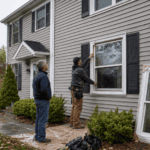
The best way to understand siding replacement cost on Long Island is to request a detailed estimate for your specific home. Online cost calculators can help with early budgeting. However, they cannot fully account for house size, wall surface area, labor rates, material choice, hidden water damage, or local exterior conditions. JAGG Roofing, Siding, and Windows provides roofing, siding, windows, gutter installation, and exterior services. They serve Nassau County, Suffolk County, Bay Shore, and nearby Long Island communities. Homeowners can request a free siding estimate through JAGG Roofing, Siding, and Windows to review materials, project scope, and cost options.
A strong estimate should explain the siding materials, labor, removal, preparation, repairs, trim, flashing, cleanup, and warranty details. It should also note whether the project may involve roof repair, gutter work, or water management improvements. This matters because siding is part of the full exterior system. JAGG positions itself as a Long Island full exterior specialist, which helps homeowners coordinate siding, roofing, and windows under one team. That can make planning easier when the home needs more than one exterior upgrade.
Jacob Giannelli is the founder of JAGG Roofing, Siding & Windows, serving Nassau and Suffolk County homeowners across Long Island. JAGG is an Owens Corning Preferred Contractor and BBB Accredited Business with a 5.0-star Google rating.