Get a free estimate.
Nassau & Suffolk County.
Why Long Island Roofs Need Careful Attention
Long Island roofs deal with more than normal age. Coastal storms, salt air, freeze-thaw cycles, strong sun, and heavy rain all wear down a roof covering over time. The National Weather Service coastal flooding resources show how exposed Long Island communities can be to coastal weather conditions. These conditions can loosen asphalt shingles, corrode metal flashing, clog a gutter system, and push water under weak areas. When small roofing problems are ignored, water intrusion can reach the Roof Deck, attic insulation, fascia boards, and interior walls.
Roof Repair vs. Roof Replacement: The Simple Difference
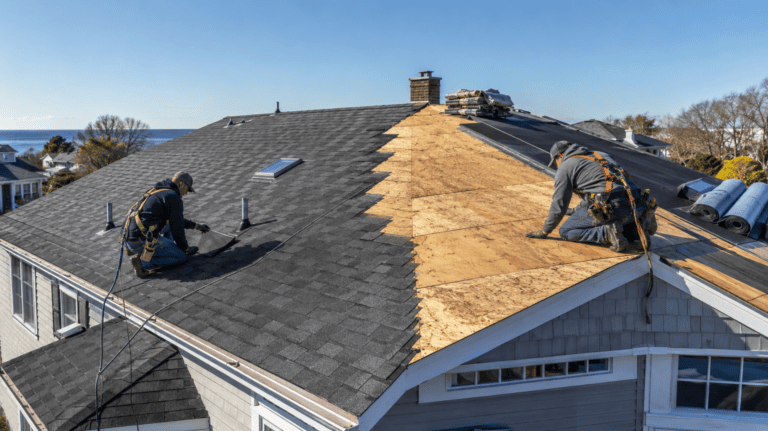
Roof repair is usually the right choice when the damage is limited to one area. This may include damaged shingles, a small water leak, loose ridge caps, or flashing around roof vent pipes. Roof replacement becomes more likely when damage is widespread, the asphalt shingle roof is near the end of its life, or the roof framing and deck show signs of moisture damage. A professional roofing contractor can inspect the surface, attic, and drainage areas to explain whether the repair process will solve the problem or only delay a larger issue.
When Is Age Alone Enough to Justify Replacement?
Age matters, but it should not be the only reason to replace a roof. Many asphalt shingles last for years when they are installed well and ventilated properly. The problem starts when age combines with granule loss, curled shingles, algae growth, water stains, or repeated storm-related damage. On Long Island, coastal microclimates can make one roof age faster than another, even on the same street. If the roof is older and repairs keep coming back, replacement may protect the home better and improve resale value.
Signs You May Only Need Roof Repair
A roof repair may be enough when the damage is small, recent, and easy to isolate. One missing asphalt shingle, a few lifted shingles, a minor leak near a vent, or a small flashing issue can often be repaired without replacing the whole system. The key is finding the true source of the water. A stain on the ceiling may appear in one room, but the leak can start higher up the roof. Early roofing repairs help stop moisture before it spreads into insulation, drywall, or wood framing.
Missing, Cracked, or Damaged Shingles
Damaged shingles are one of the clearest signs that a roof needs attention. Wind can lift shingles, fallen debris can crack them, and freeze-thaw cycles can weaken older material. Once the shingle surface breaks, water can move under the roof covering and reach the underlayment or deck. This can lead to water leaks, moisture damage, and mold growth inside the attic. If the damage is limited, roof repair may work. If damaged shingles appear across many roof slopes, replacement may be the safer choice.
Small Water Stains or Isolated Leaks
Water stains on a ceiling or wall often mean water is entering somewhere above the living space. The cause may be loose flashing, cracked sealant, worn ridge caps, clogged gutters, or a small opening near roof vent pipes. If the leak is caught early, a targeted repair may stop the problem. If stains grow, smell musty, or return after rain, the issue may be deeper. The EPA moisture and mold guide explains why water problems should be fixed quickly to reduce mold risk.
Frequently Asked Questions
-
Sometimes building codes allow roof recover or overlay work, but that does not mean it is always the best choice. The International Residential Code allows re-covering in some situations, but it also lists cases where it is not permitted, such as when the existing roof is water-soaked or deteriorated enough that the new layer would not perform properly.
That matters because covering old problems can trap moisture and hide damage in the roof deck below. For many homeowners, a full tear-off gives the roofing contractor a better view of the structure and creates a stronger base for long-term performance.
-
Homeowners insurance may help with roofing costs when the damage comes from a covered peril, but the answer depends on the insurance policy and the cause of the damage. Sudden events like wind or hail damage are more likely to be covered than long-term wear, neglect, or old age.
The Insurance Information Institute explains that coverage depends on the policy language and whether the loss came from a covered event, while settlement may be based on Replacement Cost Value or Actual Cash Value depending on the terms. For homeowners, that means documentation, photos, and a professional inspection are important if an insurance claim may be needed.
-
A roof in poor condition can make buyers worry about hidden costs, financing problems, and future repairs. A newer roof can reduce that concern and improve home value because it signals better protection and less immediate work after closing. It can also help curb appeal and support a smoother sale.
The exact market value impact depends on the home, location, and buyer expectations, but roof condition is often part of how buyers judge overall upkeep. For Long Island homeowners, replacing a failing roof before listing may create a stronger impression than trying to sell as-is with visible damage indicators.
-
There is no one perfect month for every home, but weather and scheduling both matter. Many homeowners prefer milder seasons because crews can work more comfortably and weather delays may be lower. Still, the best time is often when the roof condition makes action necessary.
Waiting for an ideal month can allow leaks, water damage, and mold growth to spread. If a roof has active problems, a licensed roofing contractor should inspect it as soon as possible. For Long Island homeowners, the best timing is usually the point where the roof can still be addressed in a controlled way before emergency conditions take over.
Not sure about your roof's condition? Let's take a look.
(631) 861-5428Flashing, Fascia, and Gutter Problems
Roofing problems do not always start with shingles. Metal flashing corrosion, rotted fascia boards, and clogged gutters can all push water into areas it should not go. When gutters overflow, water can back up under the roof edge and damage the deck. Poor water drainage can also affect siding, trim, and foundation areas. On Long Island homes near the coast, salt air can speed up corrosion around metal roof parts and flashing. Fixing these details early can protect the main roof system.
Signs You May Need Roof Replacement
Roof replacement is more likely when damage affects the whole roof system. This can include widespread granule loss, repeated leaks, sagging sections, structural deck rot, or many failing shingles. A roof is not just the visible shingles. It includes the roof deck, underlayment, flashing, ventilation, ridge caps, and drainage paths. When several parts fail at once, repairs may become a cycle. Replacement gives the homeowner a new system with better material choices, improved warranty coverage, and stronger protection against Long Island weather.
Widespread Granule Loss and Aging Asphalt Shingles
Granule loss is a warning sign that asphalt shingles are wearing down. Granules help protect the shingle from sun, rain, and surface wear. When they wash into gutters or leave bald spots, the roof becomes more exposed to UV intensity and water. A few missing granules may not mean replacement. Large areas of loss across the roof can signal that the asphalt shingle roof is near the end of its useful life. At that point, repairs may not provide long-term value.
Roof Repair vs. Roof Replacement: Quick Comparison
Some roofing issues can be fixed with a targeted repair, while larger warning signs may point to full roof replacement.
| Roof Issue | Repair May Be Enough When... | Replacement May Be Needed When... |
|---|---|---|
| Missing or Damaged Shingles | Repair: Only a few shingles are cracked, lifted, or missing. | Replace: Damage appears across multiple roof slopes. |
| Water Leaks | Repair: The leak is small, recent, and tied to one clear area. | Replace: Leaks keep returning or appear in several rooms. |
| Granule Loss | Repair: Granule loss is minor and limited to one area. | Replace: Large bald spots or heavy granules appear in gutters. |
| Flashing or Gutter Problems | Repair: The issue is limited to flashing, fascia, or drainage. | Replace: Water has spread into the deck, attic, or roof structure. |
| Roof Age | Repair: The roof is still performing well with isolated damage. | Replace: The roof is older and repairs are becoming frequent. |
| Sagging Roof Deck | Repair: Rarely a simple repair; this needs professional inspection. | Replace: Sagging may signal structural damage or moisture problems. |
Sagging Roof Deck or Structural Damage
A Sagging Roof Deck is one of the most serious warning signs. Sagging can happen when water intrusion weakens the deck, when roof framing shifts, or when moisture sits inside the structure for too long. This is more than a surface issue. It can point to structural damage that needs immediate attention. A homeowner should not walk on a sagging roof or try to inspect it from above. A certified roofing professional can check the roof framing, attic, and deck safely.
Repeated Leaks and Moisture Damage
Repeated leaks are a strong sign that the roof system may be failing. One leak can come from a single weak point. Several leaks in different areas can mean the roof covering, flashing, underlayment, or deck is no longer doing its job. Over time, water can lead to mold growth, black mold concerns, insulation damage, and stained ceilings. The longer moisture sits, the more expensive the repair can become. Replacement may be more practical when water damage keeps returning after repairs.
How Long Island Weather Changes the Decision
Long Island weather can make the repair or replacement decision more urgent. Coastal storms bring wind-driven rain, fallen debris, and storm damage. Winter can create ice dams when warm attic air melts snow and refreezes near the roof edge. ENERGY STAR attic ventilation guidance explains that proper attic airflow can help reduce ice dam formation. In coastal areas, salt air corrosion can weaken flashing and metal roofing details. These local conditions make a full roof inspection important.
How to Safely Inspect Your Roof From the Ground
Homeowners can do a simple visual inspection without climbing onto the roof. Look from the ground for missing shingles, lifted edges, sagging lines, clogged gutters, damaged ridge caps, and debris on flat roofs. Check inside the attic for damp wood, dark stains, musty odors, and daylight showing through gaps. Avoid ladder work unless it can be done safely. OSHA’s ladder safety standards show why roof access requires care, stable equipment, and proper safety steps.
Can I Inspect My Roof Myself?
You can inspect your roof yourself from the ground, attic, or upstairs windows, but you should not treat that as a full roof inspection. A homeowner can spot obvious damage types, but hidden issues are harder to see. Water can travel under shingles before showing inside the home. Thermal imaging, attic checks, and close inspection of flashing can reveal problems that a ground view may miss. A professional roofing contractor can explain whether the roof needs minor repair, major repair, or replacement.
How Long Does a Typical Roof Inspection Take?
A typical roof inspection often takes less than a few hours, depending on roof size, slope, access, and damage. A basic inspection checks shingles, flashing, gutters, roof vent pipes, ridge caps, attic ventilation, and signs of water intrusion. More advanced inspections may include thermal imaging when hidden moisture is suspected. During real estate transactions, inspections may also focus on roof age, visible defects, and remaining life. A clear inspection helps homeowners avoid guesswork and understand the best next step.
Common Roofing Materials on Long Island Homes
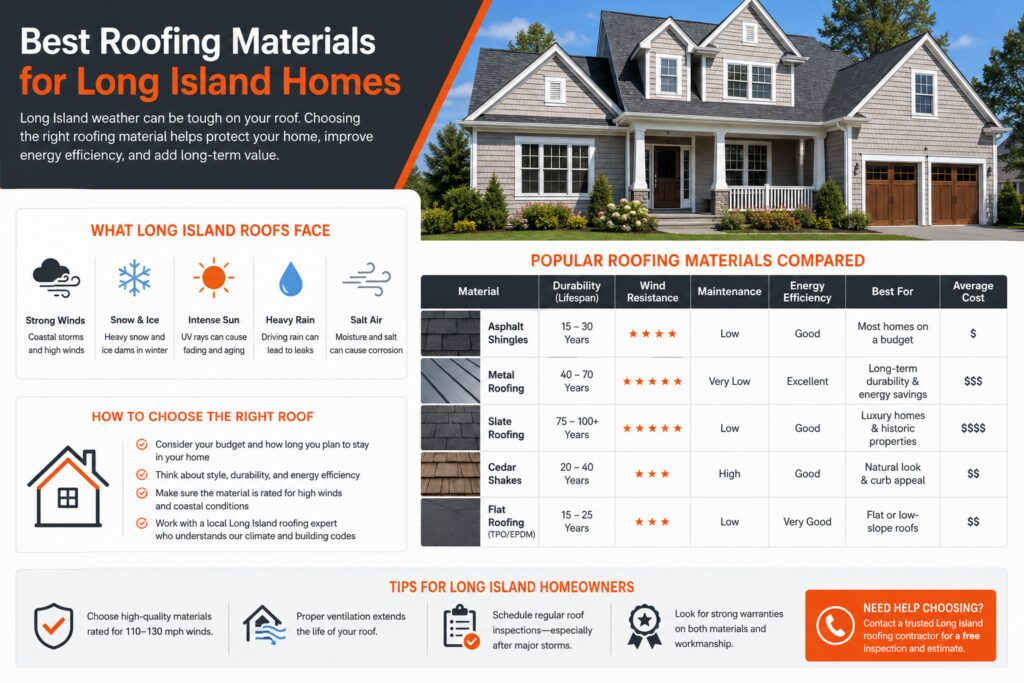
Asphalt shingles are the most common roofing material on Long Island because they are practical, familiar, and available in many styles. Architectural asphalt shingles can improve curb appeal while giving the home a stronger finished look. Some homes use metal roof systems, metal and tile roofs, synthetic slate, or flat roofs with TPO membranes. Each material handles weather differently. Metal roofing can resist some wear but may face salt air corrosion near coastal zones. Flat roofs need careful water drainage to prevent ponding.
The Role of Gutters, Ice Dams, and Drainage
Gutters play a major role in roof health. When clogged gutters block water drainage, rain can back up under shingles, soak fascia boards, and increase moisture near the roof edge. In winter, poor drainage can make ice dams worse. Ice and water shields help protect vulnerable roof areas, but they do not replace proper ventilation and gutter maintenance. Ignoring gutter repair on Long Island can lead to roof leaks, siding damage, foundation moisture, and costly repairs that could have been avoided.
Will Insurance Cover Roof Repairs or Replacement?
Insurance coverage depends on your insurance policy and the cause of damage. Many insurance companies may cover sudden storm-related damage, fallen debris, or wind damage, but they may not cover normal aging, neglect, or long-term wear. FEMA explains that some disaster-related roof leaks may qualify for assistance in declared disaster situations. Homeowners should document damage with photos, save inspection reports, and review policy terms before filing. A contractor experienced with insurance paperwork can help explain visible damage, but the insurer decides coverage.
The 50% Rule for Roof Repair vs. Replacement
The 50% rule is a simple way to think about value. If roofing repairs cost close to half the price of roof replacement, replacement may make more sense. This is especially true when the roof is older, has limited warranty coverage, or has repeated water leaks. Repairing one area today and another area next month can become expensive. A replacement may offer better long-term protection, improved energy efficiency, stronger manufacturer warranty options, and better property value when the current roof is near failure.
Choosing a Professional Roofing Contractor on Long Island
Choosing the right contractor matters because the installation affects the life of the roof. Look for certified roofing professionals, clear estimates, proper insurance, strong local experience, and a repair process that explains the cause of the problem. Long Island homeowners should ask about material choices, impact-rated shingles, attic ventilation, ice and water shields, manufacturer warranty terms, and financing options. JAGG Roofing, Siding and Windows offers roof repair and replacement services for Long Island homes, including Suffolk County and Nassau County projects.
Final Answer: Repair or Replace?
You may need roof repair if the damage is small, recent, and limited to one section. You may need roof replacement if the roof is older, leaking in several areas, sagging, losing granules, or showing signs of structural deck rot. Long Island roofs face coastal storms, salt air, freeze-thaw cycles, and heavy rain, so small problems can spread fast. The best step is a professional roof inspection. It gives you clear options, protects your home, and helps you avoid unnecessary costly repairs.
Jacob Giannelli is the founder of JAGG Roofing, Siding & Windows, serving Nassau and Suffolk County homeowners across Long Island. JAGG is an Owens Corning Preferred Contractor and BBB Accredited Business with a 5.0-star Google rating.